Key Facts
—The milestone. The VLT Carioca tram network has completed ten years of operation since its 2016 launch.
—The ridership. It has carried more than 180 million passengers and serves about 95,000 a day, per supplier Alstom.
—The build. The trains were assembled at Alstom’s plant in Taubaté, São Paulo state, giving the project a domestic supply chain.
—The technology. The trams use a ground-based power system, leaving Rio’s historic centre free of overhead wires.
—The role. It links Santos Dumont airport, the Praça XV ferry, Central do Brasil station and the cruise port across downtown.
—The legacy. Built for the 2016 Olympics as part of the Porto Maravilha port revival, it is a rare mega-event project still thriving.
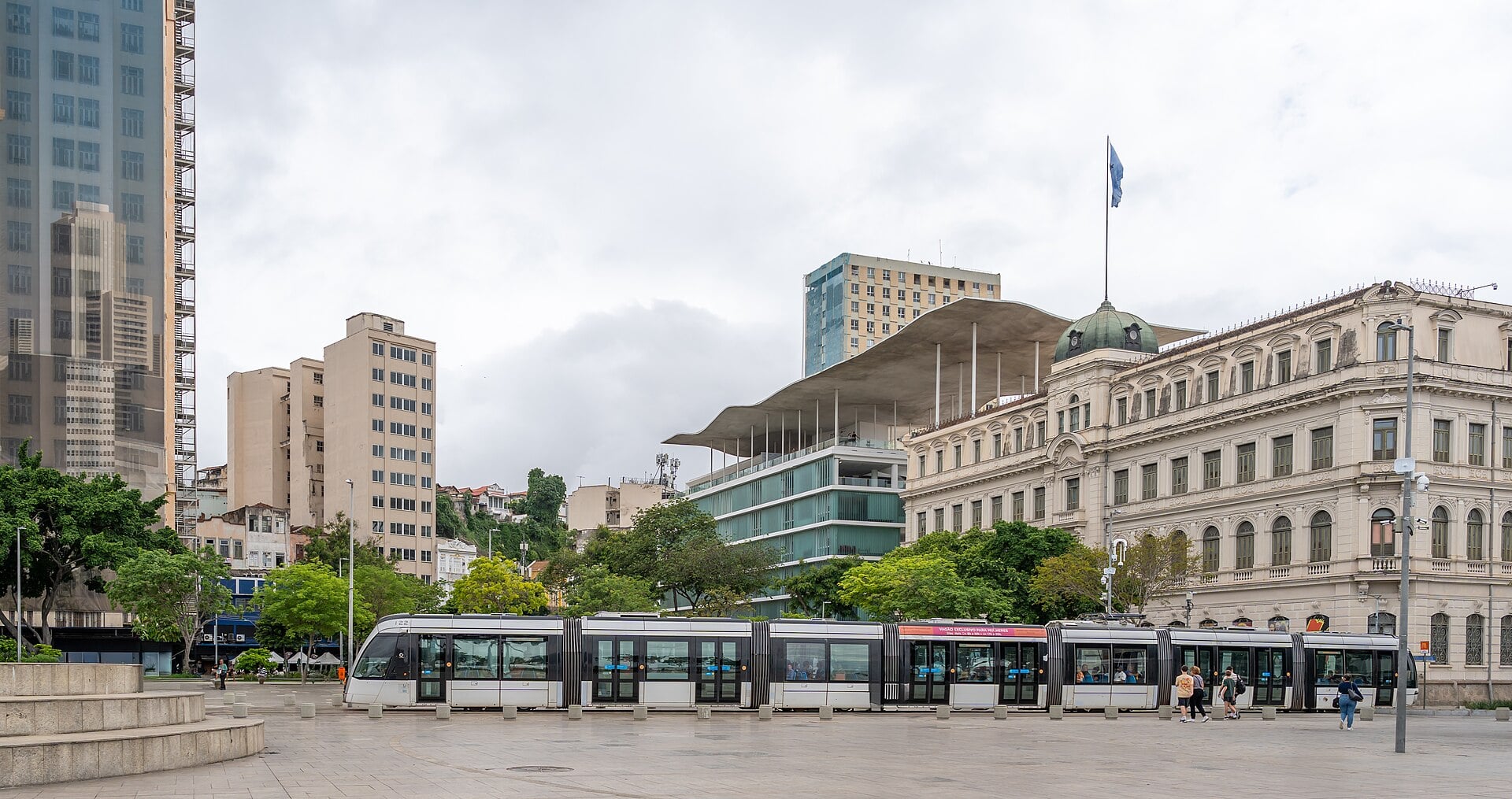
The VLT Carioca, the light-rail tram that reshaped downtown Rio de Janeiro, has marked ten years of service, a rare Olympic-legacy project that quietly became part of daily life.
When global sporting events leave a city, the venues often rot and the promises fade. Rio de Janeiro has a long list of such ghosts, yet its downtown tram is the exception.
The VLT Carioca, the modern tram network that threads through central Rio, has just completed ten years of operation. The milestone was marked by Alstom, the French group that supplied the trains, in a statement this month.
In a decade the system has carried more than 180 million passengers and now moves around 95,000 people on an average day, according to Alstom’s anniversary release. For a project born of the Olympics, that staying power is the real story.
What the VLT Carioca is
VLT stands for veículo leve sobre trilhos, Portuguese for light rail vehicle. It is a street-level tram, quieter and smaller than a metro, that runs through the heart of the city rather than underground.
The network opened in 2016, just before Rio hosted the Summer Olympics. It was the centrepiece of a wider remake of the old port district, the Porto Maravilha, which turned a derelict waterfront into a walkable cultural zone.
The trams link the Santos Dumont domestic airport, the ferry terminal at Praça XV, the Central do Brasil train station and the cruise port. That makes the VLT the connective tissue of central Rio for commuters and visitors alike.
The full VLT network covers about 28 kilometres of track across the centre. It was built in stages, with the first line opening in mid-2016 and later branches reaching the old port and the Gamboa district.
One technical feature set it apart from the start. The trams draw power from the ground rather than overhead cables, a system that keeps the historic skyline free of wires and made Rio an early adopter of the technology.
Why the milestone matters
For a reader abroad, the interest is less the tram than what it represents. Brazil has spent heavily on mega-event infrastructure that later fell idle, so a transport project still running smoothly after ten years is a useful counter-example.
The trains themselves carry an industrial footnote. They were assembled at Alstom’s plant in Taubaté, in São Paulo state, making the VLT a piece of domestic manufacturing rather than a pure import.
That local-content angle matters for investors weighing Brazil’s rail pipeline. The country has a long list of planned metro and tram lines, and a working reference project with a domestic supply chain strengthens the case for the next round.
The Rio Times notes the contrast with the system’s rocky finances. The concession that runs the VLT spent years in disputes with the city over delayed payments, a reminder that smooth operations and sound economics are not always the same thing.
The forward question is expansion. City officials have floated extending the tram into the wealthy South Zone toward Ipanema, a move that would turn a downtown circulator into a genuine cross-city line.
Whether that happens depends on money and political will, both in short supply. For now, the ten-year mark stands as proof that at least one piece of Rio’s Olympic bet is still paying out.
The timing also lands as the city pushes a fresh wave of transport spending, from new buses to a planned intercity metro line across Guanabara Bay. Against that backdrop, a tram that has simply kept running offers a low-drama benchmark for what success looks like.
Frequently Asked Questions
What is the VLT Carioca?
The VLT Carioca is Rio de Janeiro’s street-level light-rail tram, opened in 2016 as part of the Porto Maravilha downtown revival. It runs through the city centre, linking the domestic airport, the ferry terminal, the main train station and the cruise port.
How many people use it?
According to supplier Alstom, the system has carried more than 180 million passengers in its first decade and now serves about 95,000 riders on an average day. That makes it a core part of how central Rio moves.
Why is the VLT Carioca significant?
It is one of the few pieces of Rio’s 2016 Olympic infrastructure still thriving a decade on, after many venues fell idle. Its trains were also assembled in Brazil, at Taubaté in São Paulo state, giving it a domestic supply chain.
Connected Coverage
• Navigating Public Transport Rio de Janeiro: A 2026 Guide for Expats and Investors
• Rio Bets $4.4 Billion on New Buses, Flood Defenses and Security
This article was produced by The Rio Times’ automated newsroom system. How we use AI · Report an error · Editorial responsibility: Matthias Camenzind, Editor-in-Chief