Venezuela Oil Investment Surge: Delcy Rodríguez Signals New Producers
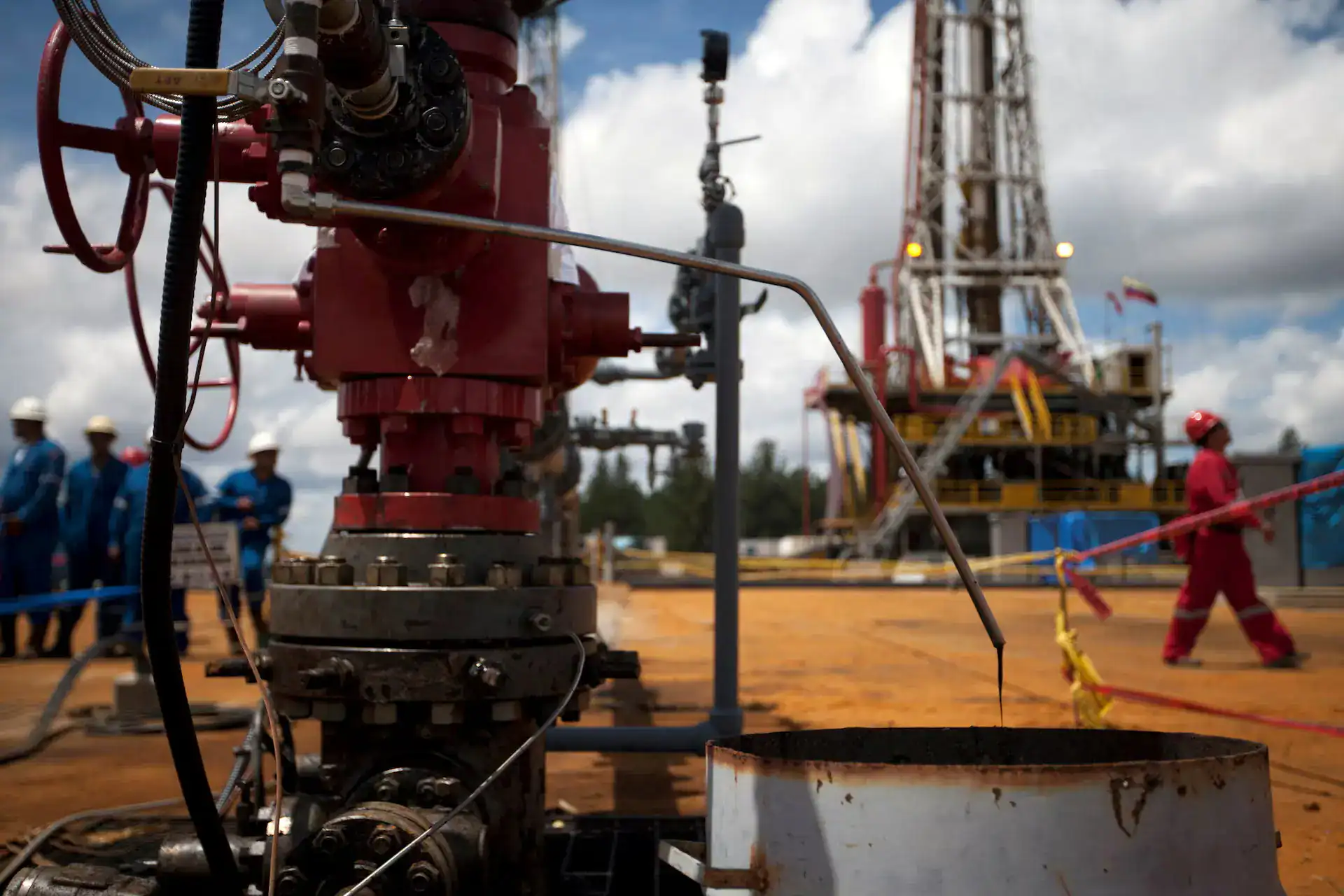
VENEZUELA · ENERGY
Key Facts
—The announcement. Acting president Delcy Rodríguez said new foreign oil firms will arrive in Venezuela “in the next few weeks,” speaking from the petroleum state of Anzoátegui on state TV channel VTV.
—Production figure. Caracas claims output has stabilized at 1.2 million barrels per day, with a target of adding another 400,000 by year-end 2026.
—Authorized players. Chevron, Shell, BP, Italy’s Eni and Spain’s Repsol hold OFAC general licenses issued February 13, 2026, to resume oil and gas operations with PDVSA.
—The hedge. Rodríguez named no new companies, timelines, or contract structures, and PDVSA’s history of optimistic output targets means independent verification will take quarters, not weeks.
—Latin American impact. A genuine Faja del Orinoco restart redraws regional crude flows, supplier contracts and FX-earnings dynamics across the western hemisphere.
Caracas is selling a Venezuela oil investment surge it cannot yet name. From Anzoátegui on Wednesday, acting president Delcy Rodríguez told oil workers that more foreign companies will arrive “in the next few weeks,” even as she declined to identify them or confirm signed terms.
What Rodríguez actually said in Anzoátegui
Speaking at the inauguration of a training rig for petroleum workers, Rodríguez framed the moment as an opening to private and foreign capital after years of operational collapse. State broadcaster VTV carried her remarks live from the eastern oil state. She did not name a single specific company expected to arrive.
The acting president attributed national crude output of 1.2 million barrels per day to what she called diplomatic outreach and worker effort. She said output had dipped in December and January but had since recovered. Caracas now aims to add 400,000 barrels per day before the end of 2026, according to her remarks reported by Banca y Negocios and EFE.
Rodríguez also announced a new academic council for hydrocarbons aimed at professionalizing oil-sector workers. In an earlier appearance the same day, she urged Washington and Brussels not to “fear” a Venezuela free of sanctions. Both remarks were paraphrased in coverage by Infobae and Monumental.
The sanctions architecture behind the Venezuela oil investment surge
On February 13, 2026, the US Treasury’s Office of Foreign Assets Control, OFAC, issued two general licenses signed by director Bradley Smith. The first authorized Chevron, BP, Shell, Italy’s Eni and Spain’s Repsol to resume transactions with PDVSA. The second allowed other firms to negotiate new investment contracts, subject to later case-by-case OFAC approvals.
Royalty and tax payments must flow through a US-controlled foreign government deposit fund established under Executive Order 14373 of January 9, 2026. The licenses explicitly bar transactions involving entities tied to Russia, China, Iran, Cuba or North Korea. Vessels under US sanctions remain off-limits.
Repsol has publicly targeted a 50 percent output increase over twelve months under the new framework, according to industry coverage. India’s Reliance Industries has reportedly received a similar US authorization. The French firm Maurel & Prom was excluded from the February permits, Petroguía reported at the time.
The ExxonMobil question hovering over Caracas
The New York Times reported earlier this month that ExxonMobil is in talks to acquire crude extraction rights in Venezuela, a development relayed by Bloomberg Línea and several wire services. Exxon has not publicly confirmed terms or a target signing date. The company exited Venezuela under Hugo Chávez’s nationalization in 2007 and has a long arbitration history with Caracas.
Bloomberg Línea reported on Thursday that two US-headquartered companies remain in active negotiations, citing the same NYT-anchored reporting plus follow-up sourcing. ConocoPhillips, which has historic Venezuela claims and ongoing arbitration recoveries, has been the most-named second candidate alongside Exxon in the regional press.
Caracas has hosted a series of US delegations in 2026, including visits by Energy Secretary Chris Wright and Interior Secretary Doug Burgum, according to AP. Those visits coincided with the OFAC licensing changes. None of the visiting officials announced specific company deals.
The numbers worth watching, and the ones to discount
Venezuela‘s first-quarter 2026 trade data, summarized by VenAmCham and reported by Bloomberg Línea, showed exports to the United States of US$1.875 billion, up 15.4 percent year-on-year. Petroleum products were 96.53 percent of those exports, or US$1.810 billion. Imports from the US rose 34.14 percent to US$1.418 billion, dominated by petroleum-sector inputs.
The 1.2 million barrels per day output figure is the government’s claim, not an audited number. Independent secondary sources, including OPEC monthly reports and IEA estimates, have historically lagged Caracas claims by 100,000 to 300,000 barrels per day. Any “next few weeks” arrivals will show up first in vessel-tracking data, port manifests at José terminal, and individual company filings, before reaching official production tables.
What the Venezuela oil investment surge means for the region
For regional readers, the practical signal is contract flow rather than rhetoric. A Faja del Orinoco at scale changes diluent demand from Colombian and US Gulf suppliers, shifts heavy-crude pricing benchmarks, and reroutes tanker traffic across the Caribbean basin.
Colombian state oil firm Ecopetrol and US Gulf Coast refiners are the most exposed to a real Venezuela output increase. Heavy-sour benchmarks such as Maya could face pricing pressure if Faja barrels return at meaningful volumes. Tanker rates between Caribbean loading points and Asian buyers would adjust in tandem.
For Brazil, the secondary effect runs through Petrobras export competition in Asian markets and through the broader heavy-crude price curve. For Mexico, a real Venezuela restart adds competition for Pemex’s similar heavy-grade exports. None of these adjustments fires until contract flow becomes concrete.
Connected Coverage
Read more on the diplomatic backdrop in our coverage of the US prosecutorial reset and Venezuela oil access and on regional currency dynamics in our Morgan Stanley Latin American currency outlook. For broader market context, see our global bond selloff and Latin America piece.
The Rio Times — Latin American financial news — riotimesonline.com
This article was produced by The Rio Times’ automated newsroom system. How we use AI · Report an error · Editorial responsibility: Matthias Camenzind, Editor-in-Chief
Frequently Asked Questions
Which foreign oil companies are currently authorized to operate in Venezuela?
Chevron, BP, Shell, Eni and Repsol hold OFAC general licenses issued February 13, 2026. Other firms can negotiate contracts under a parallel license, subject to later case-by-case OFAC approval. Maurel & Prom was excluded from the February batch.
Is ExxonMobil returning to Venezuela?
The New York Times reported the company is in talks to acquire crude extraction rights, with no confirmed terms or signing date. Exxon exited Venezuela in 2007 amid nationalization. Any return would mark a significant break from twenty years of arbitration disputes with Caracas.
What is the Faja Petrolífera del Orinoco?
The Orinoco Belt stretches across eastern Venezuela and contains the world’s largest proven crude reserves. The oil is heavy and high-sulfur, requiring diluents for transport and complex refining. Most major historic Venezuela joint ventures have been structured around Faja blocks.
How credible is the 1.2 million barrels per day figure?
It is Caracas’s own figure, attributed by Rodríguez to PDVSA. Independent estimates from OPEC monthly reports and IEA data have historically run below government claims. Vessel-tracking data, José terminal manifests and company filings will provide third-party verification over coming quarters.
What does this mean for other Latin American economies?
A real Faja restart shifts diluent flows from Colombian and US suppliers, alters heavy-crude pricing reference points, and changes tanker patterns across the Caribbean. Regional refiners and FX strategists are watching contract flow rather than political statements.