Brazil Navy Shipbuilding Push Backed by $19.6B Fund
Brazil · Defense
Key Facts
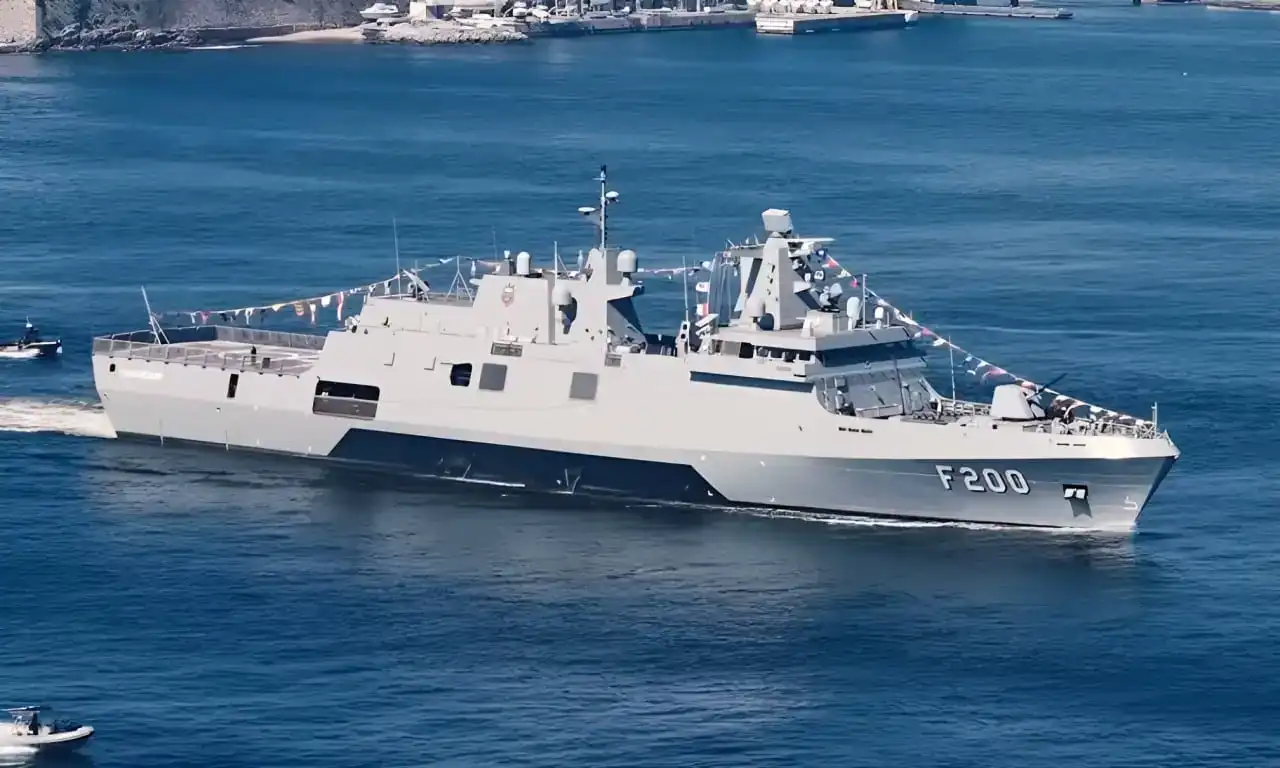
—First Tamandaré frigate. Commissioned on April 24, 2026, in Itajaí, Santa Catarina.
—Fleet expansion plan. President Lula announced plans to order four additional frigates, totaling eight.
—Financing vehicle. The Merchant Marine Fund (FMM) has historically mobilized over R$100 billion (US$19.6 billion).
—Submarine operations. The Riachuelo-class submarine Humaitá drilled with the USS Nimitz in May 2026.
—Taurus partnership. A deal with Taurus Armas focuses only on small arms and drones for naval riflemen.
Brazil Navy shipbuilding is accelerating with the recent commissioning of a new warship and plans to double the fleet, backed by a state fund with a historic financing capacity of over R$100 billion (US$19.6 billion). The push centers on frigates and submarines as part of a broader industrial policy to achieve technological sovereignty.
Warship Commissioning and Fleet Goals
The first Tamandaré-class frigate, built at the Itajaí shipyard in Santa Catarina state by the Águas Azuis Consortium, was commissioned on April 24, 2026.
President Luiz Inácio Lula da Silva then announced a plan to order four more vessels, potentially expanding the program to eight frigates.
The Águas Azuis Consortium is a joint venture formed by Germany’s Thyssenkrupp, Brazilian aerospace giant Embraer, and local tech firm Atech, blending European design with domestic manufacturing.
If all eight hulls are built, analysts say it would represent one of the largest naval procurement efforts in South America, significantly modernizing a fleet that has long relied on aging British-built frigates.
Brazil Navy Shipbuilding and the FMM Fund
The primary financing tool is the Fund for the Modernization of the Merchant Marine (FMM), which supports vessel construction and port infrastructure.
While not exclusive to military projects, the fund aligns with the National Defense Strategy to strengthen the domestic industrial base and reduce foreign dependency.
The FMM has historically mobilized over R$100 billion (US$19.6 billion) in financing capacity, channeling resources into everything from oil tankers to naval support vessels.
For foreign investors and expats, the FMM is a key piece of Brazil’s industrial policy, signaling that the government is willing to use state-backed credit to nurture high-tech manufacturing jobs and local supply chains.
Submarine Program and Recent Drills
At the Itaguaí shipyard in Rio de Janeiro, work continues on four Riachuelo-class conventional submarines under the ProSub program with France’s Naval Group.
In May 2026, the submarine Humaitá conducted a drill with the US aircraft carrier USS Nimitz, demonstrating growing operational capability.
The ProSub program also includes a dedicated naval base and plans for Brazil’s first nuclear-powered submarine, the Álvaro Alberto, though that vessel is not expected until 2036.
These drills with a US carrier strike group highlight Brazil’s push to integrate its silent, diesel-electric submarines into broader multinational naval operations, a move that reassures allies about maritime security in the South Atlantic.
Taurus Partnership Clarified
A separate partnership between the Brazilian Navy and firearms maker Taurus Armas S.A. is strictly for developing small arms and armed drones.
The protocol of intentions covers weapons for the Naval Riflemen and does not involve naval missiles, which are developed domestically under the MANSUP program.
The two-year agreement focuses on 9mm, 5.56mm, 7.62mm, and .50 caliber firearms, along with unmanned aerial systems for marine infantry use, with no financial transfer at this stage.
Brazil’s anti-ship missile needs are met by the MANSUP project, led by local defense firm SIATT, meaning Taurus plays no role in arming the Navy’s surface fleet.
What It Means for Expats and Investors
For expatriates living along Brazil’s coast, the naval buildup signals a long-term commitment to securing the country’s offshore oil fields and busy shipping lanes, which could stabilize the broader business environment.
Investors watching Brazil’s defense sector may see opportunities in the local supply chain, as the government requires technology transfers and domestic content in programs like the Tamandaré frigates.
The Itajaí and Itaguaí shipyards are creating thousands of skilled jobs, potentially boosting real estate and service demand in those regions.
However, the reliance on a state fund like the FMM means the pace of expansion is tied to political priorities and federal budget cycles, a risk worth monitoring.
What Happens Next
The second Tamandaré-class frigate, the Jerônimo de Albuquerque, was launched in August 2025 and is expected to enter service soon, while the third vessel, Cunha Moreira, had its keel laid in June 2025.
Naval officials have not yet released a firm timeline for the four additional frigates announced by President Lula, but design and contract negotiations are likely underway.
On the submarine front, the final conventional Riachuelo-class boat was expected to be delivered during 2026, completing the initial ProSub lineup.
All eyes will be on the next federal budget to see how much fresh capital the FMM allocates to military-linked shipbuilding, a figure that will determine whether the eight-frigate vision becomes reality.
More: Brazil news in English, every day from The Rio Times.
Frequently Asked Questions
What is the FMM fund in Brazil?
The Merchant Marine Fund (FMM) is a state financing vehicle for building and modernizing Brazilian merchant vessels and port infrastructure. It has historically mobilized over R$100 billion (US$19.6 billion) and is a cornerstone of the country’s industrial policy to revive its shipbuilding sector.
Is Taurus making missiles for the Brazilian Navy?
No. The Navy’s partnership with Taurus Armas is limited to small arms and drones for marine infantry. Anti-ship missiles come from the separate MANSUP program, developed by the Brazilian firm SIATT.
How many Tamandaré frigates will Brazil build?
Four were initially ordered, with the first commissioned in April 2026. President Lula announced plans to order four additional frigates for a total of eight, though a final contract for the extra vessels is still pending.
Connected Coverage
Sources: President Luiz Inácio Lula da Silva.
This article was produced by The Rio Times’ automated newsroom system. How we use AI · Report an error · Editorial responsibility: Matthias Camenzind, Editor-in-Chief