U.S. Venezuela Prosecutorial Warming: Prosecutors Told to Stand Down
AMERICAS · POLICY
Key Facts
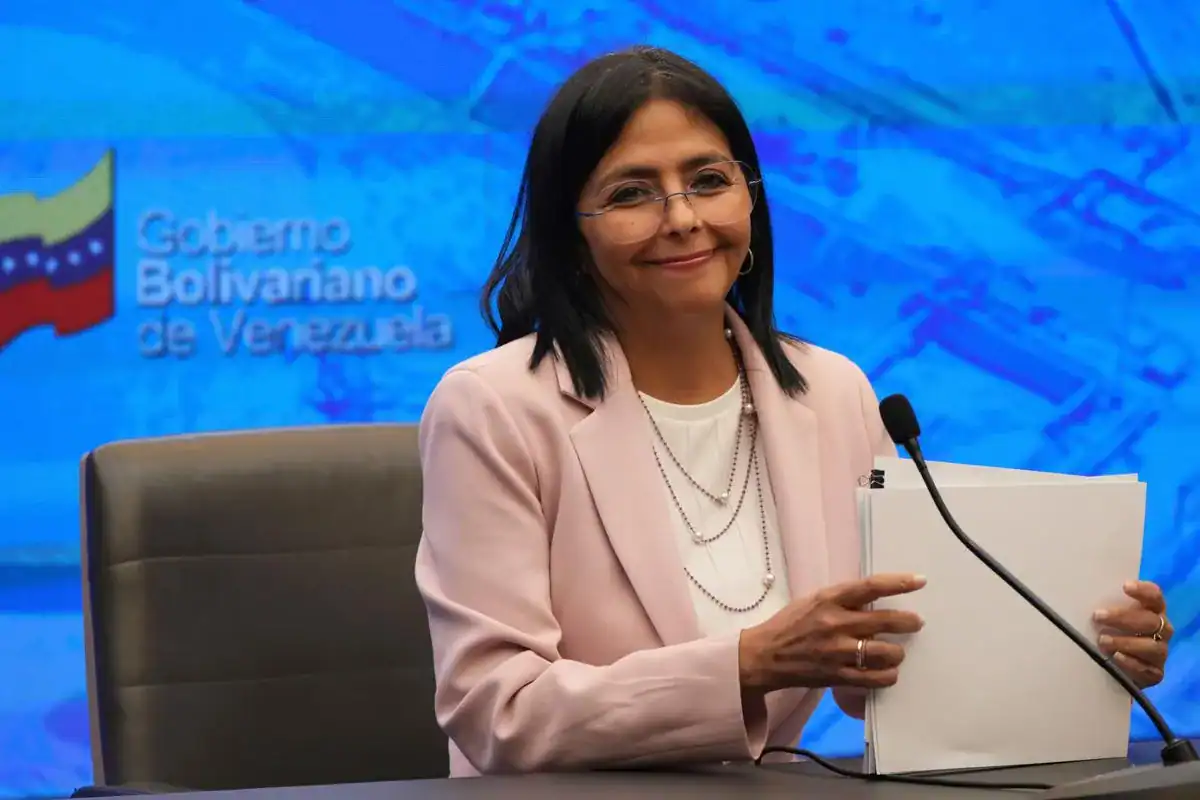
—The report. The Associated Press reported on Wednesday that the Trump administration quietly told federal prosecutors in Miami to avoid pursuing criminal investigations into Venezuela’s acting president, Delcy Rodríguez.
—The DOJ position. A Justice Department spokesperson told the AP, on the record, “there was never an investigation into her to shut down.”
—The Tampa backstory. Two former officials told the AP that Rodríguez had also surfaced in meetings with investigators in Tampa tasked last year by former attorney general Pam Bondi with financial-crimes work on Venezuela.
—The parallel. The AP also reported similar pauses on probes involving Colombian president Gustavo Petro, after a New York Times report in March that US officials had assured Bogotá he did not face charges.
—Latin American impact. US prosecutorial choices now sit alongside oil-license decisions as instruments shaping access to Venezuelan crude and broader hemispheric realignment.
A US Venezuela prosecutorial warming is now visible on the record. The Associated Press reported on Wednesday that federal prosecutors in Miami were told to stand down on Delcy Rodríguez, even as the Justice Department denies any investigation existed to halt.
What the AP reported and what the DOJ denies
According to the Associated Press, current and former law-enforcement officials said the directive went out from Washington to federal prosecutors in Miami earlier this year. “Everybody has been told to stand down,” one former official told the wire service. The officials spoke on condition of anonymity because they were not authorized to discuss internal deliberations.
The Justice Department’s response to the AP was direct. A spokesperson stated by email that “there was never an investigation into her to shut down,” challenging the premise of the reporting. The White House deferred comment to Justice, the AP wrote.
The AP framed the directive as designed to avoid disrupting US efforts to stabilize Venezuela after the January capture of Nicolás Maduro. Rodríguez has not been criminally charged in the United States. Her lawyer and Venezuela’s Communications Ministry did not respond to AP’s requests for comment.
The Tampa probe and a US Venezuela prosecutorial warming pattern
Two former officials told the AP that Rodríguez had also come up in meetings with investigators in Tampa. The Tampa team was tasked last year by former attorney general Pam Bondi with examining financial crimes connected to Venezuela. At the time of the Tampa work, Rodríguez was serving as Maduro’s vice president.
The AP noted that Justice Department policy requires the attorney general to personally approve any criminal charge against a sitting foreign head of state, who enjoys customary immunity under international and US law. That structural protection narrows the universe of possible cases on a different track from the Miami directive.
The AP also reported on similar pauses involving Colombian president Gustavo Petro. The New York Times reported in March that US officials had assured Bogotá that Petro did not face charges in cases that had been months in development. Both stories are AP-anchored and have not been independently confirmed by US officials on the record.
How oil access sits next to the prosecutorial question
On February 13, 2026, the Treasury’s Office of Foreign Assets Control, OFAC, issued general licenses authorizing Chevron, BP, Shell, Eni and Repsol to resume oil and gas operations with PDVSA. A parallel license allowed other firms to negotiate new investment contracts, subject to later approvals. Payments flow through a US-controlled foreign government deposit fund under Executive Order 14373.
In recent months Caracas has hosted US Energy Secretary Chris Wright and Interior Secretary Doug Burgum, according to AP reporting. President Trump praised Rodríguez on social media in early March, saying she was “doing a great job” and that “the Oil is beginning to flow.” The administration has not publicly linked any prosecutorial decision to those visits.
In a related and separate development this week, Rodríguez announced from Anzoátegui that more foreign oil firms will arrive in Venezuela “in the next few weeks,” speaking on state TV channel VTV. The acting president provided no specific names or timelines, leaving the operational picture dependent on contract flow rather than statements.
Critics and defenders on the record
Duncan Levin, a former federal prosecutor cited by the AP, said it would be “deeply troubling” for law enforcement to be told to stand down for political or transactional reasons. “The White House cannot use criminal enforcement as a diplomatic light switch,” Levin told the wire service.
Rick de la Torre, a former CIA chief of station in Caracas now leading consulting firm Tower Strategy, framed the policy as expedient. He told the AP that the United States is “providing her with breathing space and carrots to lay the foundation for democracy and US investment,” while adding that “at some point she will face justice.”
Opposition leader María Corina Machado, who met Trump at the White House this month according to AP, said the United States has sufficient information about Rodríguez. “Her profile is quite clear,” Machado said in remarks reported by the wire service. The exchange highlights a divide between US executive-branch dealmaking and longstanding allies of Venezuelan democracy advocacy.
What the US Venezuela prosecutorial warming changes for the region
For Latin American capitals, the AP reporting is a signal about how the current US administration sequences carrots and sticks. Sanctions relief and prosecutorial discretion are now visibly arriving together. The Petro parallel suggests this is a pattern rather than a one-off.
For energy markets, the diplomatic and prosecutorial sequencing matters because it lowers perceived counterparty risk for firms negotiating new Venezuela contracts. Five majors already hold OFAC general licenses. Others remain in negotiation, including some named in regional reporting around ExxonMobil and ConocoPhillips.
For Brazil and the Andean economies, the practical consequence is a possible step-up in Venezuelan crude exports, with knock-on effects for heavy-grade pricing and Caribbean shipping. None of that fires automatically. Each new contract still requires its own OFAC and PDVSA approvals.
Connected Coverage
For the parallel oil announcement, read our coverage of Venezuela’s oil investment surge and the Rodríguez statement from Anzoátegui. For broader hemispheric policy context, see our piece on US cartel pressure and Mexico’s sovereignty stance. For regional market reaction, see Morgan Stanley’s Latin American currency outlook.
The Rio Times — Latin American financial news — riotimesonline.com
This article was produced by The Rio Times’ automated newsroom system. How we use AI · Report an error · Editorial responsibility: Matthias Camenzind, Editor-in-Chief
Frequently Asked Questions
Has Delcy Rodríguez been charged with a crime in the United States?
No. The AP reports she has never been criminally charged in the United States, even though several other senior Venezuelan officials have been. The Justice Department has stated on the record that no investigation existed to shut down.
What does it mean that the DOJ denied an investigation existed?
The Justice Department’s email statement to the AP was unequivocal. The wire service’s reporting relies on current and former officials describing the directive to prosecutors. The two accounts are in direct tension, and readers should weigh both.
Is the Petro parallel comparable?
The cases differ in their underlying allegations and political contexts. They share a pattern in which the AP and the New York Times have reported federal investigations being eased as US bilateral relations warm. Neither government has confirmed those reports on the record.
Does sanctions relief require the DOJ to drop investigations?
No. OFAC general licenses and DOJ prosecutorial decisions are administratively separate. The licensing changes announced February 13 stand on their own legal footing regardless of any prosecutorial directive.
What should Latin American businesses watch next?
The signals to watch are contract announcements from majors negotiating new Venezuela work, any further public statements from named US officials, and whether other Latin American governments draw similar policy implications from the AP reporting.