Venezuela’s Oil Exports to the US Hit a Seven-Year High
Energy: Venezuela
Key Facts
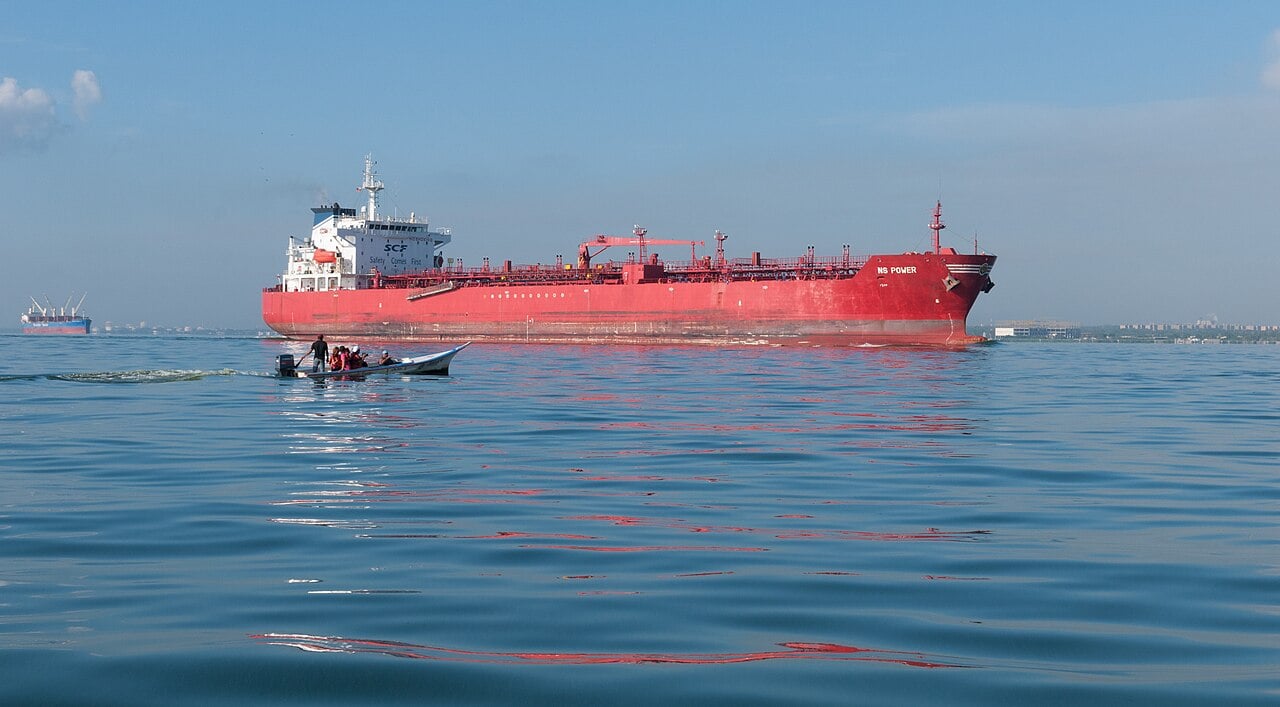
—Record flow. Venezuela shipped about 786,000 barrels per day to the United States in July 2026 — the most since early 2019 — out of total exports of 1.16 million b/d, ship-tracking data reported by Reuters show.
—Production back. Crude output reached 1.12 million b/d in July, up from a 941,000 b/d average in 2025, according to OPEC secondary-source data cited by fDi Intelligence on August 19.
—Chevron expands. Chevron’s Venezuelan joint ventures grew production 15% in six months to 280,000 b/d, and the company targets up to 50% more by end-2028, its CFO said July 31.
—Sanctions unwound. Since Executive Order 14373 of January 9, OFAC general licenses have reopened Venezuelan oil, gas, petrochemicals, electricity and logistics to US business; the US embassy in Caracas formally reopened on March 30 after seven years closed.
—The catch. Revenues from Venezuelan crude are deposited into a US Treasury account, with no transparency over how much flows back to Caracas.
Seven months after US forces captured Nicolás Maduro, Venezuela’s oil industry has flipped from blockade to boom — a recovery whose barrels now flow overwhelmingly to American refineries, and whose dollars flow first through Washington.
From Blockade to Record Flows in Seven Months
The turn was abrupt. US forces captured Maduro and his wife Cilia Flores in Caracas on January 3, 2026, after a naval blockade that had piled Venezuelan crude into tanks and idled tankers.
A January supply pact with interim president Delcy Rodríguez then reopened the channels: US-bound shipments went from 284,000 b/d in January to roughly 786,000 b/d in July, according to shipping data reported by Reuters on August 4.
Overall exports peaked at 1.24 million b/d in May as stored crude drained, then eased to 1.16 million in July — a sign that exports are converging on real production capacity. The four-week average of US imports hit 630,000 b/d in late July, the highest since September 2017, Energy Information Administration figures cited by fDi Intelligence show.
India took just 178,000 b/d in July, down from 277,000, and China — formerly the biggest buyer of Venezuelan crude — is being displaced as cargoes redirect to the US.
Who Is Investing, and on What Terms
Chevron is the anchor: production at its three PDVSA joint ventures rose 15% over six months to 280,000 b/d, and CFO Eimear Bonner told analysts on July 31 the company loves the assets and sees up to 50% growth by end-2028. Around it, the reopening widens: Shell signed five preliminary agreements in June, and on August 13 BP, the UAE’s Adnoc and Qatar’s UCC Holding received a license for the offshore Loran gas field.
The legal ground shifted with it. The interim government issued new hydrocarbons regulations on July 7, and Washington’s OFAC has issued general licenses covering oil, gas, petrochemicals, electricity and logistics under Executive Order 14373 — a phased reopening that K&L Gates, in an April 7 analysis, says now lets US companies weigh market entry, though non-US firms face a narrower path.
Where the Money Actually Goes
Here is the part of the recovery that does not appear in export charts: under current arrangements, revenue from Venezuelan crude sales is deposited into a US Treasury account, and neither side publishes how much reaches Caracas. US imports from Venezuela totaled US$4.7 billion in the second quarter of 2026 — the most since late 2015, Census Bureau data show — while economists quoted by fDi call statistical transparency part of the re-institutionalization Venezuela still owes.
That opacity, plus earthquake damage in June and open political questions, is why the other oil giants beyond Chevron are still watching from the shore — and why independents and traders are capturing the first wave.
What Comes Next
Watch three dials: whether production holds above 1.1 million b/d now that inventories are drained; whether the July 7 regulations produce the first new signed oil agreements; and whether the Treasury account arrangement survives contact with Venezuela’s reconstruction bills. For a country that pumped over 3 million b/d at its peak, the recovery has barely reached a third of history — but it has already redrawn the Atlantic crude map.
Frequently Asked Questions
How much oil does Venezuela produce in 2026?
Venezuela produced 1.12 million barrels per day in July 2026, up from an average of 941,000 b/d in 2025, according to OPEC secondary-source data. Exports reached 1.16 million b/d in July, of which about 786,000 b/d went to the United States.
Can US companies do business in Venezuela now?
Largely yes, under OFAC general licenses issued since Executive Order 14373 of January 9, 2026. The licenses cover oil, gas, petrochemicals, electricity, logistics and dealings with PDVSA, though conditions and exclusions remain, and sanctions lawyers advise case-by-case analysis.
Who governs Venezuela after Maduro’s capture?
An interim government led by former vice president Delcy Rodríguez has ruled since January 2026. Maduro and his wife were taken to the US to face drug-trafficking charges, and oil export revenues are channeled through a US Treasury account under the January supply pact.
Sources
fDi Intelligence (August 19, 2026) · Reuters via Baird Maritime (August 4, 2026) · K&L Gates (April 7, 2026) · US Treasury OFAC — Venezuela-Related Sanctions
Connected Coverage
Every turn of Venezuela’s post-Maduro transformation — oil, money and power — in our dedicated hub.
Sources: fDi Intelligence; Reuters; K&L Gates; US Treasury OFAC.
This article was produced by The Rio Times’ automated newsroom system. How we use AI · Report an error · Editorial responsibility: Matthias Camenzind, Editor-in-Chief