Reports Put 17 Venezuela Oil Fields on the Table in US Talks
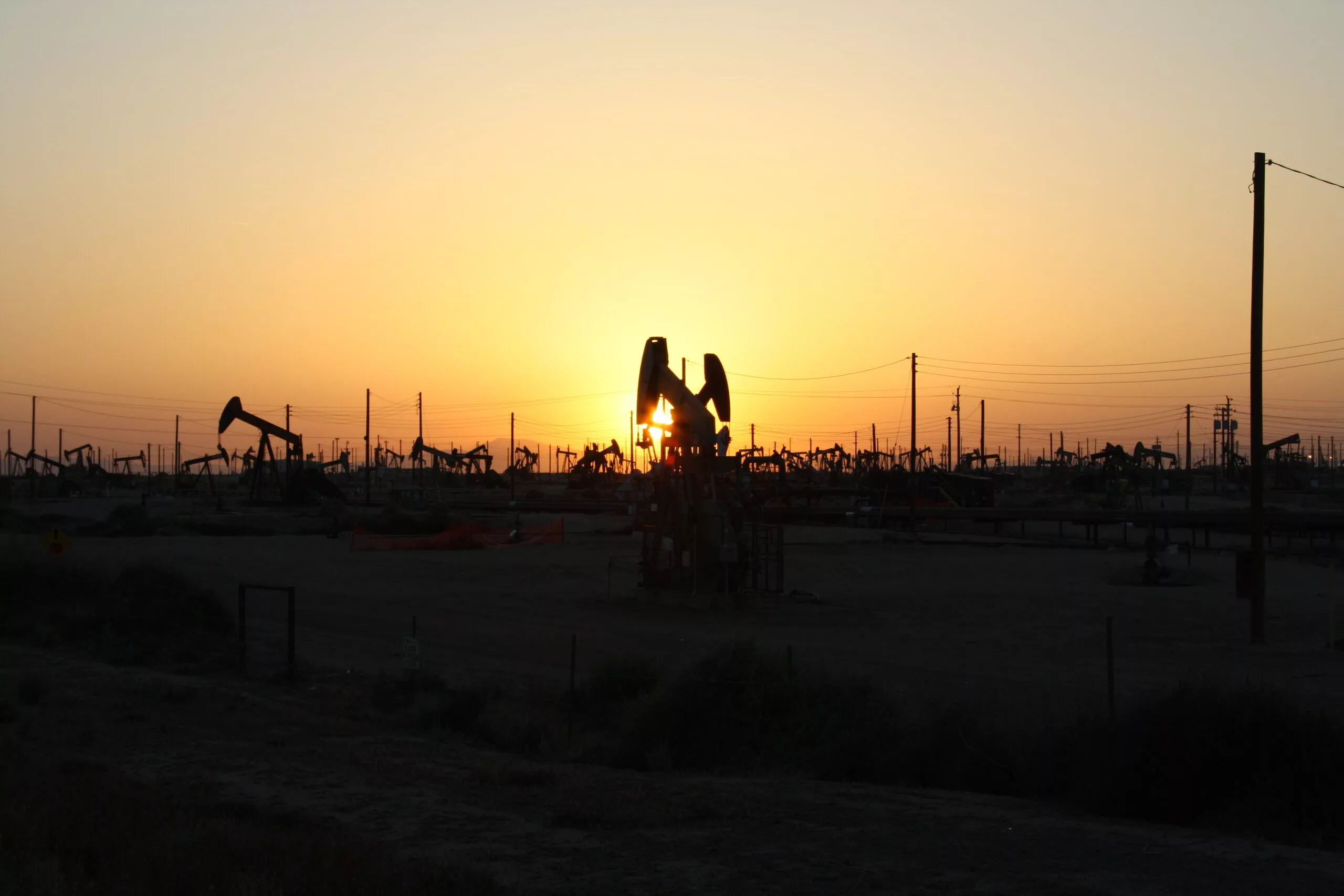
Venezuela · OIL
Key Facts
- —Reports Axios, Bloomberg and Reuters all described the talks on 27 August 2026.
- —Scale Reuters says it saw a list of 17 Venezuela oil fields.
- —Term Bloomberg reported a possible 100-year lease, a length Venezuelan law does not provide.
- —Law The reformed hydrocarbons law caps mixed companies at 25 years plus 15.
- —Output Venezuela pumped about 1.25 million barrels per day in August 2026.
Three United States outlets described the same negotiation on one day, all of them citing unnamed sources.
Washington is reported to be negotiating long-term access to a group of Venezuela oil fields. Three separate United States outlets described the talks on 27 August 2026, all citing unnamed sources.
What the reports actually say
Axios published the first account on 27 August 2026, written by Marc Caputo. It cited two unnamed United States officials and no named source.
Bloomberg followed the same day with reporting by Fabiola Zerpa and Mie Dahl. Their story rested on people familiar with the private discussions who declined to be identified.
Reuters published late on 27 August, reported by Marianna Parraga in Houston and Jarrett Renshaw in Washington. It quoted one source saying the matter was real and discussed at the highest levels.
No outlet named a single source, and no document has been published. That gap is the most important fact about the Venezuela oil fields story.
The 17 fields that nobody outside the talks has seen
Reuters said it had seen a list of 17 fields under negotiation. The news agency did not publish the list, and no field names have appeared.
The list mixes green fields in the Orinoco Belt with mature acreage in Lake Maracaibo. Green fields are undeveloped areas that have never been brought into production.
Some of the acreage is run by a small Chinese firm under a contract signed during the Maduro years. Reuters gave no production figures for the 17 Venezuela oil fields.
Axios put the number differently, describing more than a dozen productive fields. Its source said those fields hold about 90 billion barrels of proven reserves.
Where the 100-year figure comes from
Only Bloomberg reported the 100-year term, and it attributed that detail to some of its sources. Reuters and Axios did not mention any lease length at all.
Bloomberg described the idea as one arrangement that has been discussed, not as agreed terms. It added that the talks are ongoing and the terms could still change.
Reuters reported a different legal route, saying a lease was under consideration as the model. Each field would then be allocated to United States producers through an auction or tender.
The two descriptions are compatible but not identical, and neither has been documented publicly. Nothing in the reporting suggests a signed agreement over the Venezuela oil fields.
What the constitution says about the subsoil
Article 12 of Venezuela’s constitution says hydrocarbon deposits belong to the Republic. It calls them public domain goods that are inalienable and cannot be lost through time.
Article 302 reserves the petroleum activity to the state through an organic law. Article 303 keeps every share of state oil company Petróleos de Venezuela, known as PDVSA, in state hands.
Article 13 goes further, saying national territory may never be ceded, transferred or leased to foreign states. That wording sits awkwardly beside a lease held by another government.
The constitution has not been amended since these reports appeared. Any lease running a century would therefore need a constitutional route that does not yet exist.
The reformed hydrocarbons law caps terms at 40 years
Venezuela reformed its Ley Orgánica de Hidrocarburos, the organic hydrocarbons law, in January 2026. The text appeared in Gaceta Oficial 6.978 Extraordinario, dated 29 January 2026.
Its article 23 lets primary activities run through the state, through mixed companies, or through private operators under contract. Mixed companies require the state to hold more than 50 percent of the share capital.
Article 35 caps a mixed company at 25 years, extendable once by no more than 15 years. That is a maximum of 40 years, well under half the reported century.
The reformed law contains no acreage lease of the kind described for the Venezuela oil fields. Reuters made the same point, noting current regulation does not include such leases.
Neither government has confirmed anything
The White House declined to comment to Bloomberg and referred Reuters to the Energy Department. The Energy Department did not reply to Reuters before publication.
Venezuela’s oil ministry and PDVSA did not answer requests for comment either. Oil minister Paula Henao could not be reached, Reuters said.
The Information Ministry in Caracas did not respond to Bloomberg on the day of publication. No statement has come from the presidency, the State Department or the Treasury.
Readers should treat the Venezuela oil fields talks as reported, not as settled policy. Nothing described here has been signed, published or officially acknowledged.
Which companies are actually working in the country
No company has been publicly named as a party to the list of 17 fields. The reports describe United States producers only in general terms.
Chevron and Shell were reported in April 2026 to be close to signing agreements for oil and gas areas. Those reports also rested on unnamed sources.
Repsol confirmed on its own website that it signed a memorandum of understanding on 17 June 2026. The document covers the Horcón area southeast of Lake Maracaibo, between the Barúa and Motatán fields.
Hunt Oil and SLB, the Houston oilfield services group once called Schlumberger, announced contracts on 19 August 2026. No public document links any of these firms to the reported lease plan.
The numbers, and why specialists urge caution
The Organization of the Petroleum Exporting Countries puts Venezuela’s proven crude reserves at 303 billion barrels. That is the largest total in the world, and the figure dates from 2023.
Output is a different story, with production around 1.25 million barrels per day in August 2026. Barrels per day, or bpd, is the standard measure of oil output.
Francisco Monaldi of Rice University said in January 2026 that returning to peak output would need about US$100 billion. He directs the university’s Latin America Energy Program in Houston.
Monaldi put it plainly on 20 August 2026: “We have to wait and see if companies actually deploy their resources”. He has also warned that investors were burned repeatedly by contract changes.
The United States motive is supply, with its Strategic Petroleum Reserve holding about 290 million barrels. Reuters put that at roughly 41 percent of total capacity.
Frequently Asked Questions
Has any government confirmed the reported talks?
No government has confirmed them. The White House declined to comment, and Venezuela’s oil ministry did not reply to Reuters.
Would a 100-year lease be legal under Venezuelan law?
Nothing in the reformed hydrocarbons law provides for it. Mixed companies are capped at 25 years plus a single extension of 15 years.
Which fields are involved?
The list has not been published. Reuters said it saw 17 fields spanning the Orinoco Belt and Lake Maracaibo.
Connected Coverage
Venezuela Ranks Second in US Crude Oil Imports for 18 Straight Weeks
Sources
- www.axios.com
- www.bnnbloomberg.ca
- finance.yahoo.com
- www.gacetaoficial.gob.ve
- pdba.georgetown.edu
- www.repsol.com
- www.bnnbloomberg.ca
- www.npr.org
- www.pbs.org
- www.opec.org
- www.riotimesonline.com
- www.riotimesonline.com
- www.riotimesonline.com
This article was produced by The Rio Times’ automated newsroom system. How we use AI · Report an error · Editorial responsibility: Matthias Camenzind, Editor-in-Chief