US and Iran Trade Direct Attacks as the Strait of Hormuz Empties Again — What Latin America Pays
LATIN AMERICA · GEOPOLITICS
Key Facts
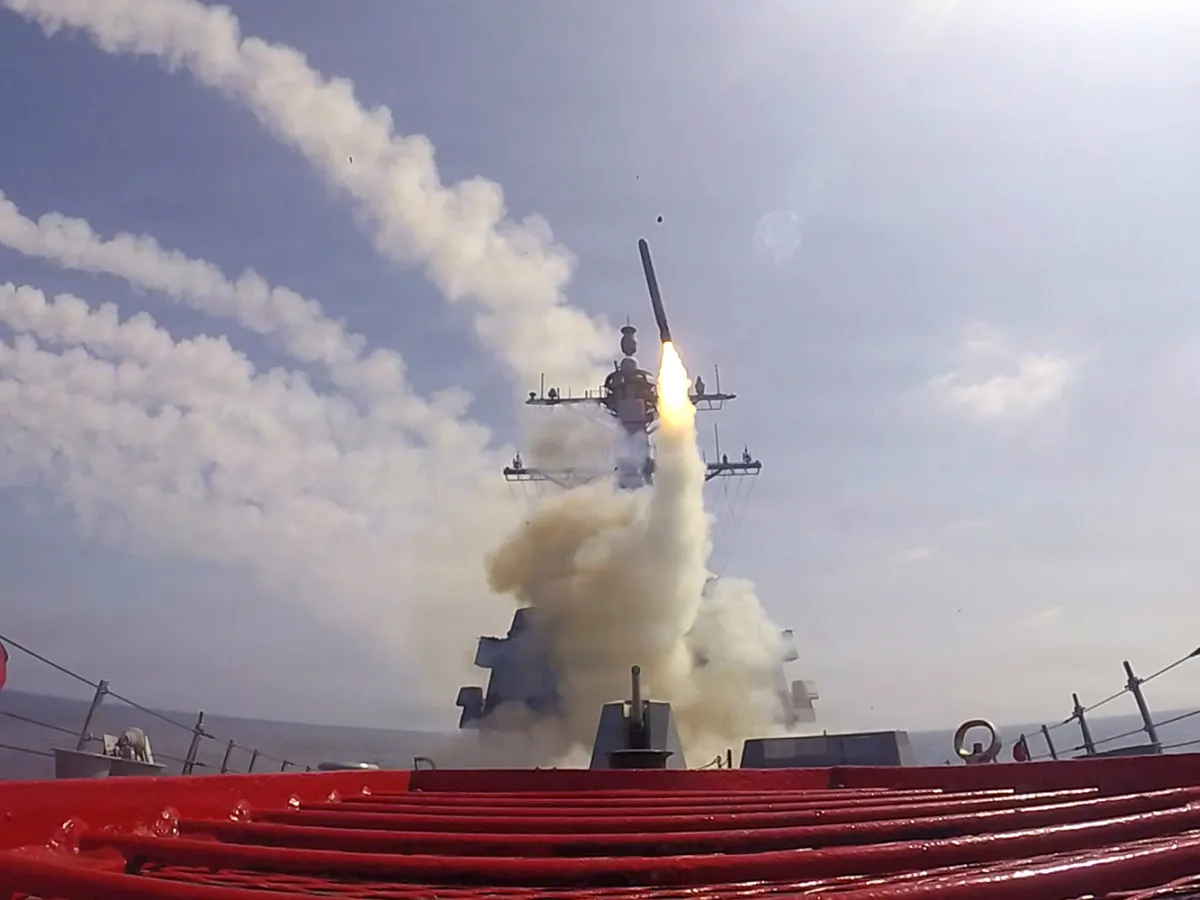
What happened: US forces struck two Iranian missile launchers on Larak Island on Sunday, and Iran answered with ballistic missiles at US bases in Jordan.
How big the escalation: These were the first direct US strikes on Iran since late July, ending five weeks of uneasy calm.
What it means: The Strait of Hormuz is emptying again, with about five daily transits against roughly 130 before the war.
The catch: Washington says the strait is open and cleared of mines, but shipowners are voting with their hulls.
Who pays first: Fuel importers like Chile, Peru and Central America face higher bills, while Brazil and Guyana earn more.
What comes next: Iran’s Revolutionary Guards promised “response and punishment”, and Brent crude opened the week near US$90 a barrel.
The United States and Iran exchanged direct attacks on Sunday for the first time in a month, around a Strait of Hormuz that is closing in practice even as Washington insists it is open. Oil opened the week higher, and Latin America feels both edges of that price.
The first direct US strikes in a month
The United States struck Iran on Sunday 30 August for the first time since late July. US Central Command confirmed its forces hit two Iranian launchers on Larak Island, a small island inside the Strait of Hormuz.
A Central Command spokesman, Navy Captain Tim Hawkins, said Revolutionary Guard forces were seen preparing to launch rockets carrying sea mines into the strait. Iran’s semi-official Tasnim news agency said the strike was carried out by drones.
The Islamic Revolutionary Guard Corps, Iran’s ideological army, said the attack killed and wounded several soldiers and civilians. The BBC reported two dead and two injured, though no independent toll exists.
Only days earlier President Donald Trump had said all Iranian mines were cleared from international shipping lanes. He warned that any vessel laying new mines would be destroyed.
Sunday’s strike is Washington’s answer to what it called a fresh mine-laying attempt. It breaks a pause that had held, more or less, since the last US strikes in late July.
Iran’s answer came over Jordan
Hours later the Revolutionary Guards said they had fired ballistic missiles and drones at two US air bases in Jordan. The targets were the King Hussein and Al-Azraq bases, the latter also known as Muwaffaq Salti.
The Guards claimed heavy damage to maintenance areas and fighter-jet hangars. There was no independent confirmation of that claim.
Jordan’s armed forces said they intercepted eight missiles over the kingdom, after explosions were heard near Aqaba. A US source told Fox News that nearly all incoming missiles were intercepted, with no significant impact.
An IRGC spokesman called the US strike a “strategic and fatal error”. He said America would pay “in both the economic and military arenas”, and promised a stronger answer to any further attack.
Live Market IntelligenceCommodities — Live Market Board
Rio Times · Live Market Intelligence
Commodities — Live Market Board
-0.03%
| Instrument | Last | Change | YoY | Prev. | High | Low | Volume |
|---|---|---|---|---|---|---|---|
| GOLD | 4,461 | +1.78% | +33.20% | 4,383 | 4,503 | 4,421 | 139,824 |
| SILVER | 65.59 | +1.26% | +73.05% | 64.77 | 66.98 | 64.81 | 46,406 |
| BRENT | 88.88 | -0.03% | +34.42% | 88.91 | 90.07 | 88.12 | 29,713 |
| WTI | 83.11 | -0.11% | +31.57% | 83.20 | 84.35 | 82.40 | 166,848 |
| COPPER | 6.61 | +0.03% | +46.70% | 6.61 | 6.71 | 6.61 | 39,543 |
| LITHIUM | 75.20 | +1.47% | +62.95% | 74.11 | 75.80 | 75.08 | 89,275 |
| IRON ORE | 161.91 | — | +58.10% | 161.91 | 161.91 | 1 | |
| SOY | 1,184 | +3.20% | +17.05% | 1,148 | 1,199 | 1,168 | 163,179 |
| CORN | 480.50 | +10.02% | +29.34% | 436.75 | 480.75 | 459.50 | 341,248 |
| WHEAT | 655.00 | +3.93% | +29.70% | 630.25 | 657.75 | 631.50 | 128,793 |
| COFFEE | 317.25 | -5.51% | +0.67% | 335.75 | 321.20 | 313.55 | 21,747 |
| SUGAR | 16.43 | -1.79% | -3.01% | 16.73 | 17.11 | 16.22 | 171,992 |
| COCOA | 5,719 | +3.18% | -34.96% | 5,543 | 5,779 | 5,574 | 26,773 |
| ORANGE JUICE | 138.55 | -0.47% | -45.38% | 139.20 | 141.05 | 137.50 | 703 |
| COTTON | 85.03 | +2.33% | +26.78% | 83.09 | 82.90 | 81.96 | 16,546 |
| BEEF | 223.60 | -3.93% | -5.18% | 232.75 | 226.40 | 223.00 | 16,126 |
| CATTLE | 339.10 | -3.16% | -1.82% | 350.17 | 345.50 | 338.60 | 10,164 |
| USD/BRL | 5.16 | +0.01% | -5.13% | 5.16 | 5.18 | 5.14 | — |
A strait that is closing without being closed
Before this war began on 28 February, the Strait of Hormuz carried about a fifth of the world’s oil and liquefied natural gas. That meant roughly 130 vessel transits a day.
Today the flow is a trickle. Shipping monitors counted only about five transits on the worst recent days, and ship operators have cut sailings on their own.
The US Energy Information Administration estimates 4.9 million barrels a day moved through the strait in the second quarter. Before the conflict the figure was 21.6 million barrels a day.
Britain’s maritime agency, UK Maritime Trade Operations, reported a tanker struck by an uncrewed aerial vehicle during an outbound transit. A formal closure has never been declared, which is why insurers and captains, not diplomats, decide what “open” means.
The war is now six months old. An April ceasefire and a June memorandum of understanding have both unravelled, and the last framework expired on 17 August.
Oil opened higher, and Latin America pays both ways
Oil opened the week higher on the news. Brent crude rose 1.53 percent to US$89.45 a barrel in early Asian trading on Monday, after touching US$90.32.
West Texas Intermediate, the US benchmark, gained 1.40 percent to US$84.57. Abu Dhabi’s Murban grade jumped 4.04 percent to US$95.75.
For Latin America the arithmetic splits the region in two. Exporters such as Brazil, Guyana, Argentina, Colombia and Ecuador earn more for every barrel sold abroad.
Importers feel the opposite edge. Chile, Peru, Central America and the Caribbean buy most of their fuel abroad and will pay more for petrol, diesel and freight.
Costlier crude also feeds fertiliser and shipping-insurance bills for farm exporters like Brazil and Argentina. That reaches food prices in places that never see a tanker.
Mexico sits between the two groups. It produces crude but imports most of its petrol, so dearer fuel raises the cost of keeping pump prices stable.
What to watch from here
The first test is whether Iran’s promised punishment stops at Jordan or reaches shipping again. Another tanker hit would push transits even lower.
The second is the traffic count itself. If daily transits stay near five, the open strait Washington describes remains a legal fact and a commercial fiction.
The third is Washington’s plan to refill the US Strategic Petroleum Reserve with Venezuelan crude. That could cushion prices later, but no timetable has been published.
More: Latin America news in English, every day from The Rio Times.
Frequently Asked Questions
What happened between the US and Iran on 30 August 2026?
US forces struck two Iranian launchers on Larak Island in the Strait of Hormuz, the first American strikes on Iran since late July. Iran’s Revolutionary Guards answered with ballistic missiles aimed at two US air bases in Jordan.
Why did the US strike Larak Island?
US Central Command said Revolutionary Guard forces were preparing to launch rockets carrying sea mines into the Strait of Hormuz. President Trump had warned days earlier that any vessel laying new mines would be destroyed.
Is the Strait of Hormuz closed?
Not formally. Washington says the waterway is open and cleared of mines, but shipping monitors counted only about five daily transits recently, against roughly 130 before the war.
What happened to oil prices on Monday?
Brent crude rose 1.53 percent to US$89.45 a barrel in early Asian trading on 31 August, after touching US$90.32. West Texas Intermediate gained 1.40 percent to US$84.57.
What does this mean for Latin America?
Oil exporters like Brazil, Guyana and Colombia earn more per barrel, while importers such as Chile, Peru and Central America pay more for fuel. Higher crude also lifts fertiliser, freight and insurance costs across the region.
Sources
Reuters, USA Today, Anadolu Agency, The Jerusalem Post, Gulf News and OilPrice market data, the US Energy Information Administration, and UK Maritime Trade Operations.
Connected Coverage
We mapped the reopened waterway on 28 August in the Strait of Hormuz is open again, and Latin America feels it and tracked the currency fallout in what Hormuz means for Latin American currencies. The reserve plan mentioned above runs through the US–Venezuela oil deal, explained.
This article was produced by The Rio Times’ automated newsroom system. How we use AI · Report an error · Editorial responsibility: Matthias Camenzind, Editor-in-Chief