Strait of Hormuz Declared Open After US Mine-Clearing: What It Means for Latin America
GLOBAL BACKDROP · ENERGY & FREIGHT
Key Facts
—What happened: US Central Command said on 27 August it cleared all Iranian mines from the Strait of Hormuz shipping lanes.
—How big the job: Underwater drones found over 100 suspected mines in recent months, and private contractors disposed of them.
—Iran’s answer: Tehran agreed with Oman on a shipping corridor, but only if Washington meets conditions it has not published.
—The catch: Ship traffic through the strait is still just 5 to 15 percent of normal, according to tracking services.
—What oil costs: Brent crude touched US$93.01 on Thursday, a five-week high, before easing toward US$90 on Friday.
—What comes next: Iran wants frozen funds released and the US port blockade lifted before normal shipping resumes.
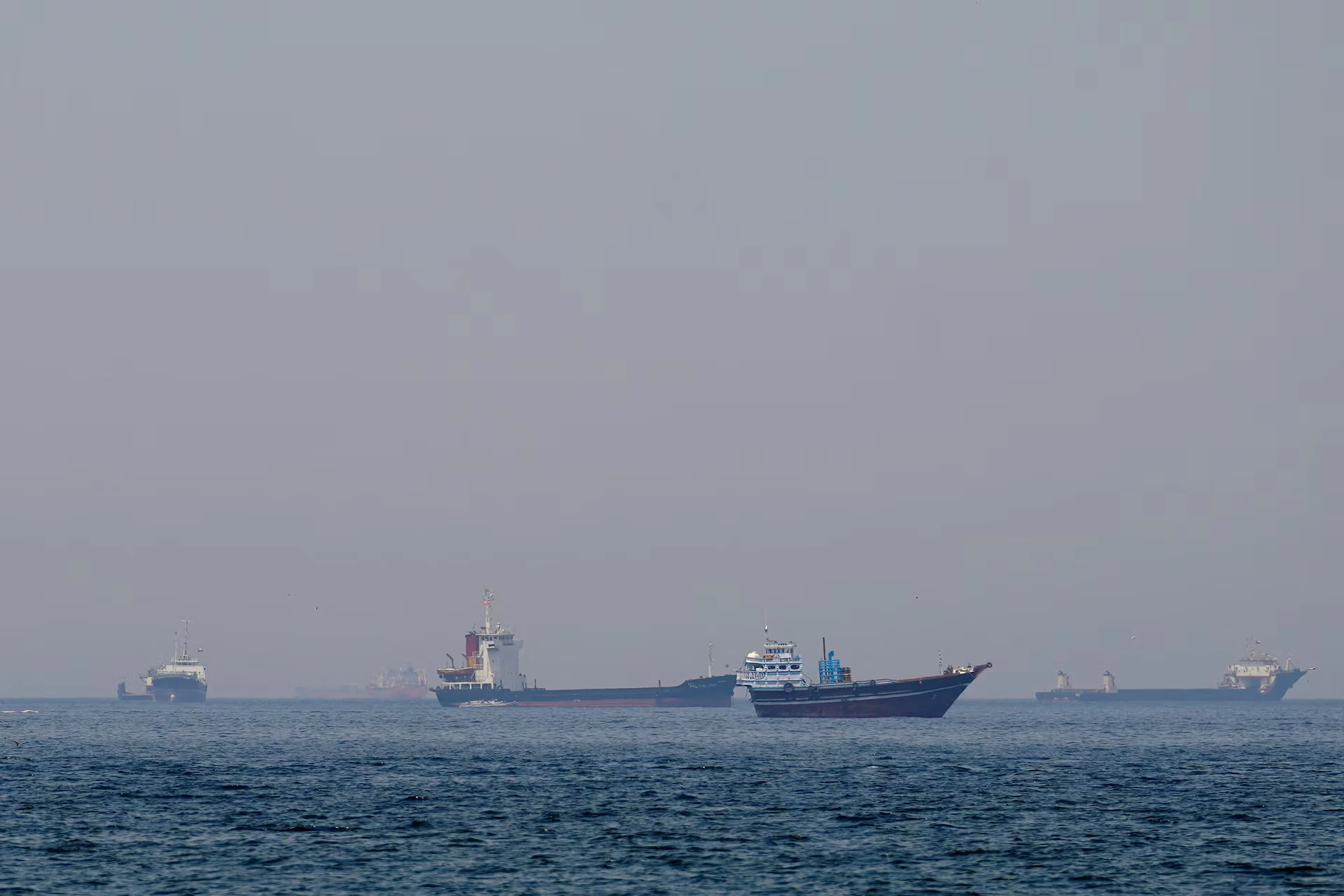
The United States declared the Strait of Hormuz free of Iranian sea mines on Thursday 27 August 2026, after a mine-clearing operation lasting months. For Latin America, the stakes are concrete: cheaper oil, cheaper freight and, eventually, cheaper fertilizer.
What Washington announced on Thursday
Admiral Brad Cooper, the commander of US Central Command, posted a video statement on Thursday evening. He called the clearance of the strait’s international shipping lanes a “major milestone”.
Cooper said American forces had removed sea mines laid months ago by Iran’s Islamic Revolutionary Guard Corps. That is the elite branch of Iran’s military that enforced the closure.
US officials had confirmed the essential claim two days earlier. They said underwater drones had identified more than 100 suspected mines in recent months.
Private contractors then disposed of the devices, the officials said. President Donald Trump warned that American forces would destroy any Iranian vessel caught laying new mines.
Iran sets its price for reopening
Tehran did not simply accept the American announcement. It set out terms of its own.
Mohsen Rezaei, secretary of Iran’s Supreme National Security Council, said Iran had agreed with Oman on a shipping corridor. Ships would use a designated central channel, but only if Washington met Iran’s conditions.
Oman matters here because it owns the southern shore of the waterway. The main shipping channels run between Iranian and Omani territorial waters.
Among Iran’s demands is the release of Iranian funds frozen overseas. Rezaei named that condition publicly this week.
Qatar’s prime minister pressed the case in person on Thursday. He met senior Iranian leaders in Tehran and urged respect for freedom of navigation under international law.
Tehran then agreed to draw up a formal list of conditions for restoring normal traffic. That list had not been published by Friday.
Live Market IntelligenceCommodities — Live Market Board
Rio Times · Live Market Intelligence
Commodities — Live Market Board
-0.03%
| Instrument | Last | Change | YoY | Prev. | High | Low | Volume |
|---|---|---|---|---|---|---|---|
| GOLD | 4,461 | +1.78% | +33.20% | 4,383 | 4,503 | 4,421 | 139,824 |
| SILVER | 65.59 | +1.26% | +73.05% | 64.77 | 66.98 | 64.81 | 46,406 |
| BRENT | 88.88 | -0.03% | +34.42% | 88.91 | 90.07 | 88.12 | 29,713 |
| WTI | 83.11 | -0.11% | +31.57% | 83.20 | 84.35 | 82.40 | 166,848 |
| COPPER | 6.61 | +0.03% | +46.70% | 6.61 | 6.71 | 6.61 | 39,543 |
| LITHIUM | 75.20 | +1.47% | +62.95% | 74.11 | 75.80 | 75.08 | 89,275 |
| IRON ORE | 161.91 | — | +58.10% | 161.91 | 161.91 | 1 | |
| SOY | 1,184 | +3.20% | +17.05% | 1,148 | 1,199 | 1,168 | 163,179 |
| CORN | 480.50 | +10.02% | +29.34% | 436.75 | 480.75 | 459.50 | 341,248 |
| WHEAT | 655.00 | +3.93% | +29.70% | 630.25 | 657.75 | 631.50 | 128,793 |
| COFFEE | 317.25 | -5.51% | +0.67% | 335.75 | 321.20 | 313.55 | 21,747 |
| SUGAR | 16.43 | -1.79% | -3.01% | 16.73 | 17.11 | 16.22 | 171,992 |
| COCOA | 5,719 | +3.18% | -34.96% | 5,543 | 5,779 | 5,574 | 26,773 |
| ORANGE JUICE | 138.55 | -0.47% | -45.38% | 139.20 | 141.05 | 137.50 | 703 |
| COTTON | 85.03 | +2.33% | +26.78% | 83.09 | 82.90 | 81.96 | 16,546 |
| BEEF | 223.60 | -3.93% | -5.18% | 232.75 | 226.40 | 223.00 | 16,126 |
| CATTLE | 339.10 | -3.16% | -1.82% | 350.17 | 345.50 | 338.60 | 10,164 |
| USD/BRL | 5.16 | +0.01% | -5.13% | 5.16 | 5.18 | 5.14 | — |
Oil at US$93, and then a sigh of relief
Markets spent the week trading every rumour out of the Gulf. Brent crude, the global benchmark, touched US$93.01 a barrel on Thursday.
That was its highest level since 24 July, and it capped a weekly gain of more than five percent. By Friday morning Brent had eased to around US$90.
US West Texas Intermediate, the American benchmark, traded near US$83. The gap reflects how much less exposed US supply is to the Gulf.
Some context shows how far prices have already come. Brent peaked at US$126 in March, weeks after Iran closed the Strait of Hormuz on 28 February.
Why a strait half a world away hits Latin America
The Strait of Hormuz carries about a fifth of the world’s traded oil in normal times, according to US energy data. When it closes, everyone’s bill rises.
The first channel is fuel. Most countries in the region import diesel or gasoline, and dearer crude reaches their pumps with a lag of weeks.
The second channel is fertilizer. Brazil, the region’s farming giant, imports about 85 percent of the fertilizer its soy and corn fields consume, according to industry estimates.
The closure disrupted fertilizer supply and lifted prices worldwide. A genuinely reopened waterway would ease one of the farm belt’s biggest costs.
The third channel is freight. War-risk insurance for Gulf shipping surged during the closure, and some cargo rerouted as far as the Panama Canal.
Latin America’s crude exporters face the flip side. Producers like Brazil, Guyana and Argentina earned a war premium for six months, and that premium is now deflating.
The catch — the waterway is not back to normal
Declared open is not the same as busy. Ship-tracking services estimate traffic through the strait at just 5 to 15 percent of normal volumes.
The toll of six months of conflict explains the caution. The UN’s International Maritime Organization has recorded 70 incidents that killed 19 seafarers.
There is also a political cliff edge. The US naval blockade of Iranian ports remains in place, and the financial pressure campaign is widening.
Treasury Secretary Scott Bessent opened that campaign on Monday. He warned countries to drop financial ties with Iran or risk being barred from the US dollar system.
What to watch from here
The immediate item is Iran’s written list of conditions. Whether Washington lifts its port blockade will decide if the Oman corridor ever carries cargo.
Energy forecasters are already pencilling in cheaper oil. The US Energy Information Administration sees Brent averaging about US$85 in the third quarter and US$78 in the fourth.
For Latin American budgets, farmers and freight buyers, that path would be welcome. It would also close the region’s most profitable oil quarter in years.
More: Brazil news, every day from The Rio Times.
Frequently Asked Questions
Did the United States really declare the Strait of Hormuz open?
Yes. Admiral Brad Cooper, head of US Central Command, said on 27 August 2026 that internationally recognized transit routes are free of Iranian sea mines.
What did Iran agree with Oman?
Iran’s security council secretary Mohsen Rezaei said both sides agreed on a shipping corridor through the strait. Ships would use a designated central channel if the US meets Iran’s conditions.
Why does this matter for Latin America?
The closure pushed oil, freight and fertilizer costs up worldwide. Brazil imports about 85 percent of its fertilizer, and dearer crude feeds directly into regional diesel and gasoline prices.
How much is oil now?
Brent crude hit US$93.01 a barrel on Thursday, its highest since 24 July. It eased to around US$90 on Friday morning.
Is shipping back to normal?
No. Ship-tracking services estimate traffic at just 5 to 15 percent of normal volumes. The UN’s maritime agency has recorded 70 incidents that killed 19 seafarers.
Connected Coverage
We tracked the market side of this story in Oil Slides as Iran-Oman Talks Fuel Hopes of Strait of Hormuz Reopening, measured the regional fallout in Oil Falls on Hormuz Freight Risk and explained the knock-on trade in Suez Canal Revenue Climbs 13% — Because Hormuz Is Shut.
Sources: US Central Command statement reported by The Hill; Axios and The Times of Israel on the mine clearance; Press Trust of India via HDFC Sky on the Iran-Oman corridor, Qatar’s mission and traffic estimates; Bloomberg on Brent prices; Yahoo Finance market data.
This article was produced by The Rio Times’ automated newsroom system. How we use AI · Report an error · Editorial responsibility: Matthias Camenzind, Editor-in-Chief