Uruguay Opens Residency Route as 30,000 Await Asylum

MIGRATION · URUGUAY
Key Facts
- —The country Uruguay, a stable South American democracy. Thousands of Cubans have arrived in recent years, many by land from Brazil, and claimed asylum.
- —Why it matters Thousands of migrants, mostly Cuban, have waited years for an answer on asylum. Without residency, they struggle to rent homes or take out loans.
- —Why now The decree, dated Thursday 8 October and posted on the presidency’s legal website, was reported on Sunday 11 October.
- —What happened A new permanent residency route covers foreigners who entered before 1 January 2026. They must drop an asylum claim or have had one finally rejected.
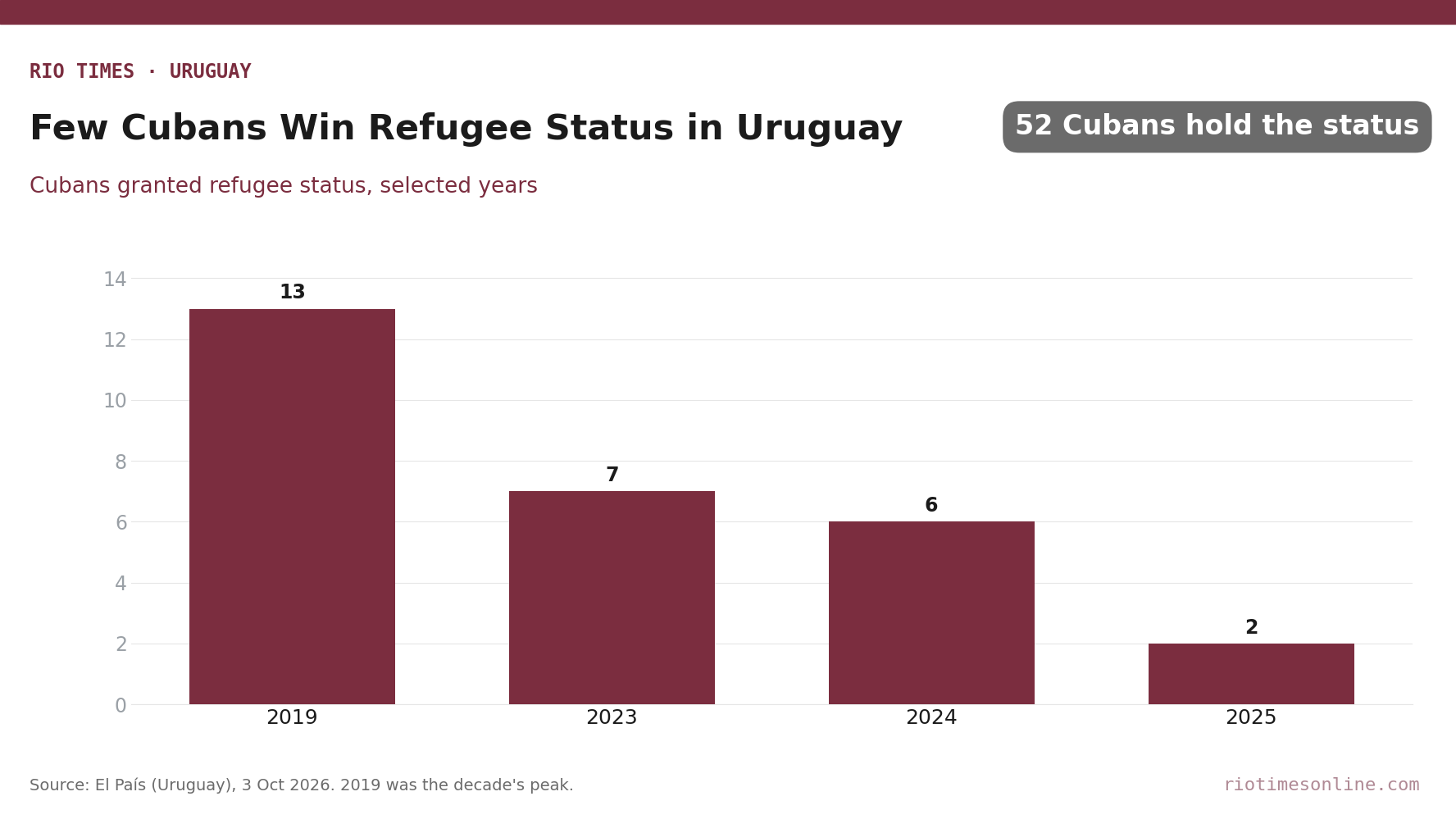
- —The numbers Nearly 30,000 refugee applications are pending, El País reported on 3 October. Only 52 Cubans in Uruguay hold refugee status.
- —What it means for you US families with relatives in Uruguay’s asylum queue gain a legal route for them. It starts 90 days after official publication.
- —Still open The publication date, how many people will apply, and whether the asylum backlog itself will be cleared.
Uruguay has opened a new Uruguay residency route for asylum seekers who have waited years for an answer, most of them Cuban. A decree dated Thursday 8 October lets foreigners who arrived before 1 January 2026 seek permanent residence by arraigo, or proven roots. For American readers, it shows how one South American democracy is handling a Cuban exodus that the United States also faces.
The text is posted on the legal website of Uruguay’s presidency. It was reported on Sunday 11 October by CiberCuba, a Cuban news site, and then by Infobae. It carries the letterheads of the Interior Ministry and the Foreign Ministry. It takes effect 90 days after official publication.
The government of President Yamandú Orsi, of the left-wing Frente Amplio coalition, had not presented the measure publicly by Monday morning. No ministerial statement on it was found.
Who Can Apply and What It Requires
The decree covers two groups. The first is people with a pending asylum claim who expressly give it up to join the new scheme. The second is people whose claim was rejected by a final decision.
Applicants must have entered Uruguay legally through an official border post. They must have no bar on entry or stay under the migration law, Law 18,250. They must also have no other route to temporary or permanent residence.
They must apply within 12 months of the decree taking effect. The National Migration Directorate, the Interior Ministry office that handles residency, can extend that window once, by up to 12 more months.
The paperwork is demanding. Applicants need a valid identity document and a photo. They also need criminal record certificates from countries where they spent over 180 days in the five years before arrival. They also need proof of Uruguay’s vaccination schedule.
Most importantly, they must show their own means of support, or that of their family in Uruguay. That means social security records or a notary’s certificate showing monthly income above the national minimum wage.
The Migration Directorate can waive documents from a country of origin for justified reasons. These include the humanitarian situation there, the lack of a consulate in Uruguay, high costs or the lack of family contacts. For children, the decree requires their rights and best interests to be protected.
Anyone dropping an asylum claim must be told the consequences by the official who records it. The decision is then passed to the Refugee Commission (CORE), the body that rules on asylum. A safeguard clause says a new resident may still apply for asylum again later.
Why Uruguay Is Doing This
Cubans need a visa to enter Uruguay. Many therefore cross by land and claim asylum on arrival. About 30 Cubans a month do so at Rivera, on the border with Brazil, El País reported.
Very few succeed. Uruguay granted refugee status to two Cubans in 2025, six in 2024 and seven in 2023, El País reported. The peak in the past decade was 13, in 2019.
Deputy Foreign Minister Valeria Csukasi has blamed the backlog on a mismatch. The volume of claims exceeds the Refugee Commission’s capacity to process them, she said. Leydis Aguilera, a Cuban-born alternate deputy for the opposition National Party, sees a lack of political will instead, El País reported.
The decree states that legal residence gives migrants progressive access to civil, economic and social rights. It cites Law 18,250, which recognises migration as a human right.
A Second Attempt After 2024
This is not Uruguay’s first arraigo scheme. On Wednesday 15 May 2024, Uruguay created a residency programme by arraigo through Decree 138/024. It was the government of former president Luis Lacalle Pou, of the centre-right National Party. The Foreign Ministry said then that it could resolve the status of about 20,000 people.
By February 2025, more than 2,000 migrants had started the process and about half had finished it, the ministry said. Cubans were the main beneficiaries. Applications closed on 23 May 2025, and the current government chose not to reopen them, El País reported.
The new decree builds on that programme but offers only permanent residence. It also lets the Migration Directorate seek technical and financial help from UNHCR, the United Nations refugee agency. That aid can fund outreach and staff.
The measure sits alongside a separate debate on who counts as Uruguayan. For that, see Uruguay Nationality Bill Goes to Cabinet on 12 October. On ties with Havana, see Uruguay Weighs Paying Cuban Doctors Directly After US Report Names It.
What It Means for You
Do you have relatives or staff in Uruguay with a pending or rejected asylum claim? The Uruguay residency decree offers them a path to permanent status. It requires steady work above the minimum wage and clean criminal records.
Nobody should withdraw a claim yet. The scheme starts only 90 days after official publication, and the Migration Directorate has not issued instructions. Giving up an asylum claim is a legal step with consequences, so advice from a lawyer or UNHCR partner is wise.
For employers and investors, more migrants with full papers should mean more formal workers. Without residency, migrants have been refused rentals and loans, according to Aguilera.
What Is Not Known
It is not known when the decree will appear in the official gazette. The start date is therefore unclear. The government has not estimated how many people could qualify.
It is unclear whether the Refugee Commission will speed up the remaining claims. The new Uruguay residency route may mainly serve to shrink the queue. Figures circulating in Cuban media on the exact backlog could not be checked against an official release.
Frequently Asked Questions
Who qualifies for Uruguay’s new arraigo residency?
Foreigners who entered Uruguay legally before 1 January 2026. They must give up a pending asylum claim or have had one finally rejected. They must also show income above the minimum wage.
When does the Uruguay residency decree take effect?
Ninety days after its official publication. It is dated Thursday 8 October 2026, but the publication date had not been confirmed by Monday 12 October.
Can someone still seek asylum after getting this residency?
Yes. The decree says nothing in it stops a resident by arraigo from applying for refugee status again under Uruguay’s refugee law.
Sources: Decree of 8 October 2026 (Presidency of Uruguay); Foreign Ministry, 16 May 2024; Foreign Ministry, 25 February 2025; El País (Uruguay); CiberCuba; Infobae.
This article was produced by The Rio Times’ automated newsroom system. How we use AI · Report an error · Editorial responsibility: Matthias Camenzind, Editor-in-Chief