Uruguay is the Latin American country with the greatest influence of the Chinese regime on its foreign policy
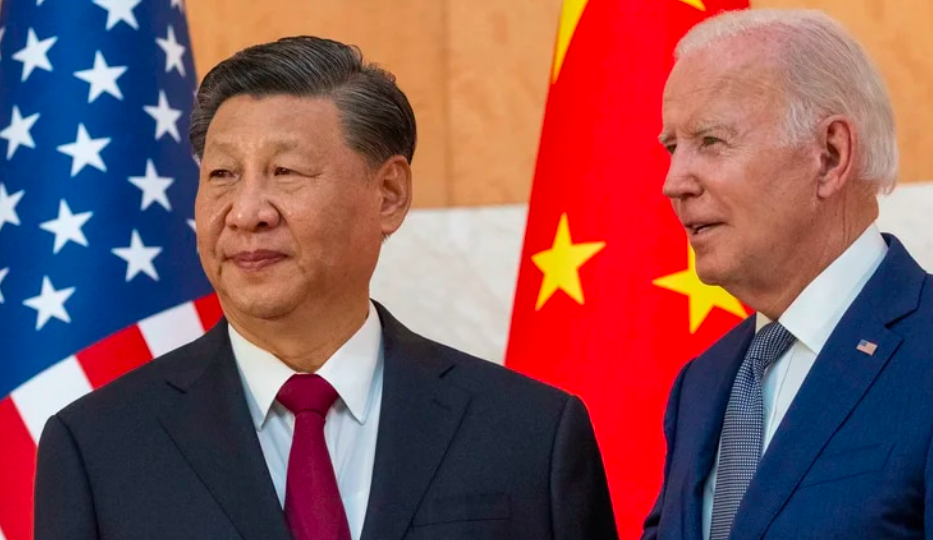
Within the framework of the geopolitical dispute with the United States, the Xi Jinping regime no longer hides its intention to deepen its radius of influence in Latin America.
Despite the complaints of human rights violations and different arbitrary practices condemned by the West, more and more countries are opening their doors to the Chinese economic power.
Read also: Check out our coverage on Uruguay
One of the nations that in recent years has considerably increased its ties with Beijing is Uruguay.

The ties between the two countries increased to such an extent that Chinese influence in Uruguayan foreign policy is the highest in Latin America. This was determined by the China Index 2021 ranking, recently launched by the Taiwanese NGO Doublethink Lab, which seeks to measure and visualize the influence of the Asian giant in 46 countries.
For the study, nine categories are analyzed, ranging from academic and technological, to foreign policy and the media, among others.
“Regarding the characteristics of this influence, the China Index highlights that, in general terms and at a global level, it is stronger in the domains of foreign policy, domestic policy and technology, and weaker in the military and social domains,” indicates the Gorman Lee organization.
It is precisely in the field of foreign policy that Chinese influence in Uruguay stands out. According to the report, the Asian giant’s interference in the South American country in its foreign relations stood at 65.9%, the second highest of the entire index globally, only surpassed by Cambodia, a country located in southeast Asia that registers a degree of Chinese influence of 75%.
The study measures the PRC’s efforts to achieve its diplomatic goals “through its influence on key players in each country.” For that, eleven requirements are analyzed. “Uruguay shows conclusive evidence of Chinese influence in six of those eleven requirements.”
First of all, the report recalls that Uruguay and China have a joint parliamentary friendship group, created in 1992. Likewise, DoubleThink Lab also cites the trip that Uruguayan parliamentarians made to meet their Chinese counterparts in 2017.
The Taiwanese NGO points out that “diplomats or public officials have received some training in China.” In this sense, it gives as an example the Educational Management Seminar held in this country in 2019, which was attended by officials from the Ministry of Education and the Innovation Agency.
The China Index also found the possibility that “politicians or government employees have been pressured by diplomats of the People’s Republic of China to change their political or diplomatic stances.”
As evidence, he recalls the decision of the Uruguayan government in 2018 to deny visa-free entry to Taiwanese citizens. This was taken as a measure arising from pressure from the Xi Jinping regime.
Regarding Uruguay’s position with Taiwan, the study also points to the fact that “the president or foreign minister of a country denies Taiwan’s right to participate as a member, observer or guest at the WHO.” “Although there is no explicit document from Uruguay that denies Taiwan this participation, there is no evidence of Uruguayan support for the initiatives that seek to include it,” it clarifies.
This position has been maintained in recent years, despite the constant Chinese threats to Taiwan, which have led to a situation of extreme tension in the Pacific today. Some even fear a possible invasion of the island by Beijing.
Another point analyzed by the study regarding Chinese influence on Uruguayan foreign policy is Montevideo’s support for the appointment of a Chinese official as a candidate to preside over a UN agency, such as the Food and Agriculture Organization of the United Nations (FAO) or the International Civil Aviation Organization (ICAO). In 2019, the South American country endorsed Qu Dongyu’s candidacy for FAO Director-General.
In the remaining five requirements, no evidence was found in one: the detention in China of Uruguayan citizens for political reasons.
In the other four, however, the country adopted a position of neutrality and silence in the face of Chinese territorial claims, denounces the treatment of the Uyghur minority, the Tibetan population and the imposition of the National Security Law in Hong Kong.
“Although this criterion of silence may be questionable, Doublethink Lab interprets this lack of response as a tacit endorsement,” says the NGO.
How is the degree of influence of China in the foreign policy of the other Latin American countries that this index measures? Uruguay, which was the country with the greatest evidence of Chinese influence in this pillar, is followed by Mexico (61.4%), Venezuela (56.8%), Peru and Bolivia (54.5%), Brazil (52.3%), Chile (45.5%), Argentina (36.4%), Colombia (29.5%) and Paraguay (20%).
In the commercial field, the links are also increasingly close.
The Chinese regime takes advantage of the weaknesses and needs of the region to deepen its predominance in the most diverse areas. In the field of technology, the installation of the 5G network is progressing slowly.
In this context, the Asian giant seeks to land with its own infrastructure, amid accusations of espionage against Huawei. And Uruguay is on its way to being one of the gateways.
The South American country is also moving forward with an agreement to export sorghum to China. As the Lacalle Pou government declared last October, this pact “is the result of the excellent relations between the two countries.”
The growing Chinese presence in Latin America also raises concerns about illegal fishing. The Asian giant is designated as one of the largest predators in international waters.
However, the Uruguayan government is moving towards leaving the patrol of its coasts in the hands of the Chinese regime by allowing one of the main supplier companies of the People’s Liberation Army (PLA), China Shipbuilding Industry Corporation (CSOC) to be the beneficiary of the sale and maintenance of two boats for the control of the seas.
The main task that these ships will have will be, ironically, to control that Chinese fishing boats do not invade the Exclusive Economic Zone (ZEE) where they prey on the country’s resources.
Despite the questions from several countries and the concerns they generate, mainly for the United States, the government of Luis Lacalle Pou in recent months has advanced in different agreements that further strengthen its ties with the Chinese regime.
The most forceful, without a doubt, is the Free Trade Agreement that it seeks to sign with Beijing, in the midst of a strong dispute with its Mercosur partners.
Last October, the Uruguayan head of state participated in the seventh edition of the America Business Forum in Punta del Este.
Asked about the negotiations with China, he questioned those who oppose it: “When we say China and they tell us ‘no’, then who? Don’t tell us what isn’t”. “We are on the way to signing with China, we are negotiating with Turkey and before the end of the year we are going to send the letters for the adhesion to the Progressive and Comprehensive Agreement for the Trans-Pacific Partnership (CPTPP)”, he anticipated.
The Uruguayan president acknowledged that he also wants a trade agreement with the United States, but regretted that Washington “does not look to the south.”
With information from Infobae
More: Brazil news in English, every day from The Rio Times.
Editorial responsibility: Matthias Camenzind, Editor-in-Chief · Editorial standards · Report an error