Uruguay approved the construction of a new city of the future designed for Argentines
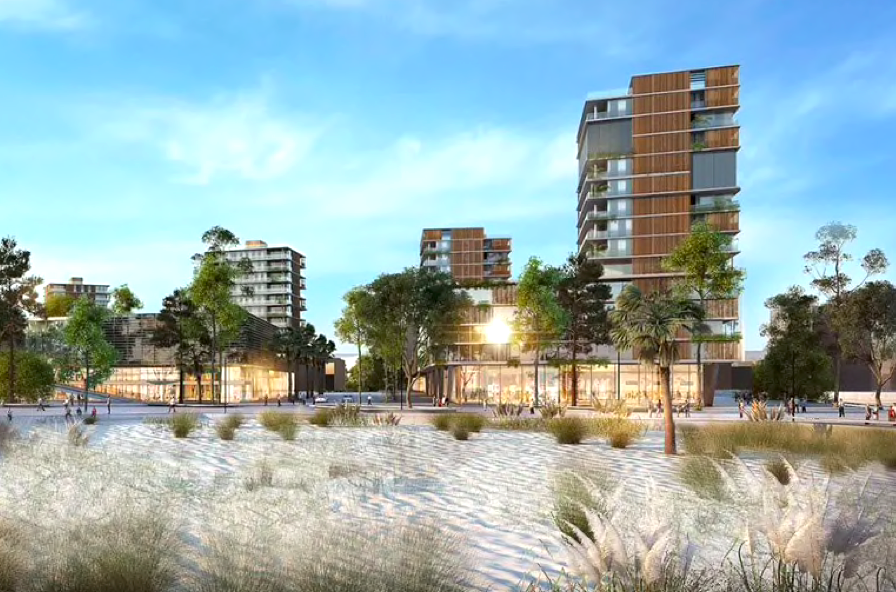
RIO DE JANEIRO, BRAZIL – The project to build a modern city for Argentine families in Uruguay received formal approval from the Legislative body of the city of Colonia. It is a megaplan that includes thousands of houses, companies, several schools, a private sanatorium, shops, entertainment centers, parks with public spaces and a modern technological system for smart homes.
Those responsible for the new city held the vote on Friday night at the Departmental Board of Colonia, which authorized the project, and which today will have the formal announcement of the start of works, with a total investment estimated at US$1.9 billion.
Read also: Check out our coverage on Uruguay

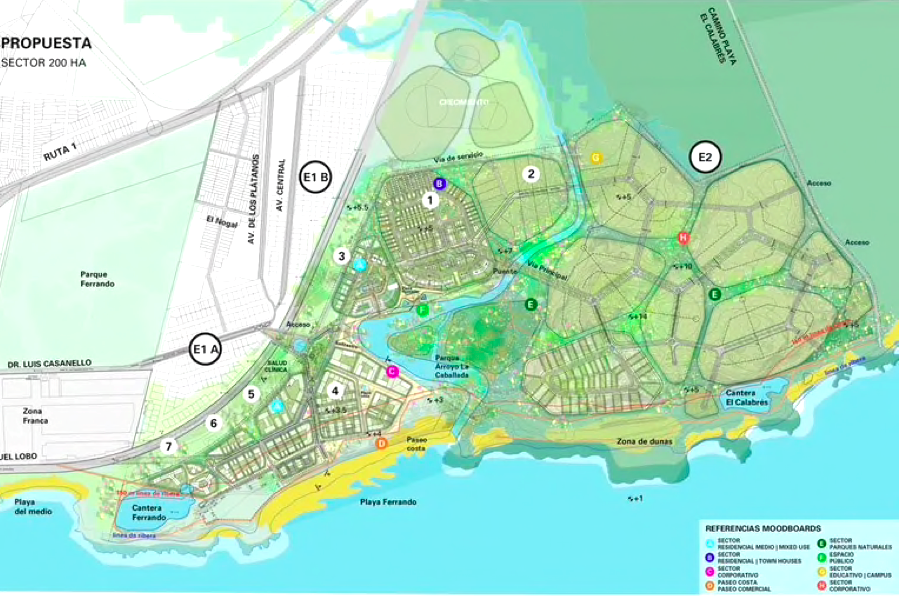
Urban development aims to generate 30,000 new residents, with the construction of 7,000 to 8,000 new homes. It has the goal of attracting 100 new ICT companies (for a period of 20 to 30 years), building five new schools, a medical center and offices. In addition, 100 hectares of quality public space, 12,000 jobs in services, logistics, shops, transport, hotels are projected. The idea is to generate 6,000 jobs in the ICT sector, between 1,500 and 2,000 in construction and thousands more in secondary services.
Due to the dimension of the plan and everything it includes, it will now require other authorizations from the national government, including from the area of environmental control. The Gómez Platero studio, which has developed several residential complexes for foreigners, is preparing to take the first steps of execution.
President Luis Lacalle Pou has set himself the goal of improving residence conditions and investment procedures to get Argentine families to move to live on this side of the Prata River. “Uruguay needs people to enlarge the internal market and here you can think long term,” said the President, basing his plan to attract foreigners to become residents in the country.
Punta del Este and Montevideo are managing to attract Argentines with high purchasing power. With this project, Colonia aims to overcome what has been seen so far: not a private neighborhood or an area of integrated farms, but to create an entire city.
The residence procedures for Argentines have grown to such an extent that, in the last two years, they replaced Venezuelans in the first place of foreigners who come to live in Uruguay. In 2017 there were 2,184 procedures for Argentines by residence. In 2018 it dropped to 1484 cases. In 2019 it rose again with 2,042 procedures. And already in 2020 it climbed to the first place in the ranking with 6,816 people. Last year it almost doubled and reached 11,835, which has become stronger in recent months with the lifting of restrictions.
From the state electricity company, UTE, they estimate that when the project materializes as planned, this will double the demand for electricity that the entire city of Colonia del Sacramento currently has.
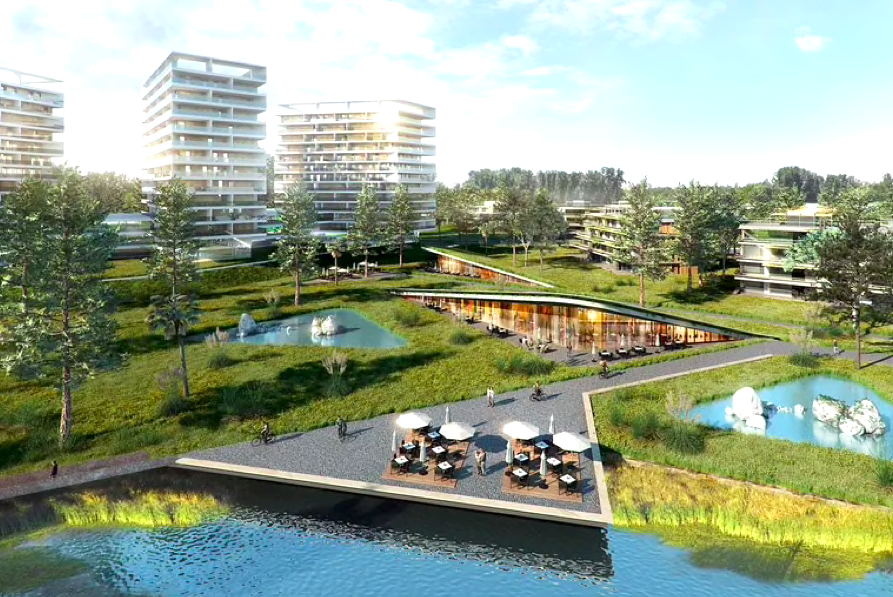
The idea and the project correspond to the businessman Carlos Bastitta, who bought the land 35 years ago and presented himself to the authorities with his plan, as a “dreamer of the +Colonia project” who imagined it as “an ecological city, a city of the future.”
Bastitta is 90 years old and already lives with Colonia; he began his professional activity at YPF as an engineer and later dedicated himself to the agricultural sector in different Argentine provinces.
The head of government of Colonia, Carlos Moreira, described the Colonia+ plan as “a unique investment in the history of Colonia” and stated that it is “a property with a truly exceptional location and surface area” that “can generate a large amount of jobs” not only during “the construction of each stage, but in the services that are generated from them.”
Among the axes of +Colonia is that of “Smart City”, that is, a “city built on blockchain technology; with digital and remote housing management”, with a “Governance” that includes a “decentralized autonomous organization, with direct and active participation in district decisions, advised by the City Council.”
It also includes the “Professional Career” axis with an “ecosystem of startups, digital and technology companies with venture capital funds, banks, laboratories and research and development centers.”
RENEWABLE ENERGY
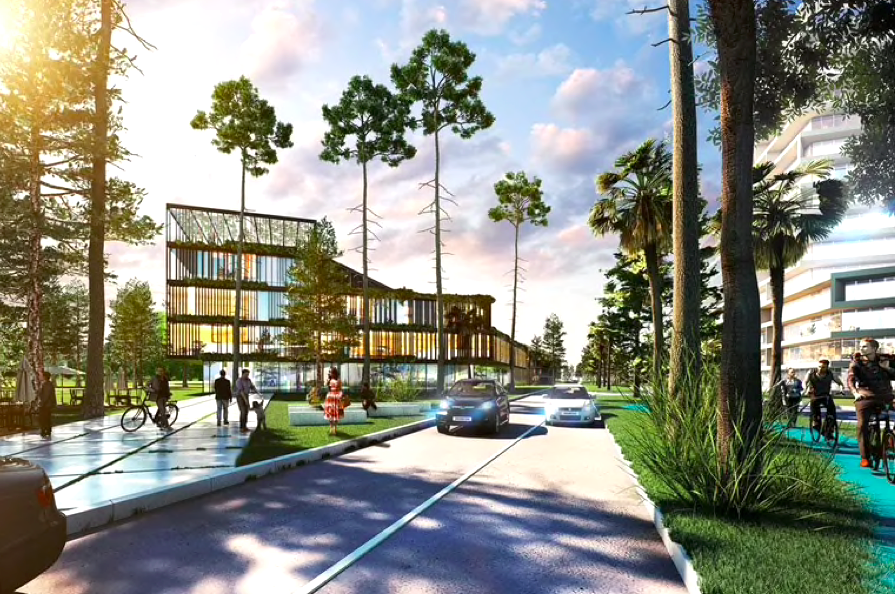
The project gives relevance to the concept of sustainability, with an energy matrix of renewable energies and efficient management of energy, water and waste. 50% is also planned for public and green spaces; natural environment of forests and beaches, trails for running, biking and walking, and the river and a can terrace to practice all water sports.
The promoters of the city attach importance to the concept of “training”, with an international academic headquarters, with initial education and university campus, coding schools and alliances with business schools.
In addition, the plan values the axis called “enjoy”, which encompasses expressions of “art, culture and entertainment; gastronomy, music.”
They also highlight the “healthy” value with “sports in a natural environment, organic food stores and local gardens and first-class health services.”
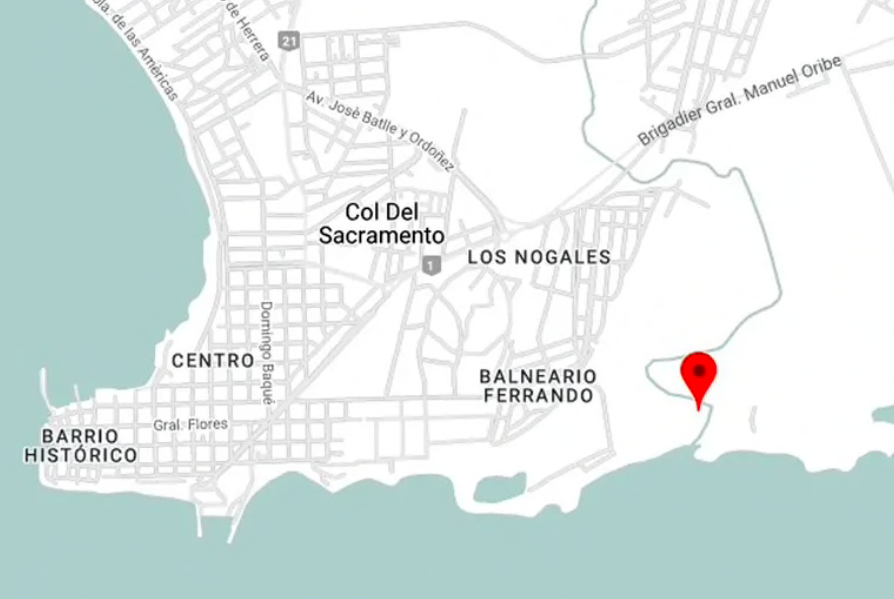
The +Colonia project is perceived as a “cultural connection and bridge with Buenos Aires and Montevideo”: it is 40 minutes from the capital of Buenos Aires and almost two hours from the Uruguayan capital.
The presentation made in the Legislative of Colonia highlighted that a strength of the modern city is to be only 800 meters from the port of Colonia. An imposing natural setting on the edge of a historic city, and 500 meters from an international airport.
Although at the local level, and due to the location, the project is seen as designed for Argentine families, the promoters of the plan highlight the value and “diversity and inclusion” and raise a slogan: “Everyone is welcome, regardless of gender, ethnicity, creed or sexual orientation.”
Although Carlos Bastitta is the creator of the plan, those leading the negotiations are Eduardo Bastitta (co-founder and CEO of Plaza Logística) and Geraldine Assmus (Co-founder and partner at Sustentator).
The project approved by the Colonia Board establishes that it is a “route that connects the new +Colonia with the historic Colonia (…) a complementary interaction where the rich historical legacy finds a way to write the future in a present that emanates diversity, inclusion and prosperity.”
Paperwork is missing, construction begins, and Colonia is preparing for an unprecedented plan, which seeks to be a special magnet for Argentine families.
With information from La Nacion
More: Argentina news in English, every day from The Rio Times.
This article was produced by The Rio Times’ automated newsroom system. How we use AI · Report an error · Editorial responsibility: Matthias Camenzind, Editor-in-Chief