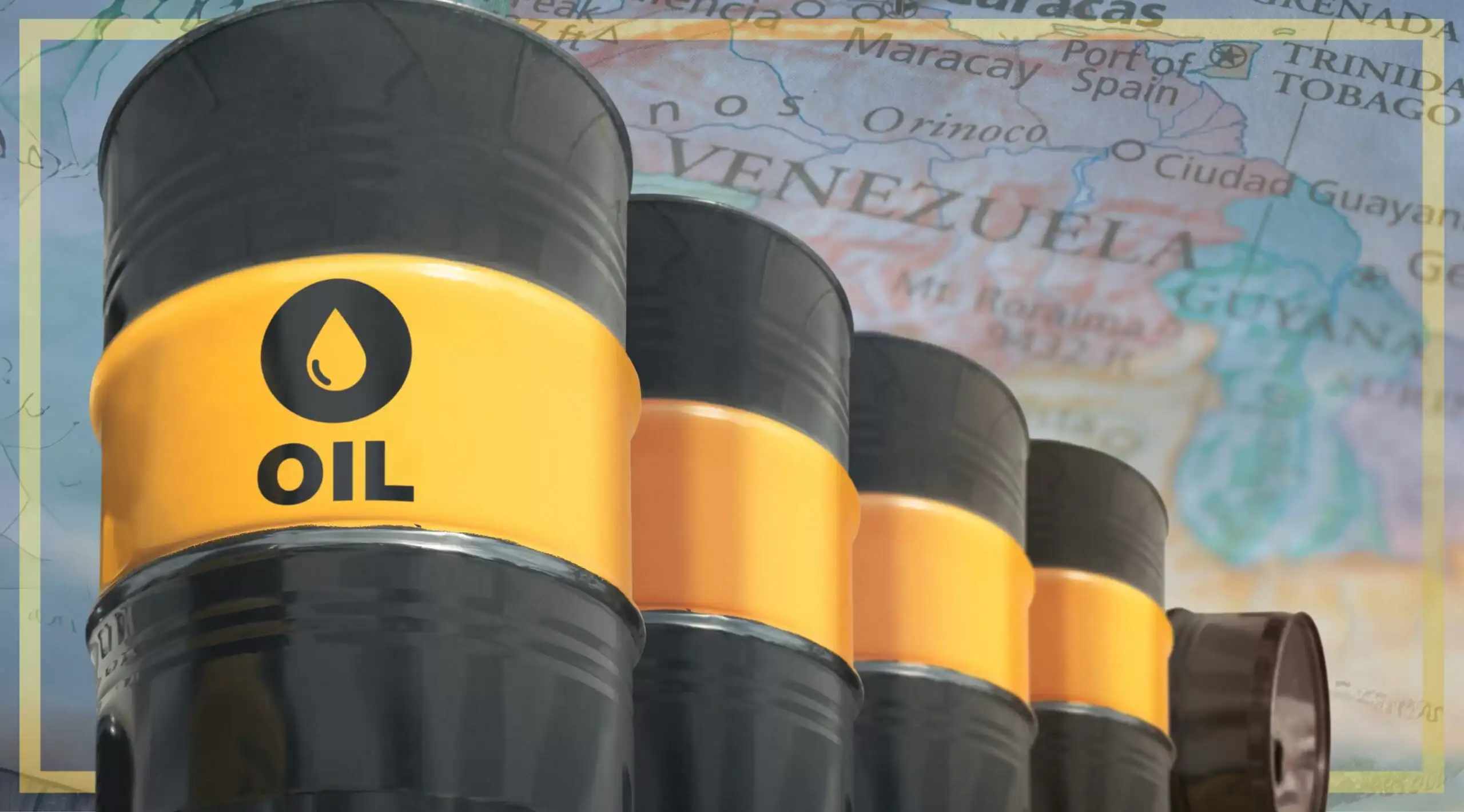
Venezuela Oil Funded Iran War, Trump Claims as Drills Begin
Venezuela · Geopolitics
Key Facts
—Trump revenue claim:. President Donald Trump said Friday that Venezuelan oil revenue under the post-Maduro framework was enough to “amply compensate” Iran war costs.
—Embassy evacuation drill:. Acting president Delcy Rodriguez authorized a US embassy evacuation drill that began Saturday May 23 with a military overflight from the USS Iwo Jima.
—Opposition in Panama:. Plataforma Unitaria Democratica representatives met opposition leader Maria Corina Machado in Panama on Friday to set post-Maduro strategy.
—Chavista exits:. Camilla Fabri Saab and her children left Caracas for Italy on Friday, while opposition figure Carlos Ocariz returned to Venezuela.
—Oil-sector framework:. Washington lifted Venezuelan oil sanctions after January; ConocoPhillips, Chevron and ExxonMobil are negotiating access, though ConocoPhillips called terms insufficient.
The Saturday escalation extends a Venezuela oil transition that has reshaped Latin American geopolitics since January 3, with each new operational step from Washington signaling that the post-Maduro framework remains under active negotiation rather than settled.
What did Trump say about Venezuela oil?
The Rio Times, the Latin American financial news outlet, reports that President Donald Trump told reporters Friday that Venezuelan oil operations under the post-Maduro transition generated revenues sufficient to “amply compensate” the costs of the 2026 Iran war that began February 28 with joint United States and Israeli strikes. The statement is the first formal United States linkage of the January 3 Venezuelan operation to the financial ledger of the Middle East campaign, made alongside an oil-executive meeting at which Trump reiterated a focus on lower United States gasoline prices through expanded Venezuelan output.
What is the embassy evacuation drill?
The Saturday May 23 exercise began with a United States military aircraft overflight from the USS Iwo Jima amphibious assault ship, positioned off the Venezuelan Caribbean coast at La Guaira. The drill simulates a contingency evacuation of United States diplomatic personnel from the Caracas embassy compound and was authorized by acting president Delcy Rodríguez, demonstrating that bilateral coordination between Washington and the Rodríguez transition framework now extends to active United States military operations on Venezuelan territory with the host government’s authorization.
The USS Iwo Jima is the same vessel that received Maduro and his wife Cilia Flores after the January 3 capture raid before their transfer to the New York metropolitan area. The vessel’s continued positioning off the Venezuelan coast nearly five months later, and its active participation in the Saturday drill, signal that the United States maintains the operational option for additional operations under the existing framework.
What is the opposition working on in Panama?
Plataforma Unitaria Democrática representatives met with María Corina Machado in Panama on Friday for a working session focused on the post-Maduro political strategy. The meeting addressed the substantive challenge facing the opposition coalition: how to move from external coordination to domestic political consolidation now that the Maduro-Flores leadership is in United States federal custody but Delcy Rodríguez and the broader chavista institutional structure retain control of Venezuelan domestic governance. Trump has stated repeatedly that he does not believe Machado has the support necessary to govern Venezuela, complicating the path to a Machado-led transition that the opposition originally framed as the legitimate outcome of the disputed July 2024 election.
What does this mean for Latin America?
The Latin American regional response remains divided five months after the January raid. Brazil, Colombia, Chile, Mexico, Uruguay and Cuba condemned the operation as a sovereignty violation, while Argentina, Ecuador, Panama and Paraguay supported the opposition framework; Russia, China and Iran characterized the action as armed aggression. The May 23 escalation reopens the regional debate at a moment when Colombia’s May 31 first-round vote, Chile’s incoming Kast administration and Brazil’s October general election are all reshaping the political map.
Connected Coverage
The Saturday escalation fits the broader regional context analyzed in our Venezuela 2026 economy investor guide and connects to the parallel Mexico-Pemex story in our coverage of the ExxonMobil six-field talks.
This article was produced by The Rio Times’ automated newsroom system. How we use AI · Report an error · Editorial responsibility: Matthias Camenzind, Editor-in-Chief
Frequently Asked Questions
Who is Delcy Rodríguez?
Delcy Rodríguez was the vice president under Maduro and was sworn in as acting president of Venezuela on January 5 following the January 3 United States capture operation. She has cooperated with Washington while publicly maintaining that Maduro remains the legitimate president.
Where is Maduro now?
Nicolás Maduro and his wife Cilia Flores are detained at the Metropolitan Detention Center in Brooklyn, New York. They face federal charges of narcoterrorism, conspiracy to import cocaine, and weapons offenses in a Manhattan federal court.
Are US sanctions on Venezuelan oil lifted?
Yes. The United States lifted oil-trade sanctions after the January operation and announced a Venezuelan oil sector privatization framework. ConocoPhillips characterized current terms as insufficient earlier this week, while Chevron and ExxonMobil are engaged in their own access negotiations under the Rodríguez framework.
What is the Plataforma Unitaria Democrática?
The Plataforma Unitaria Democrática is the coalition of Venezuelan opposition parties that backed Edmundo González Urrutia in the July 2024 presidential election and continues to coordinate the political strategy for the post-Maduro transition under the public leadership of María Corina Machado.
How did Latin America react to the January operation?
Brazil, Colombia, Chile, Mexico, Uruguay and Cuba condemned the operation as a sovereignty violation. Argentina, Ecuador, Panama and Paraguay supported the opposition framework. The regional response remains divided five months later.