The U.S. Supreme Court is currently examining former President Donald Trump’s right to be on Colorado’s primary ballot.
This inquiry stems from a December 19 ruling by the Colorado Supreme Court.
It declared Trump unfit for presidential candidacy under Section 3, citing his involvement in the January 6, 2021, Capitol attack.
As a result, Trump was initially removed from the ballot by Colorado’s Secretary of State, Jena Griswold.
However, this decision is paused, keeping Trump on the ballot while awaiting the Supreme Court’s final judgment.
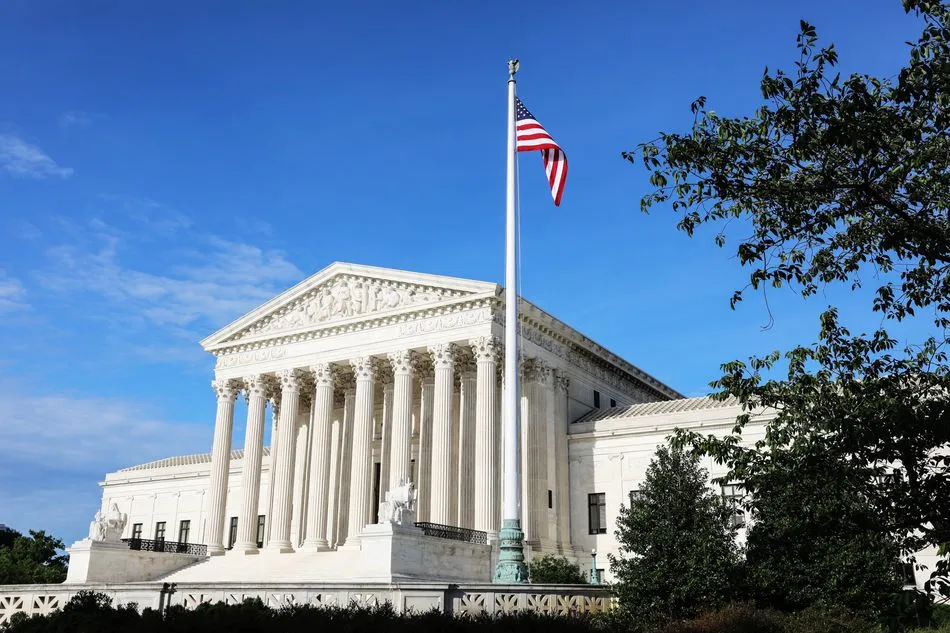
This case underscores Trump’s ongoing legal challenges and tests the Supreme Court’s role in electoral politics.
It echoes the 2000 election scenario, where the Court significantly influenced the election’s outcome.
The current situation could similarly entangle the justices in election-related matters.
The rulings on Trump’s immunity and his eligibility in Colorado might set a critical precedent, showing the Supreme Court’s sway over election outcomes and Trump’s political destiny.
Background – U.S. Supreme Court Reviews Trump’s Ballot Eligibility
This legal battle transcends Trump’s candidacy, focusing on constitutional interpretations of insurrection.
The Colorado Supreme Court’s use of Section 3, citing January 6 events, could set a landmark precedent.
It raises questions about state versus federal roles in election decisions, reminiscent of the 2000 Bush v. Gore case, emphasizing the Supreme Court’s critical role in electoral integrity.
The case also tests perceptions of the Supreme Court’s neutrality and its democratic function.
The outcome will influence not just Trump’s political path but also future approaches to insurrection claims.
This pivotal moment underscores the complex relationship between law, politics, and democracy in the U.S.
This article was produced by The Rio Times’ automated newsroom system. How we use AI · Report an error
Read More from The Rio Times