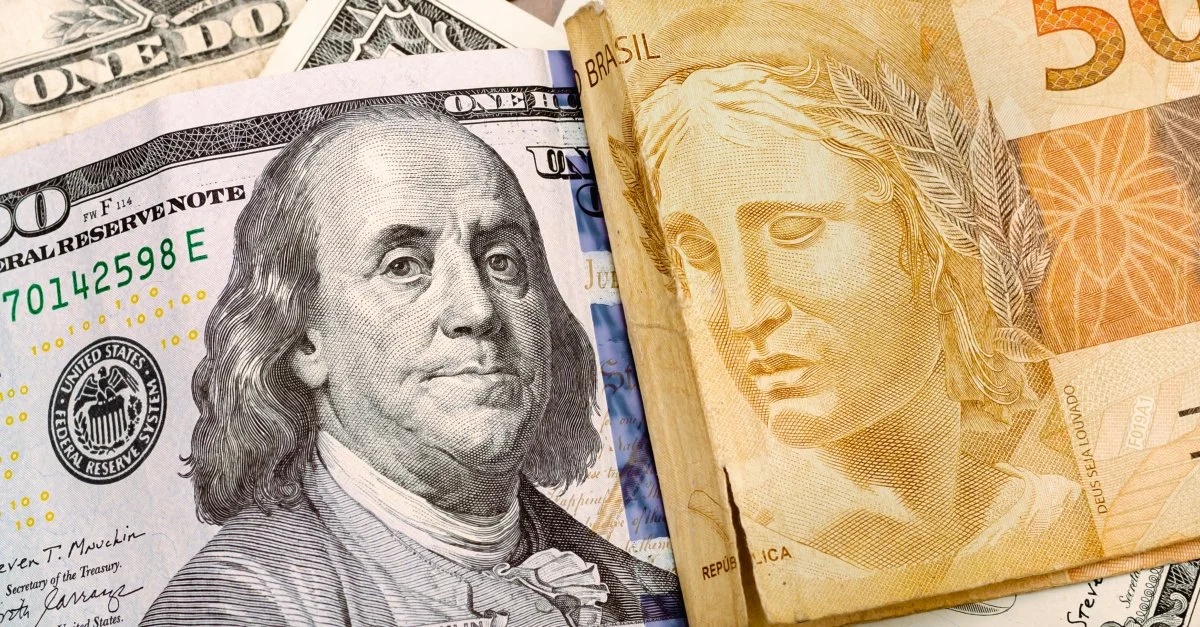
On Thursday, the U.S. dollar’s value against the Brazilian real subtly declined, reflecting investor reactions to a blend of economic indicators from the United States.
These mixed signals did not shift predictions regarding the Federal Reserve’s approach to monetary policy adjustments.
The minimal drop of 0.14% to 4.9677 reais underscored market sensitivity to the latest inflation, retail sales, and employment figures.
Free daily brief — no card needed
Get every Market Reports story in one morning email
We build you a personalized brief around the topics you follow — free for 7 days. Love it? Your first month after that is US$1.
February’s PPI showed a 0.6% increase, indicating unexpected inflation pressure, primarily from goods and services costs.
Contrastingly, a more focused view of the PPI revealed a moderation in inflation‘s growth pace, offering a nuanced insight into underlying economic conditions.
U.S. Dollar’s Slide on Mixed Economic Signals.
One-stop reference
Company Intelligence
Every listed company in Latin America — financials, ownership and structure for 1,450+ companies across 26 exchanges, in one place.
Moreover, U.S. retail activity expanded by 0.6%, slightly underperforming against projections.
Revisions to January’s data revealed a more significant downturn in consumer spending than initially reported.
Additionally, fewer Americans filed for unemployment benefits than anticipated, hinting at enduring labor market strength.
This intricate economic scenario underscores the delicate dance central banks engage in as they weigh varied data points to guide their monetary policy decisions.
Crucial meetings scheduled for the Federal Reserve and Brazil’s Central Bank prompt close scrutiny for potential policy shifts. These could significantly impact global financial currents.
Investors and analysts acknowledge economic indicators’ influence on currency values and cross-border investment strategies.
As central banks navigate uncertain waters, their decisions echo across international markets. They shape investment landscapes and influence global economic dynamics.