In a bold move, President-elect Donald Trump has announced the creation of a new Department of Government Efficiency (DOGE). This unconventional agency will be led by tech mogul Elon Musk and former presidential hopeful Vivek Ramaswamy. The announcement came on November 12, 2024, sparking widespread discussion about the future of government operations.
Trump’s decision to bring Musk on board aligns with his campaign promises. The billionaire entrepreneur had shown increasing support for Trump throughout the election. Musk’s super PAC, “America PAC,” contributed over $100 million to Trump’s campaign. This marked a significant shift in Musk’s political engagement.
The DOGE aims to streamline government processes and cut unnecessary spending. Trump has set an ambitious deadline of July 4, 2026, for the department to complete its work. This date coincides with the 250th anniversary of the Declaration of Independence. The symbolism is clear: a leaner government as a gift to the nation.
Musk’s involvement raises questions about potential conflicts of interest. His companies, including SpaceX, hold substantial government contracts. Critics argue this could compromise his ability to make unbiased decisions. Supporters counter that his business acumen is precisely what’s needed to trim government fat.
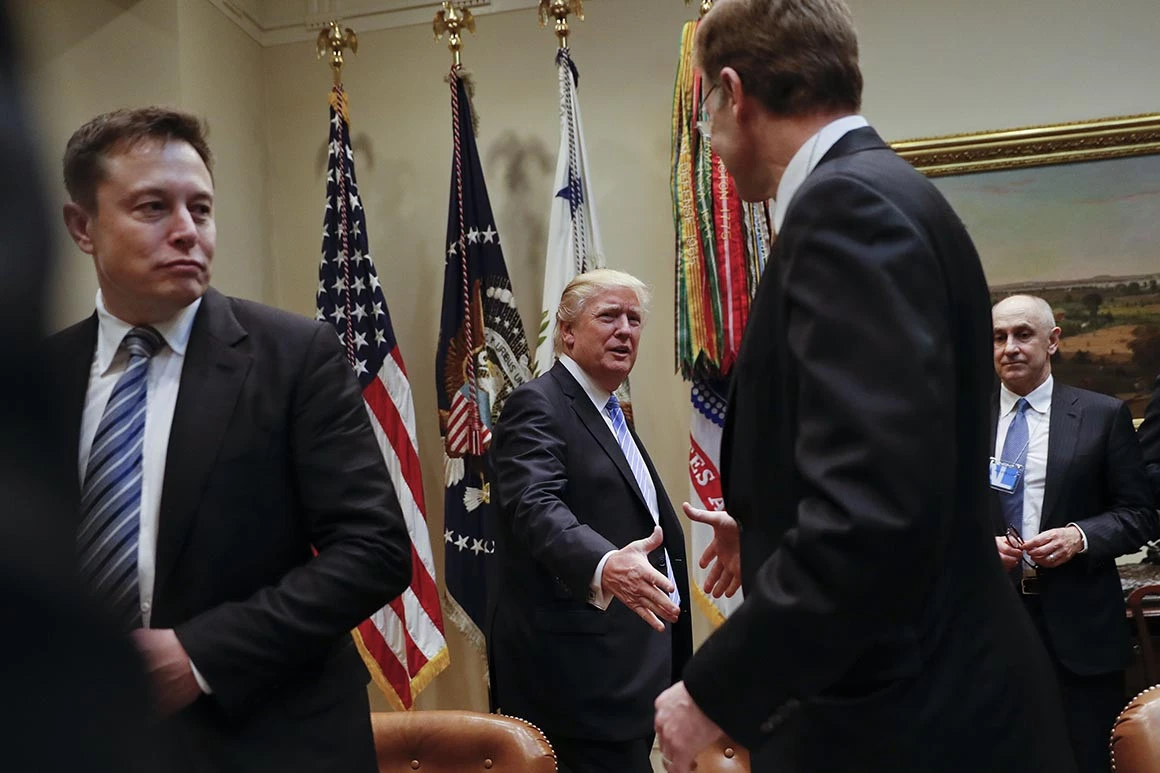
The new department’s structure differs from traditional government agencies. It will operate as an advisory body, partnering with existing offices. This approach allows for outside perspective while leveraging established governmental frameworks. The goal is to inject private sector efficiency into public sector operations.
Transparency is a key promise of the DOGE. Musk has pledged to post all departmental actions online. This includes a “leaderboard” tracking tax dollar spending. Such openness could revolutionize public understanding of government finances. It may also face resistance from entrenched bureaucratic interests.
Trump Taps Tech Titan Musk to Trim Government Fat
Trump likened the DOGE to the Manhattan Project in terms of potential impact. This comparison underscores the administration’s high expectations for the department. Musk has previously claimed he could identify over $2 trillion in government savings. This figure represents nearly a third of total federal spending.
The creation of DOGE reflects a libertarian approach to governance. It emphasizes reducing government size and increasing individual responsibility. This philosophy contrasts sharply with progressive, paternalistic models of government. The success or failure of DOGE could significantly influence future policy directions.
Trump Taps Noem for Homeland Security: Immigration Hardliner to Lead $60B Agency
Critics point out that nonpartisan bodies already handle government efficiency audits. The Government Accountability Office, for example, has long served this function. Supporters argue that fresh eyes and private sector experience will yield better results. The debate highlights ongoing tensions between traditional governance and innovative approaches.
As the story unfolds, many questions remain unanswered. The practical implementation of DOGE’s recommendations is uncertain. Its legal status and relationship with existing agencies need clarification. The impact on government operations and public services is yet to be seen.
The Trump-Musk partnership represents a significant gamble. It could lead to a more efficient, cost-effective government. Alternatively, it might disrupt essential services or favor corporate interests. The outcome will likely shape public perception of private sector involvement in government for years to come.
This article was produced by The Rio Times’ automated newsroom system. How we use AI · Report an error · Editorial responsibility: Matthias Camenzind, Editor-in-Chief