Tariff Threats Push Mexico and Europe Closer in Trade
The Netherlands’ ambassador to Mexico, Wilfred Mohr, reveals a shifting trade landscape as U.S. tariff threats loom. Mexico and the European Union finalize a modernized free trade deal, aiming to boost commerce amid uncertainty.
This agreement, set for ratification by 2026 or 2027, targets a $67 billion trade relationship that has grown 240% since 2000. Mexico exports 80% of its goods to the U.S., making diversification urgent as potential 25% tariffs threaten key sectors like automotive and agriculture.
The EU, Mexico’s third-largest trading partner, offers a massive market of 445 million consumers. The updated deal slashes agricultural tariffs, opening doors for avocados, limes, and tequila to flow into Europe more easily.
Negotiations, launched in 2016 and concluded in January 2025, modernize a pact from 1997. The EU, contributing 35% of Mexico’s foreign investment, hosts over 8,000 firms in the country.
Mexico’s Shifting Trade Focus
Germany leads as Mexico’s top EU trade partner, followed by Spain and Italy, with electronics and petroleum dominating exports. The Netherlands ranks Mexico as its second-largest Latin American trade partner after Brazil.
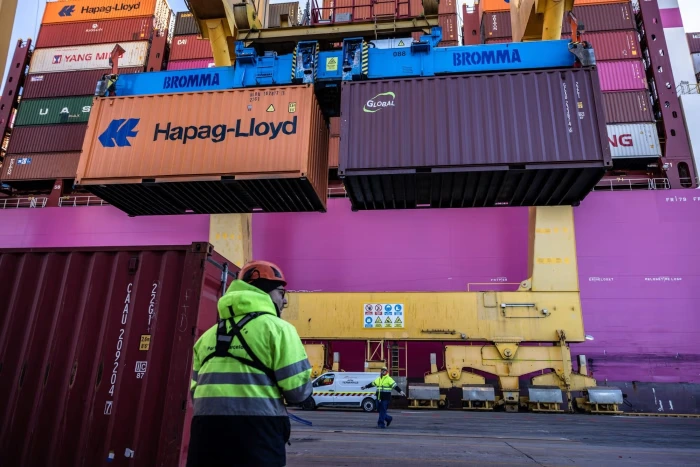
Dutch firms invest heavily in Querétaro, with 50 companies thriving in agriculture and automotive sectors. Trouw Nutrition opens a new plant in 2025, while AWL expands its robotics operations, showing confidence despite tariff fears.
Trade with the EU accounts for just 5% of Mexico’s exports, dwarfed by the U.S. share. The new agreement aims to shift this balance, offering Mexican farmers better access to Europe’s food-importing giant.
However, small producers face challenges meeting strict EU standards, needing government support to compete. Mohr warns that tariffs hurt everyone, pushing Mexico to rethink its strategy.
The modernized deal includes digital trade and sustainability rules, simplifying a complex global market. Mexico City, Nuevo León, and Querétaro attract Dutch investments, especially in auto parts, as firms brace for U.S. policy shifts.
Businesses watch closely as ratification nears, with the EU eyeing Mexico as a North American gateway. The figures tell a story of adaptation: a nation pivots from reliance on one market to seize a broader opportunity, balancing risks with practical gains in a tense trade climate.
Key Facts
— Deep Dive
— For the complete picture, read our in-depth guide: Mexico Economy 2026: GDP, Peso, Nearshoring, Banxico and Trade
More: Latin America news in English, every day from The Rio Times.
This article was produced by The Rio Times’ automated newsroom system. How we use AI · Report an error
In depth
Read More from The Rio Times