AMIA Bombing: Argentine Judge Charges 8 Over 1994 Jewish Centre Attack
Argentina · Justice
Key Facts
- —What happened Federal judge Daniel Rafecas issued a 648-page ruling on 21 September 2026 charging eight men over the 1994 attack.
- —Who is accused Four men who held top Iranian posts in 1994, two former diplomats, an alleged intelligence agent and an alleged Hezbollah operative.
- —A sitting commander One accused, Ahmad Vahidi, has commanded Iran’s Revolutionary Guard, its elite military force, since 1 March 2026.
- —The money Rafecas ordered a freeze of US$500 million on the assets of each of the eight accused.
- —Why it matters It moves the case closer to Argentina’s first trial in absentia, which Rafecas ordered in June 2025.
- —The catch None of the accused is in Argentina, the ruling can be appealed, and no trial date has been set.
A truck bomb killed 85 people at a Jewish centre in Buenos Aires 32 years ago. Now a federal judge has formally charged eight men in their absence. None is in custody, and none has been convicted.
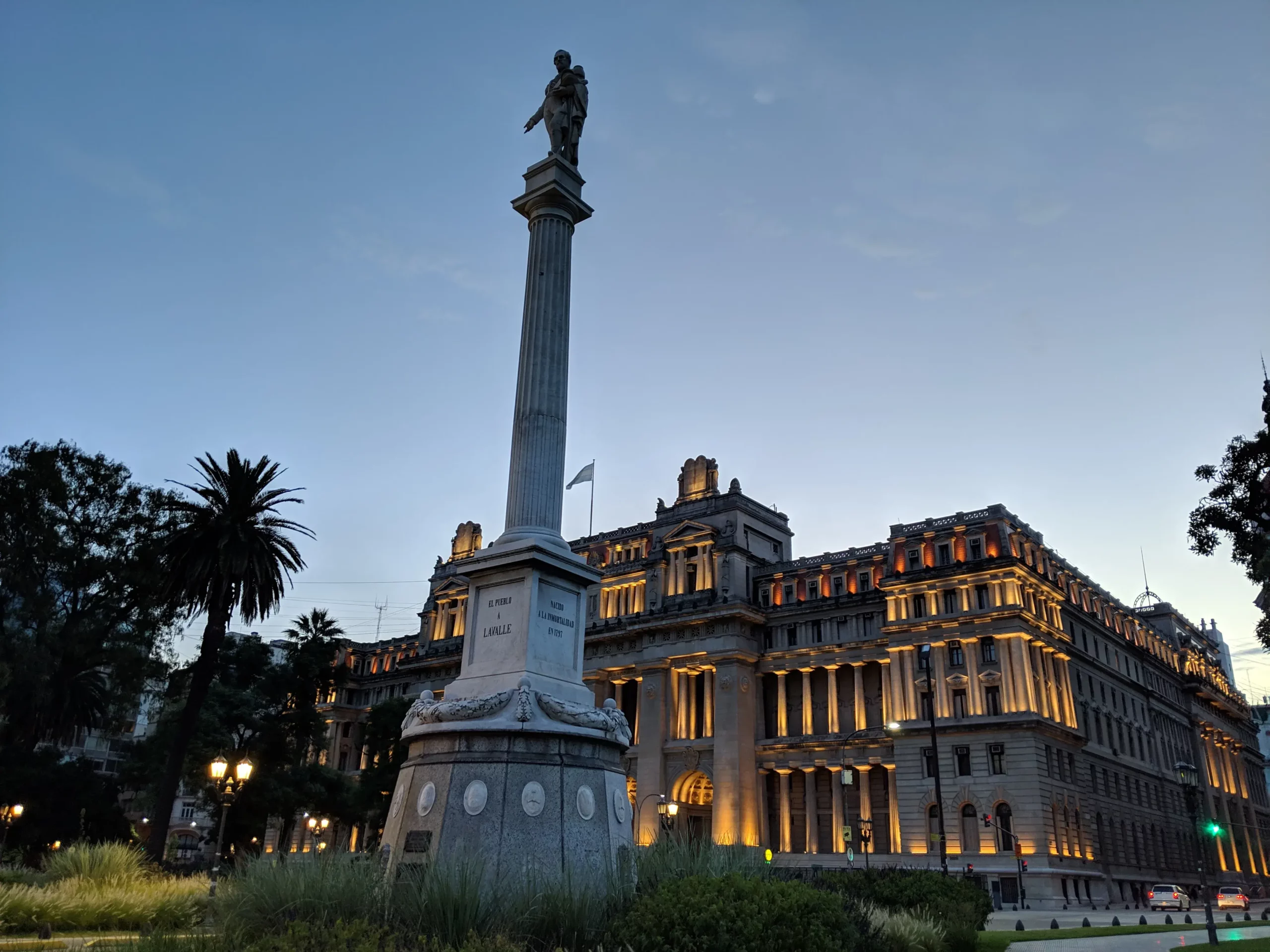
The AMIA bombing case, over the 1994 attack on a Jewish centre in Buenos Aires, has taken its biggest step in years. On Monday 21 September 2026, federal judge Daniel Rafecas formally charged seven Iranians and a Lebanese man over the 1994 attack.
The truck bomb destroyed the Buenos Aires headquarters of the Asociación Mutual Israelita Argentina (AMIA), the country’s main Jewish community centre. It killed 85 people and injured at least 151, according to federal prosecutors.
None of the eight is in Argentina, and none has been tried or convicted. The ruling relies on a 2025 law that lets some cases proceed without the accused in the courtroom.
What the judge decided
Rafecas is the acting head of Federal Criminal and Correctional Court No. 6 in Buenos Aires. His 648-page ruling, reported by the news site Infobae, is known in Argentine law as a procesamiento.
A procesamiento is not a verdict. It is a pre-trial finding that the evidence is strong enough to send a suspect toward trial, and it can be appealed.
The judge also ordered a freeze of US$500 million on the assets of each accused. Whether any of those assets can be found has not been reported.
The ruling holds that Iran’s top leadership decided on the attack in August 1993. It says execution was entrusted to Hezbollah, the Lebanese armed group allied with Tehran.
The eight accused
Four men who held senior Iranian posts in 1994 were charged as indirect perpetrators, meaning those who allegedly ordered the crime. Two are Ali Fallahijan, then intelligence minister, and Ali Akbar Velayati, then foreign minister.
The other two are Mohsen Rezai, then commander of the Revolutionary Guard, and Ahmad Vahidi, then head of its Quds Force. The Quds Force runs the Guard’s operations abroad.
Vahidi now leads the whole Revolutionary Guard, Iran’s elite military force. He was appointed on 1 March 2026, after his predecessor was killed in the US-Israeli war on Iran.
Three more were charged as necessary accomplices. They are Hadi Soleimanpour, then Iran’s ambassador to Argentina, and Mohsen Rabbani, then cultural adviser at the Iranian embassy.
The third is Ahmad Reza Asghari, described in the ruling as a Revolutionary Guard intelligence agent. The eighth accused is Salman Raouf Salman, also known as Samuel El Reda.
Rafecas accused Salman, a Lebanese citizen, of coordinating the final stage of the attack for Hezbollah. Two other suspects, Abdallah Salman and Hussein Mouzannar, were not charged for lack of evidence.
Iran has never accepted the Argentine accusations. In 2007 Interpol issued red notices, its international wanted-person alerts, for several of the men.
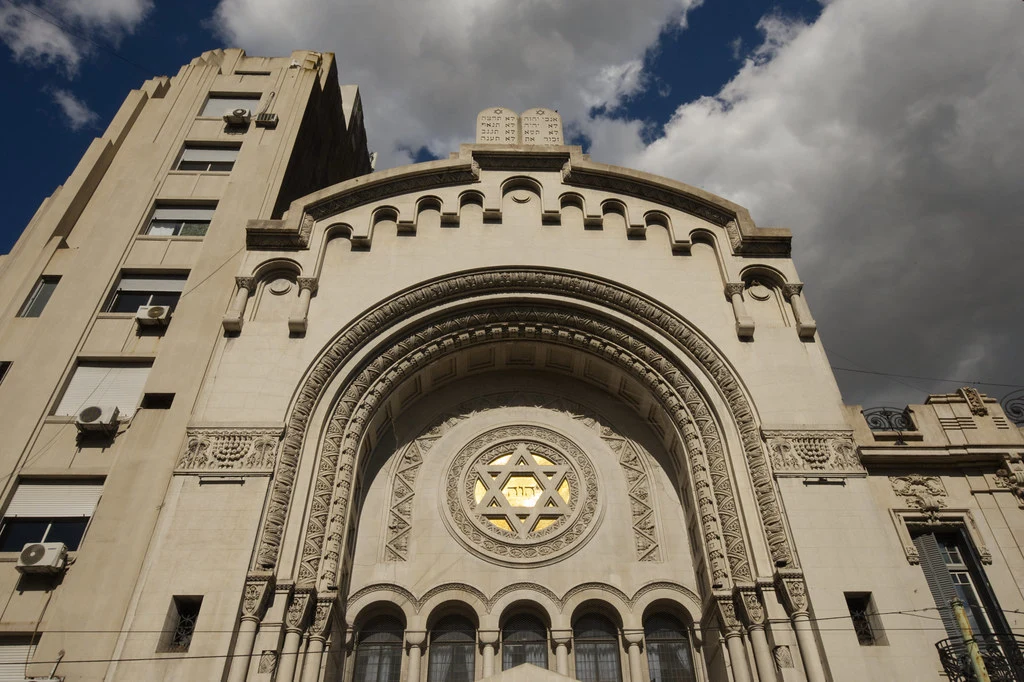
How the attack unfolded, according to the ruling
The ruling says the attackers bought a Renault Trafic van on Sunday 10 July 1994. It was loaded with about 300 kilograms of ammonal and TNT, two types of explosive.
The van was left in a public car park four blocks from the building on Friday 15 July. It was driven to the centre on the morning of Monday 18 July, when the building was busiest.
The judge classified the attack as a crime against humanity and as genocide under international law. The charges include aggravated homicide and injury motivated by racial or religious hatred.
Rafecas also linked the attack to a bombing of a passenger plane in Panama on 19 July 1994. That blast killed 20 people, 12 of them members of Panama’s Jewish community.
Why a trial without the accused is now possible
For three decades the AMIA bombing case stalled because the accused stayed abroad. Argentine law did not allow them to be tried in their absence.
Law 27,784, published in the Official Gazette on 7 March 2025, changed that. It allows trials in absentia for crimes including genocide, crimes against humanity, war crimes and terrorism.
In April 2025 prosecutor Sebastián Basso, head of the special AMIA investigative unit, asked Rafecas to apply the law. His request covered ten suspects, all of whom the court had formally declared fugitives for failing to appear.
Rafecas granted the request on 26 June 2025, the first time the law was applied in Argentina. A federal appeals chamber upheld his decision on 23 September 2025.
Not every victims’ group backs the procedure. Memoria Activa and two other associations of victims’ relatives opposed it in 2025, Infobae reported.
The public defender’s office challenged the law as unconstitutional. On the same Monday, the Federal Criminal Cassation Chamber, Argentina’s top criminal appeals court, rejected that challenge.
One of its three judges was Carlos Mahiques, the father of Justice Minister Juan Bautista Mahiques.
What the government said
Justice Minister Juan Bautista Mahiques welcomed the ruling on the social network X. He called it “a historic step” for the 85 victims, their families and Argentine society.
“Soon there will be an oral trial in Argentina for these facts,” he wrote, according to the news site El Destape. His ministry said in a statement that the ruling marked “a milestone in the fight against impunity”.
Patricia Bullrich, the senator who leads the bloc of La Libertad Avanza, President Javier Milei’s party, also backed the law on social media. “If a terrorism suspect flees, justice does not stop,” she wrote.
Bullrich also criticised the agreement on the case that Argentina signed with Iran under former president Cristina Fernández de Kirchner. She said the new law “came to end impunity”.
What happens next
The ruling can be appealed by the public defender, Hernán Silva, according to Infobae. If higher courts confirm it, the judge can ask the parties whether to send the case to trial.
That trial would be held before a federal oral court, Argentina’s trial-level criminal bench. No date has been set.
Rafecas also asked the Supreme Court to consider merging the case with the 1992 bombing of Israel’s embassy in Buenos Aires. Prosecutors argue the same organisation carried out both attacks.
For the victims’ families, the AMIA bombing case has been a story of delay since 1994. The minister’s promise of a trial now depends on the appeals courts.
More: Argentina coverage, every day from The Rio Times.
Frequently Asked Questions
What was the AMIA bombing?
On 18 July 1994 a van bomb blew up outside the headquarters of the Asociación Mutual Israelita Argentina (AMIA) in Buenos Aires. The centre was the main institution of Argentina’s Jewish community. The attack killed 85 people and injured at least 151, according to federal prosecutors.
Have the accused been convicted?
No. Judge Daniel Rafecas issued a procesamiento, a pre-trial finding that there is enough evidence to move toward trial. It can be appealed, and the accused are presumed innocent. None of the eight is in Argentine custody, and Iran has never accepted the accusations.
What is a trial in absentia?
It is a trial held without the defendant present. Argentina allowed it through Law 27,784, published on 7 March 2025. It covers crimes including genocide, crimes against humanity and terrorism, when suspects have been formally declared fugitives. A public defender represents them, and a defendant who later appears can in some cases request a new trial.
Who are the accused?
Ali Fallahijan and Ali Akbar Velayati were Iran’s intelligence and foreign ministers in 1994. Mohsen Rezai and Ahmad Vahidi were senior Revolutionary Guard commanders. Hadi Soleimanpour and Mohsen Rabbani were diplomats. Vahidi has commanded the whole Revolutionary Guard since 1 March 2026. Also charged were alleged intelligence agent Ahmad Reza Asghari and Lebanese citizen Salman Raouf Salman, an alleged Hezbollah operative.
Sources: Infobae on the ruling and the Justice Ministry statement, Rosario3 on the charges and the defendants, El Tribuno on the Cassation Chamber and Patricia Bullrich, El Destape, via Examedia, on Juan Bautista Mahiques’s post, Infobae on the Cassation Chamber ruling, Infobae on the June 2025 order, Infobae on the September 2025 appeal ruling, Al Jazeera on Ahmad Vahidi, Argentina’s Public Prosecution Service on the April 2025 request, InfoLeg on Law 27,784, Wikipedia on the case history and Interpol notices
This article was produced by The Rio Times’ automated newsroom system. How we use AI · Report an error
Read More from The Rio Times