Sudan Tells the UN Where It Thinks the RSF Gets Its Weapons
SUDAN · GEOPOLITICS
Key Facts
—The claim: Sudan’s UN ambassador told the Security Council on 24 August that eastern Libya, Chad and Ethiopia serve as supply corridors for the Rapid Support Forces.
—Who said it: Ambassador Al-Harith Idriss Al-Harith Mohamed, Sudan’s permanent representative, at a session requested by Denmark.
—What is documented: A UN panel reporting on Libya found a Libyan armed group, the Subul al-Salam Battalion, moved recruits, weapons and fuel across the border to the RSF.
—What is not: The claims about Ethiopia rest on Sudanese government monitoring, not on any published UN finding.
—The source: The account comes from Sudan’s state news agency, and Sudan’s government is a party to the war.
—The war: Fighting since April 2023 has displaced roughly 12 to 13 million people, with famine confirmed in parts of Darfur and South Kordofan.
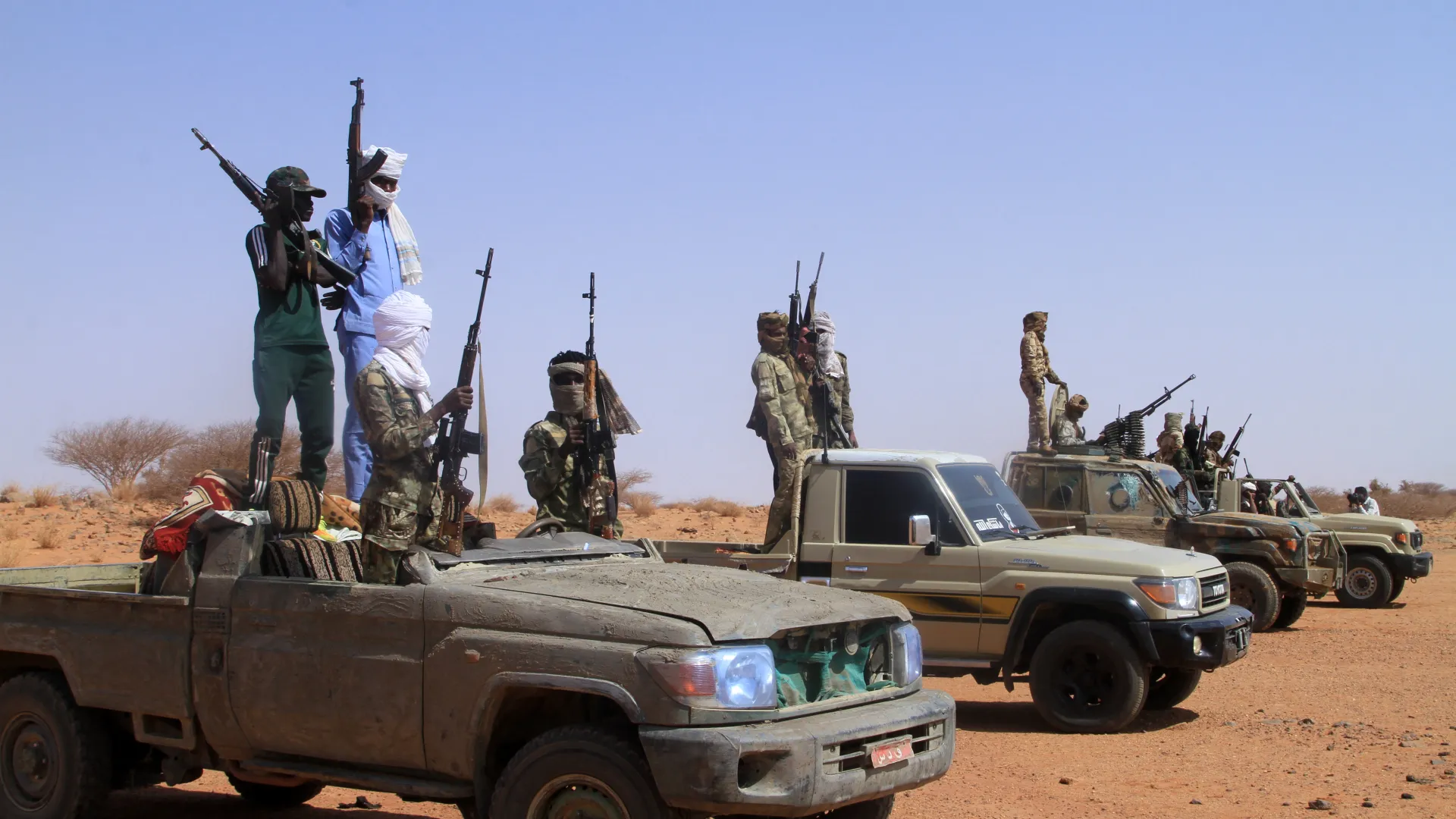
Sudan has told the UN Security Council that RSF supply routes run through eastern Libya, Chad and Ethiopia. A published UN panel supports the Libyan part of that account; the Ethiopian part rests on Sudan’s own monitoring.
What Sudan told the Council about RSF supply routes
Ambassador Al-Harith Idriss Al-Harith Mohamed spoke on 24 August at a session of the UN Security Council, the United Nations body responsible for peace and security, on the protection of civilians.
Denmark, which held the Council’s rotating presidency in August, had requested the meeting.
He said eastern Libya had become a central hub in the supply chain of the Rapid Support Forces, the paramilitary group fighting Sudan’s army since April 2023, citing the renovation and expansion of Kufra airport and a sharp increase in cargo flights.
He described Chad as a major hub in the war economy, with networks moving fuel, gold, weapons and fighters between Libya, Chad and Sudan.
On Ethiopia, he said Sudan had monitored a supply centre and rear base near the border since late 2025, and alleged drones were launched from Bahir Dar airport in March 2026.
He also said mercenary recruitment amounted to an act of aggression under the UN Charter and African Union instruments.
The framing served a diplomatic purpose, which is to move the war from a civil conflict to an internationalised one.
What an independent UN panel has actually documented
Here the distinction matters more than the allegation.
A panel of experts reporting on Libya made its findings public on 19 April 2026, covering the period from October 2024 to February 2026.
It found that the Subul al-Salam Battalion, an armed group based in Kufra and aligned with the forces that control eastern Libya, facilitated the transfer of recruits, weapons and fuel across the border to the Rapid Support Forces.
It also described a rear base roughly 75 kilometres southwest of Kufra and the use of Kufra airbase as a transit point, including for foreign fighters recruited in Colombia.
It reported that the battalion deployed units, escorted fighters across Libyan territory and supplied fuel and spare parts in June 2025.
Where the account outruns the evidence
The Libyan material in the ambassador’s statement tracks that published panel closely.
The Ethiopian allegations do not appear in any UN document we could identify, and are attributed to Sudanese government monitoring.
The panel that reports specifically on Sudan is a separate body, and its most recent publicly available final report dates from April 2025.
None of this makes the Ethiopian claim false. It means it is an assertion by a belligerent rather than a finding, and should be read that way.
The source is a party to the war
The account of the ambassador’s remarks comes from Sudan’s state news agency, and Sudan’s armed forces are one of the two combatants.
That does not disqualify it, but it does set the standard of proof a reader should apply.
The ambassador argued that the pace at which new fronts have opened exceeds the paramilitary’s own capabilities, and inferred external sponsorship from that.
He called for verification and fact-finding mechanisms to be activated, which is a reasonable request whoever makes it.
The Emirati question, and what courts have and have not decided
The most persistent allegation of external backing concerns the United Arab Emirates, which has consistently denied supplying weapons to any party.
Sudan took that allegation to the International Court of Justice, the UN’s highest court, in March 2025, accusing the Emirates of complicity in genocide against the Masalit people of Darfur.
On 5 May 2025 the court dismissed the case for want of jurisdiction, because of a reservation the Emirates entered when it joined the Genocide Convention.
That was a jurisdictional ruling and not a judgement on the merits, a distinction frequently lost in the reporting since.
A private analysis group has separately tracked devices it says belonged to Colombian fighters in Sudan, and argues they supported the capture of El Fasher.
That is a commercial research claim rather than a United Nations finding, and should be weighed accordingly.
The war these routes are feeding
Fighting since April 2023 has driven roughly 12 to 13 million people from their homes, about 9.5 million of them inside Sudan and more than 3 million into neighbouring countries, as of mid-2026.
In February 2026, UN investigators appointed by the Human Rights Council concluded that the RSF’s capture of El Fasher in October 2025 showed, in their words, the hallmarks of genocide, alongside documented war crimes and crimes against humanity.
Famine, the most severe level of hunger on the international scale, has been confirmed in El Fasher and in Kadugli.
At the same August meeting, the UN’s relief chief Tom Fletcher said more than two-thirds of Sudan’s people now need life-saving support, and that the UN recorded 1,400 civilian deaths in the first half of 2026 alone.
The overall death toll is genuinely unknown. One widely used conflict database, ACLED, had recorded at least 59,000 deaths by April 2026, and media investigations in late 2025 suggested the true figure may be far higher.
Aid access remains the binding constraint on knowing anything with confidence.
Where humanitarian agencies cannot reach, neither can the people counting.
Frequently Asked Questions
What did Sudan tell the Security Council?
Its permanent representative said on 24 August 2026 that eastern Libya, Chad and Ethiopia serve as supply routes for the Rapid Support Forces, citing cargo flights through Kufra and cross-border smuggling networks.
Has the United Nations confirmed these claims?
Only partly: a panel of experts reporting on Libya documented a Libyan armed group moving recruits, weapons and fuel to the RSF. The allegations concerning Ethiopia rest on Sudanese government monitoring rather than any published UN finding.
What happened to Sudan’s case against the United Arab Emirates?
The International Court of Justice dismissed it in May 2025 for want of jurisdiction, because of a reservation the Emirates entered to the Genocide Convention. There was no ruling on the merits.
How many people have been displaced by the war?
Roughly 12 to 13 million people have been forced from their homes since fighting began in April 2023, as of mid-2026, with famine confirmed in El Fasher and Kadugli.
Connected Coverage
Sudan’s war keeps drawing in its neighbours, as the siege of El Obeid and Saudi armoured vehicles displayed with the Sudanese army both showed. The wider contest for influence is the subject of Africa: The New Scramble.
This article was produced by The Rio Times’ automated newsroom system. How we use AI · Report an error · Editorial responsibility: Matthias Camenzind, Editor-in-Chief