Key Facts
- SLX rose to 104.10 $ on the latest settled session, a gain of +0.59% d/d on 2026-07-27.
- Gerdau edged higher to 4.83 $, up +0.42% d/d on 2026-07-27.
- CSN outperformed peers to 1.12 $, rising +3.70% d/d on 2026-07-27.
- Ternium gained to 47.74 $, adding +0.93% d/d on 2026-07-27.
- The steel trade backdrop is shaped by cheap Chinese imports and tariff measures, which are central to the regional pricing and margin debate.
- Demand from construction and autos remains the key domestic support for Latin American steelmakers, especially in Brazil and Mexico.
Today’s Focus
Latin American steel stocks moved higher in the latest session, with the steel-producers ETF SLX and the region’s listed names all finishing up. The broad message for investors is that the market is still balancing tariff protection against the drag from cheap Chinese imports.
Brazilian producers Gerdau, CSN and Usiminas sit at the centre of that tug-of-war, while Mexico’s Ternium reflects the same industrial cycle through a different market. Construction and auto demand matter because they are the main end-markets that can absorb more steel and help support pricing.
For foreign readers, the important point is that this is not just a company story: it is a regional trade story. When imports are cheap, local mills feel pressure; when tariffs bite and domestic demand holds up, their shares tend to benefit.
The latest board showed a firmer tone across the sector, led by CSN, with the ETF and the other names also higher. The next thing to watch is whether tariffs stay firm enough to offset import pressure while construction and auto demand keep improving.
What matters today. Tariffs and end-demand are still deciding whether Latin American steel shares can hold their bounce.
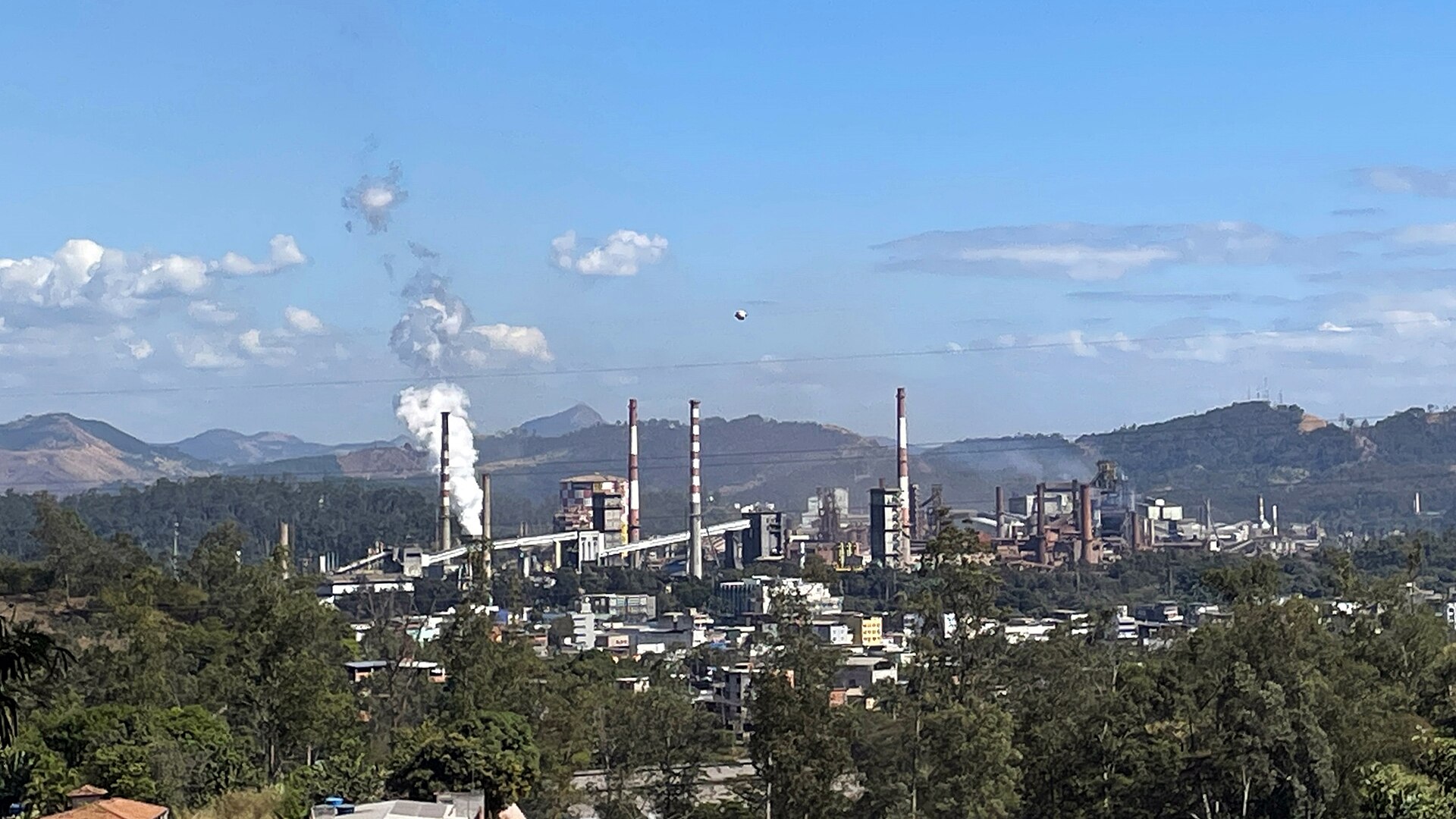
01 The session in one read
Latin American steel stocks ended the latest session firmer, with the steel-producers ETF SLX at 104.10 $ and the main regional names also higher. The move suggests investors are still willing to buy the sector when tariff protection and end-demand look supportive.
The bigger story is that steel in Latin America remains a policy-and-demand trade, not just a commodity trade. Cheap Chinese imports continue to pressure the market, so the shares tend to react quickly to any sign that tariffs or domestic construction and auto activity may improve pricing power.
The market’s message was straightforward: steel stocks in Latin America rose, but the real driver remains the balance between import pressure and domestic demand. Cheap Chinese steel keeps threatening local pricing, while tariffs and steady construction and auto activity can still give regional producers room to recover. The variable to watch is tariffs.
02 The board
Brazil’s Gerdau closed at 4.83 $, CSN at 1.12 $, and Mexico’s Ternium at 47.74 $. Among those names, CSN had the strongest daily move, while Gerdau and Ternium also finished higher.
The pattern matters because it shows broad participation rather than a single-stock story. For readers outside the region, the key point is that these companies make flat steel and long steel used in buildings, machinery and vehicles, so their share prices often track the health of factories, construction sites and trade policy at the same time.
| Asset | Level | Change |
|---|---|---|
| Steel (SLX ETF) | 104.10 $ | +0.59% |
| Gerdau | 4.83 $ | +0.42% |
| CSN | 1.12 $ | +3.70% |
| Ternium | 47.74 $ | +0.93% |
Source: RT close, 2026-07-27. Where a commodity has no spot feed, an exchange-traded tracker or leading producer is shown as a labelled proxy.
Live Market IntelligenceThe live market board
Rio Times · Live Market Intelligence
Latin America — Cross-Market Board
| Instrument | Last | Change | YoY | Prev. | High | Low | Volume |
|---|---|---|---|---|---|---|---|
| IBOV | 184,984.96 | -0.54% | +21.85% | 185,992.03 | 168,310 | 167,142 | — |
| IPSA | 11,381.18 | +1.30% | — | 11,235.60 | 11,210 | 10,984 | 1,513,213,483 |
| IPC MEX | 63,873.32 | +0.58% | +12.17% | 63,507.11 | 66,121 | 65,405 | 108,886,187 |
| MERVAL | 3,017,810 | -1.43% | +30.51% | 3,022,485 | 3,042,365 | 2,991,150 | — |
| COLCAP | 2,525.81 | +0.16% | — | 9.04 | 9.05 | 9.02 | 4,133 |
| BVL PERÚ | 60,023.65 | -0.35% | — | — | — | — | — |
| USD/BRL | 5.16 | +0.01% | -5.13% | 5.16 | 5.18 | 5.14 | — |
| EUR/BRL | 5.95 | +1.01% | -5.83% | 5.89 | 5.98 | 5.94 | — |
| USD/MXN | 17.06 | -0.24% | -8.58% | 17.10 | 17.08 | 17.01 | — |
| USD/CLP | 913.98 | +0.04% | -5.67% | 913.65 | 915.11 | 906.68 | — |
| USD/COP | 3,140 | +0.03% | -22.04% | 3,139 | 3,141 | 3,105 | — |
| USD/PEN | 3.36 | -0.66% | -4.82% | 3.38 | 3.38 | 3.35 | — |
| USD/ARS | 1,493 | +0.10% | +12.96% | 1,491 | 1,494 | 1,480 | — |
| USD/UYU | 40.27 | +1.24% | +1.80% | 39.77 | 40.27 | 40.23 | — |
| USD/PYG | 5,939 | +1.68% | -19.54% | 5,841 | 5,939 | 5,925 | — |
| USD/BOB | 11.64 | -0.76% | +72.04% | 11.73 | 11.72 | 11.64 | — |
| USD/DOP | 58.34 | +1.25% | -3.44% | 57.62 | 58.34 | 58.04 | — |
| USD/CRC | 445.92 | +0.89% | -9.71% | 441.97 | 448.50 | 445.92 | — |
03 What moved it
The main negative force remains cheap Chinese imports, which can undercut local mills and squeeze margins. Tariffs are the offset, because they make imported steel less competitive and can help domestic producers defend prices.
Construction and auto demand are the main real-economy supports. When builders and carmakers buy more steel, mills have more room to lift volumes and pricing, and that usually helps sentiment in the sector.
04 The Latin American read
Brazil is the central market to watch because Gerdau, CSN and Usiminas are the region’s most closely followed listed steel names. Their shares are often read as a proxy for the strength of Brazilian industry, trade protection and domestic spending.
Mexico matters because Ternium links the region to North American manufacturing demand, especially autos. For foreign investors, that makes the sector a useful barometer of whether Latin American industry is being helped more by tariffs or hurt more by imports.
05 The names to watch
Gerdau is the largest long-steel producer in the Americas, heavily exposed to construction cycles in Brazil and North America. CSN is a flat-steel giant with integrated mining operations, making it sensitive to both steel prices and iron ore.
Ternium operates large flat-steel mills in Mexico with deep links to the automotive supply chain and the wider US industrial market. Usiminas, though not on the board above, completes the Brazilian trio and is jointly controlled by Ternium and Nippon Steel, giving it a dual domestic and Asian strategic angle.
06 The outlook
The near-term direction for Latin American steel stocks depends on whether governments keep tariffs firm enough to deter a fresh wave of Chinese supply, and whether construction and auto demand in Brazil and Mexico stays steady. For a global investor, the sector is a concentrated way to bet on protectionism and domestic spending holding the line against excess capacity from Asia.
07 What to watch
- Tariff policy: Any change in Brazil or Mexico’s steel import duties would directly alter the competitive landscape for domestic mills.
- Chinese export volumes: A further rise in cheap Chinese shipments would test whether regional tariffs are high enough to protect local pricing.
- Brazil construction data: Steady or improving construction activity supports long-steel demand and can lift sentiment for Gerdau and CSN.
- Mexican auto production: Auto output numbers matter for Ternium because the sector is a major consumer of flat steel in North America.
Frequently Asked Questions
What is SLX?
SLX is an exchange-traded fund that holds shares of global steel producers, offering a single way to track the sector, including Latin American names.
Why do Chinese imports matter?
China produces more steel than any other country, and its exports can flood regional markets at prices that local mills find hard to match, squeezing their profits.
What is the difference between flat and long steel?
Flat steel is used in cars, appliances and pipes; long steel goes into construction, such as rebar for reinforced concrete and wire rod.
How do tariffs help local steelmakers?
Tariffs raise the cost of imported steel, which makes domestic products more competitive and can let local mills support both volumes and prices.
This article was produced by The Rio Times’ automated newsroom system. How we use AI · Report an error
LatAm Markets: Live Signals → — real-time movers, turnover leaders and FX across Latin America.
Read More from The Rio Times