Asia Intelligence Brief — Friday, September 18, 2026
Executive Summary
Asia Intelligence Brief for 18 September 2026: Seoul's bus strike never began after a settlement at ten to two in the morning that handed the wage
Asia Intelligence Brief — Friday, September 18, 2026
Key Facts
Asia’s central banks spent this week answering a question Washington asked on Wednesday. Tokyo raised the price of money, Hong Kong followed the Federal Reserve upward by formula, and Taipei chose to sit still.
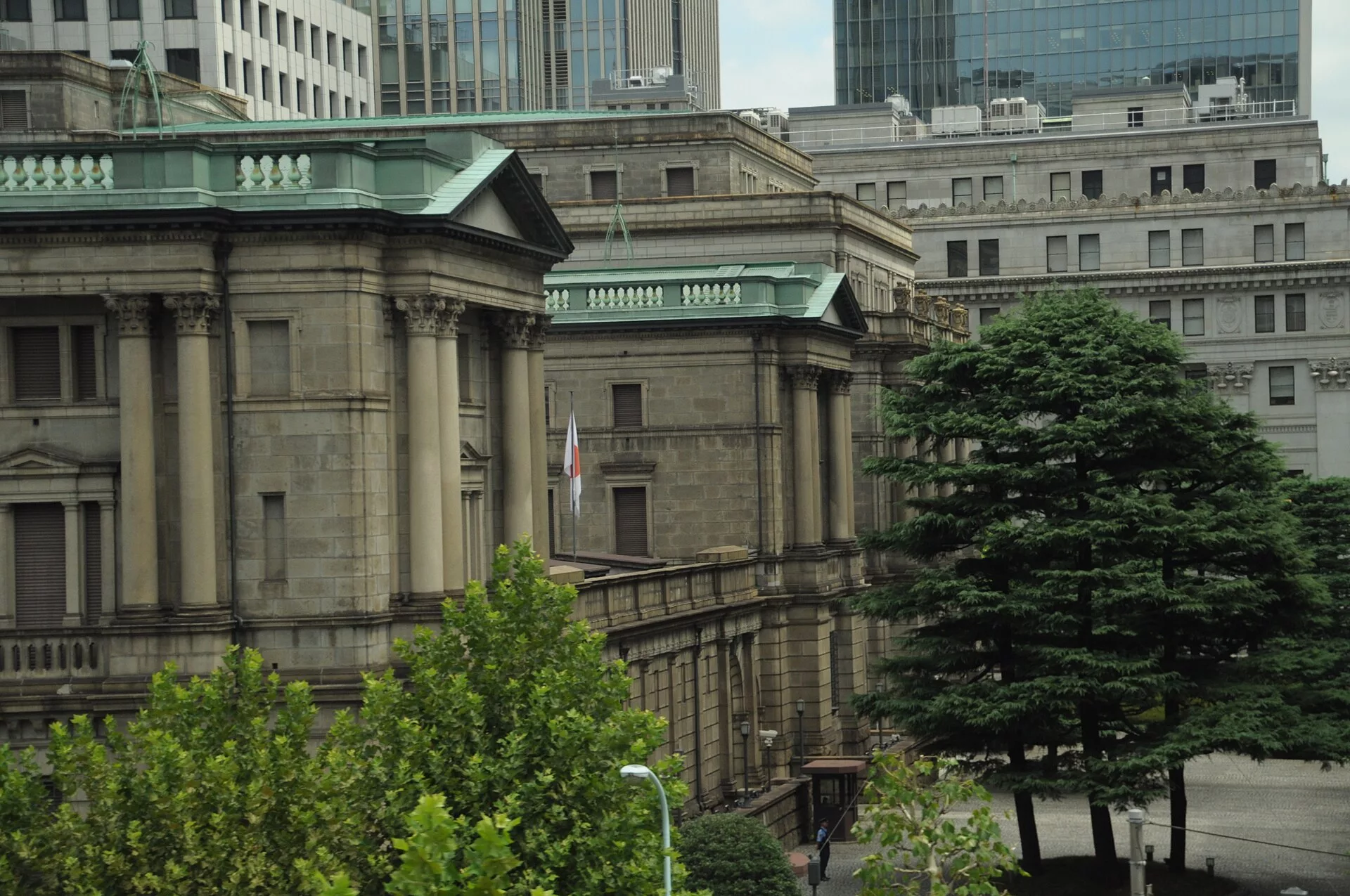
The Bank of Japan set its rate at 1.25 per cent on 18 September, the highest in about 31 years, and the yen weakened rather than strengthened. That is the shape of the week across the region: higher rates in several capitals, and currency markets that no longer reward them automatically.
Read in English this morning, with material from Japanese, Chinese and Korean sources taken in English editions or in agency translation. The desk also read its own Asia file of 17 September.
Japan: A Rate At 1.25 Per Cent, And A Weaker Yen
The Bank of Japan raised its policy rate to 1.25 per cent from 1.00 per cent on 18 September, by seven votes to two. The bank named the two dissenters as Toichiro Asada and Ayano Sato, both of whom wanted the rate left where it was.
It is the highest Japanese policy rate in about 31 years, a level last seen in 1995, and the second increase in three months. The board also changed its guideline for money market operations the same day.
Governor Kazuo Ueda told his news conference afterwards that he had no specific pace in mind for further increases, on the account carried by FXStreet. He also said it is difficult to judge where the rate should finally settle.
Japan’s Statistics Bureau published August consumer prices on 18 September, hours before the decision. The headline rate was 1.9 per cent on a year earlier, the rate excluding fresh food 1.7 per cent, and the rate excluding fresh food and energy 1.9 per cent.
The yen closed at 155.97 to the dollar on 17 September. It weakened to 157.085 during Friday’s session after the decision, which is a reading taken while trading continued rather than a settlement.
Japanese government bond yields moved in two directions at once on Friday, with shorter maturities easing and longer ones rising, on the Reuters account carried by The Korea Times and The Standard of Hong Kong. The two dissenting votes were read in Tokyo as a sign that the next increase sits further off than it looked on Thursday.
A central bank that raises its rate and then watches its currency fall has been told something useful. The market is pricing the pace of the journey rather than the size of the step.
Hong Kong: A Currency Peg Does The Deciding
The Hong Kong Monetary Authority set its base rate at 4.25 per cent on 17 September, its first increase in more than three years. Under the territory’s linked exchange rate system, which holds the Hong Kong dollar in a band against the American dollar, the local rate follows the Federal Reserve by formula rather than by choice.
The Federal Reserve had raised its own target range to between 3.75 per cent and 4.00 per cent on 16 September, effective the following day, by twelve votes to nothing. It was the first American increase since July 2023.
The Hong Kong Monetary Authority sets the rate at fifty hundredths of a percentage point above the lower end of the American target range, which gives 4.25 per cent. The alternative reference, a five-day moving average of overnight and one-month Hong Kong interbank rates, stood at 2.50 per cent, and the higher of the two applies.
Eddie Yue, the Monetary Authority’s chief executive, warned that a widening gap between Hong Kong dollar and American dollar interest rates could encourage borrowing in one currency to invest in another. Positions of that kind tend to weaken the local currency as they build.
Whether Hong Kong’s commercial banks follow with their own lending rates was still open on 17 September, with Vantage Markets reporting that the market was waiting on HSBC and Standard Chartered. A base rate is the price the monetary authority charges banks, and a prime rate is the price a household actually pays.
The Chinese yuan, by contrast, is managed rather than pegged, and it strengthened this week. The offshore rate reached 6.6967 to the dollar, its strongest since July 2022, after the People’s Bank of China set a firmer daily reference rate for an eighth consecutive session.
Khoon Goh of ANZ told Bloomberg that further gains are likely if the daily fixings continue on their recent trend. A currency that strengthens while the region’s rates rise is an unusual combination, and Beijing is choosing it.
Live Market IntelligenceCommodities — Live Market Board
Rio Times · Live Market Intelligence
Commodities — Live Market Board
-0.03%
| Instrument | Last | Change | YoY | Prev. | High | Low | Volume |
|---|---|---|---|---|---|---|---|
| GOLD | 4,461 | +1.78% | +33.20% | 4,383 | 4,503 | 4,421 | 139,824 |
| SILVER | 65.59 | +1.26% | +73.05% | 64.77 | 66.98 | 64.81 | 46,406 |
| BRENT | 88.88 | -0.03% | +34.42% | 88.91 | 90.07 | 88.12 | 29,713 |
| WTI | 83.11 | -0.11% | +31.57% | 83.20 | 84.35 | 82.40 | 166,848 |
| COPPER | 6.61 | +0.03% | +46.70% | 6.61 | 6.71 | 6.61 | 39,543 |
| LITHIUM | 75.20 | +1.47% | +62.95% | 74.11 | 75.80 | 75.08 | 89,275 |
| IRON ORE | 161.91 | — | +58.10% | 161.91 | 161.91 | 1 | |
| SOY | 1,184 | +3.20% | +17.05% | 1,148 | 1,199 | 1,168 | 163,179 |
| CORN | 480.50 | +10.02% | +29.34% | 436.75 | 480.75 | 459.50 | 341,248 |
| WHEAT | 655.00 | +3.93% | +29.70% | 630.25 | 657.75 | 631.50 | 128,793 |
| COFFEE | 317.25 | -5.51% | +0.67% | 335.75 | 321.20 | 313.55 | 21,747 |
| SUGAR | 16.43 | -1.79% | -3.01% | 16.73 | 17.11 | 16.22 | 171,992 |
| COCOA | 5,719 | +3.18% | -34.96% | 5,543 | 5,779 | 5,574 | 26,773 |
| ORANGE JUICE | 138.55 | -0.47% | -45.38% | 139.20 | 141.05 | 137.50 | 703 |
| COTTON | 85.03 | +2.33% | +26.78% | 83.09 | 82.90 | 81.96 | 16,546 |
| BEEF | 223.60 | -3.93% | -5.18% | 232.75 | 226.40 | 223.00 | 16,126 |
| CATTLE | 339.10 | -3.16% | -1.82% | 350.17 | 345.50 | 338.60 | 10,164 |
| USD/BRL | 5.16 | +0.01% | -5.13% | 5.16 | 5.18 | 5.14 | — |
Taiwan: The Central Bank That Did Not Move
The Central Bank of the Republic of China, Taiwan’s central bank, held its discount rate at 2.00 per cent on 17 September. Its rate on secured lending to banks stayed at 2.375 per cent and its unsecured rate at 4.250 per cent.
The bank lifted its 2026 growth forecast to 11.48 per cent, from 9.45 per cent in June, on demand tied to artificial intelligence. That figure is less startling than it looks, because the economy grew 14.15 per cent in the first half and the bank expects 9.09 per cent in the second.
The bank also raised its 2026 consumer price forecast to 2.03 per cent, from 1.91 per cent, and put 2027 at 1.83 per cent. Prices are expected to rise more slowly next year than this one, which is the argument for leaving rates alone.
From 18 September a buyer of a second home may borrow up to 70 per cent of the purchase price, against 60 per cent before. The bank also removed a requirement that buyers of land begin construction within a set period.
Taipei is loosening the rules on property while Tokyo and Hong Kong raise the price of money. A central bank with an export boom behind it can afford a different argument from its neighbours.
Washington: A Tariff Power Aimed At Two Asian Buyers
The United States House of Representatives passed a Russia and Iran sanctions measure on 16 September by 262 votes to 159, sending it to the president. Roll Call reported that only seven Republicans opposed it and that 58 Democrats supported it, with most Democrats against.
The Senate had passed the measure by 86 votes to 11 in the previous month, on the same Roll Call account. It also extends sanctions on Iran that were due to expire this year.
Al Jazeera reported on 17 September that the measure allows tariffs of up to 100 per cent on two groups of countries. They are the five largest buyers of Russian energy, and the five doing most to help Russia evade sanctions.
It also allows tariffs of up to 500 per cent on Russian goods entering the United States. Nothing takes effect until the president signs, and he had not done so when this brief closed.
On the same Al Jazeera account China takes about 50 per cent of Russian crude oil exports and India about 37 per cent, with Turkey and the European Union at roughly 5 per cent each. Indian imports had already fallen to 1.1 million barrels a day in January 2026, from an average of 1.7 million barrels a day in 2025.
Representative Michael R. Turner put the case for the measure in a single line, saying that “the economic lifeline that keeps Putin’s war machine moving must be restricted”. Representative Richard E. Neal put the case against it, telling the House that his party is for Ukraine and against giving this president more tariff authority.
A tariff power that reached the president’s desk on 16 September is already a fact for a planning department in Mumbai or in Shandong. The power exists, and the decision to use it belongs to one person.
Oil: Saudi Cargoes Turned Towards Asian Refineries
November Brent settled at US$104.82 a barrel on Thursday 17 September, down US$1.01 and down 0.95 per cent on the day. West Texas Intermediate for October settled at US$101.91, down US$0.52.
Prices fell for a third session because Saudi Arabia offered additional crude cargoes to Asian refiners, transferred ship to ship off the Omani port of Sohar. Nation Thailand reported the offer on 17 September, alongside a separate effort to bring damaged pipeline capacity back.
Saudi Arabia is also working to restore about half the capacity of its East-West pipeline within days, with the remainder expected within about six weeks, on the Rigzone account of 17 September. Drone strikes had damaged the line.
How much oil still moves through the Strait of Hormuz is not known with any confidence. This brief carries three estimates from two sources rather than choosing between them.
Chris Wright, the United States Energy Secretary, cited 18 million barrels for a single day on 16 September. He had given a seven-day average of 11 million barrels a day on 10 September, while Clarksons Research estimated about 8 million barrels a day.
Tanker traffic through the strait was still falling, on the Nation Thailand account of 17 September. A prolonged shutdown of the Saudi line could remove as much as 4 per cent of world oil supply, the same report said.
Asia’s refineries are being supplied around a war rather than through it. The barrels still arrive, and the route they take is now part of the price.
India: Reserves Fall After A Record Week
India’s foreign exchange reserves fell US$4.9 billion to US$780.8 billion in the week to 11 September, on Reserve Bank of India figures published on 18 September. Business Standard carried the release, which ended ten consecutive weeks of increases.
Foreign currency assets fell US$2.4 billion to US$645.8 billion and gold holdings fell US$2.6 billion to US$111.2 billion. Special drawing rights at the International Monetary Fund rose US$39 million to US$18.8 billion. India’s reserve position at the fund was unchanged on the week, at US$4.9 billion.
The week before had brought a record increase of US$44.9 billion, which lifted reserves to US$785.7 billion. An economist quoted by Business Standard attributed this week’s fall to revaluation and a stronger dollar rather than to any spending of reserves.
Reserves can fall when the dollar rises even if a country spends nothing at all. That distinction matters most in the weeks when the headline number moves fastest.
What This Means From Latin America
Money became dearer in two Asian centres this week, and Latin American borrowers meet the same arithmetic in dollars. Brazil’s Selic rate (the country’s benchmark interest rate) was cut to 13.75 per cent with effect from 17 September, moving the other way.
A Japanese policy rate of 1.25 per cent makes money borrowed in yen costlier to hold. Unwinding positions funded that way has moved the Brazilian real and the Mexican peso in past cycles.
Brent’s settlement of US$104.82 a barrel on 17 September is the number Latin American producers budget against. It is also the number Asian importers are trying to get away from, and both sides are reading the same strait.
The American tariff power aimed at buyers of Russian energy is a reminder that trade rules can change quickly in either hemisphere. Exporters in Chile, Peru and Brazil sell into the same policy weather.
What We Are Watching
- China’s loan rates on Monday — The one-year rate is 3.00 per cent and the five-year rate 3.50 per cent. All 21 market participants in a Reuters poll expect both held on 21 September, which would be a sixteenth consecutive month unchanged.
- The Asian Games in Aichi and Nagoya — They open on 19 September and close on 4 October, with 45 countries and more than 11,000 athletes across 43 sports. Organisers planned for 15,000 participants and are housing more than 17,000, some of them on the cruise ship Costa Serena.
- Hong Kong’s commercial lending rates — Whether HSBC and Standard Chartered raise their own rates after the Monetary Authority moved to 4.25 per cent on 17 September. Vantage Markets reported that day that the question was still open.
- Taiwan’s eased mortgage limits — A buyer of a second home has been able to borrow up to 70 per cent of the price since 18 September, against 60 per cent before. Whether Taipei’s property market responds is the test of a central bank that held its rate.
- The United Nations General Assembly debate — The general debate of the 81st session runs from 22 to 28 September in New York. Thailand’s prime minister Anutin Charnvirakul is in the United States from 21 to 27 September.
- Thailand’s five-day flood alert — The Department of Disaster Prevention and Mitigation placed every province, Bangkok included, on alert for 16 to 20 September. Fourteen provinces hold reservoirs above 80 per cent of capacity.
- The Saudi East-West pipeline — About half of the damaged capacity could return within days and the remainder within about six weeks, Rigzone reported on 17 September. Brent settled at US$104.82 a barrel that day.
- India’s monetary policy committee in October — It meets from 5 to 7 October and announces on the third day. Reserves stood at US$780.8 billion in the week to 11 September.
The Bigger Picture
Three Asian central banks met in the same week and answered it three different ways. Tokyo raised, Hong Kong followed a formula it did not write, and Taipei stayed still and loosened a mortgage rule instead.
That spread is the ordinary condition of a region that shares a supplier of energy but not a currency. Asia does not run one monetary cycle, and this week it ran three.
The longer pattern is familiar enough: dearer money and dearer fuel arriving in the same quarter, as they did in 1973 and again in 1979. What followed each time was a decade of stockpiles, pipelines and terminals rather than a decade of decline.
None of this asks a reader to move money this week. It asks them to expect the next quarter’s figures to look different from the last one’s.
Frequently Asked Questions
What did the Bank of Japan actually decide on 18 September 2026?
It raised its policy rate to 1.25 per cent from 1.00 per cent, by seven votes to two. The Bank of Japan named the two dissenters as Toichiro Asada and Ayano Sato, both of whom wanted the rate left where it was. It is the highest Japanese policy rate in about 31 years, a level last seen in 1995, and the second increase in three months. The board also changed its guideline for money market operations the same day. Governor Kazuo Ueda told his news conference that he had no specific pace in mind for further increases, on the account carried by FXStreet. Japan’s Statistics Bureau had published August consumer prices hours earlier, on 18 September. The headline rate was 1.9 per cent, the rate excluding fresh food 1.7 per cent, and the rate excluding fresh food and energy 1.9 per cent.
Why did Hong Kong raise its rate when its own economy did not ask for it?
Because Hong Kong does not set its own rate in the ordinary sense. The territory runs a linked exchange rate system that holds the Hong Kong dollar in a band against the American dollar, and the base rate follows the Federal Reserve by formula. The Federal Reserve raised its target range to between 3.75 per cent and 4.00 per cent on 16 September, effective the following day, by twelve votes to nothing. The Hong Kong Monetary Authority then moved to 4.25 per cent on 17 September. That is Hong Kong’s first increase in more than three years. The formula takes the higher of two references. One is fifty hundredths of a percentage point above the lower end of the American target range, which gives 4.25 per cent. The other is a five-day moving average of overnight and one-month Hong Kong interbank rates, which stood at 2.50 per cent. Eddie Yue, the authority’s chief executive, warned that a widening gap between Hong Kong dollar and American dollar rates could encourage borrowing in one currency to invest in another.
What would the new American tariff power mean for China and India?
It would give the president the option of tariffs of up to 100 per cent on two groups of countries, on Al Jazeera’s account of 17 September. They are the five largest buyers of Russian energy, and the five doing most to help Russia evade sanctions. The same measure allows tariffs of up to 500 per cent on Russian goods entering the United States, and it extends sanctions on Iran that were due to expire this year. China takes about 50 per cent of Russian crude oil exports and India about 37 per cent, with Turkey and the European Union at roughly 5 per cent each. Indian imports had already fallen to 1.1 million barrels a day in January 2026, from an average of 1.7 million barrels a day in 2025. The House of Representatives passed the measure on 16 September by 262 votes to 159 and the Senate had passed it by 86 votes to 11 in the previous month, on Roll Call’s account. The measure had travelled as far as the president’s desk when this brief closed, and nothing in it binds anyone until he signs.
What does this week change for someone living in Latin America?
Three things, in plain terms. First, the Federal Reserve moved its target range to between 3.75 per cent and 4.00 per cent on 16 September, and dollar borrowing became dearer for everyone who uses it, including Brazilian, Mexican and Colombian borrowers. Brazil’s Selic rate (the country’s benchmark interest rate) was cut to 13.75 per cent with effect from 17 September, so the two are moving apart. Second, a Japanese policy rate of 1.25 per cent makes money borrowed in yen costlier to hold, and unwinding positions funded that way has moved the Brazilian real and the Mexican peso in past cycles. Third, November Brent settled at US$104.82 a barrel on 17 September, which is the number regional producers budget against and the number Asian importers are trying to escape. None of these is a reason to act today, and all three are reasons to read the next quarter closely.
Sources: The Korea Times, Seoul Economic Daily, The Standard of Hong Kong and Investing.com, each carrying Reuters on the Bank of Japan’s decision and on Japan’s August consumer prices. Also FXStreet on Governor Kazuo Ueda’s news conference. Also Focus Taiwan, the English service of the Central News Agency, and Central Banking on the reception of Taiwan’s decision. Also Vantage Markets and Peter Lewis’s Asian Business and Finance Briefing on the reception of the Hong Kong decision. Also Roll Call on the House and Senate votes and Al Jazeera on the tariff powers and the Russian crude shares. Also Nation Thailand and Rigzone on Thursday’s oil settlements, the Saudi cargoes and the Strait of Hormuz claims. Also Business Standard on the Reserve Bank of India’s weekly reserve figures, Yahoo Finance carrying Bloomberg on the yuan, and Advisor Perspectives on the Federal Open Market Committee decision of 16 September 2026. Primary sources: the Bank of Japan on its decision of 18 September 2026, for the rate of 1.25 per cent, the seven to two vote, the two dissenters and the change to the guideline for money market operations. The Central Bank of the Republic of China (Taiwan) on its board meeting of 17 September 2026, for the discount rate of 2.00 per cent, the growth and consumer price forecasts, and the mortgage change effective 18 September. The Hong Kong Monetary Authority on its base rate of 4.25 per cent, effective 17 September 2026, and on the formula behind it. Also Japan’s Statistics Bureau consumer price release of 18 September 2026, the Reserve Bank of India’s weekly statistical supplement of 18 September 2026, and the United Nations high-level week schedule for the 81st session. Market figures are the house settlements of 17 September 2026. Reporting from 15 to 18 September 2026. Currency conversions are desk calculations and are approximate.
This article was produced by The Rio Times’ automated newsroom system. How we use AI · Report an error