South Africa Shields Its Steel Mills as the EU Starts Charging for Carbon
South Africa · TRADE
Key Facts
- —The country South Africa, home to about 65 million people, has a US$427 billion economy (World Bank, 2025), slightly smaller than Denmark’s. It is Africa’s second-largest steel producer.
- —Why it matters Steel feeds South Africa’s car plants, mines and builders. The European Union (EU) is its second-largest steel export market, and its main steelworks run on coal.
- —Why now On 18 September the trade regulator proposed higher steel tariffs and more import permits. Anti-dumping duties on Chinese coil took effect, and builders report shortages.
- —What happened Since 1 January 2026, EU importers of steel owe a carbon charge under the Carbon Border Adjustment Mechanism (CBAM). Its first 2026 prices were about €75 (about US$86) per tonne of carbon dioxide.
- —Who is involved ArcelorMittal South Africa, the main steelmaker, shut its loss-making long-steel business in 2025. The Industrial Development Corporation (IDC), a state lender, is in advanced talks on a deal.
- —What it means for you Building or manufacturing in South Africa means tighter supply of beams and bars. EU buyers of South African steel need verified emissions data from suppliers.
- —Still open Whether the IDC deal closes and whether the EU adds power-station emissions. The third-quarter certificate price is due on 5 October.
South Africa’s steel industry is being squeezed from both ends. At home it is losing ground to cheap imports, while in Europe its exporters now face a charge on carbon.
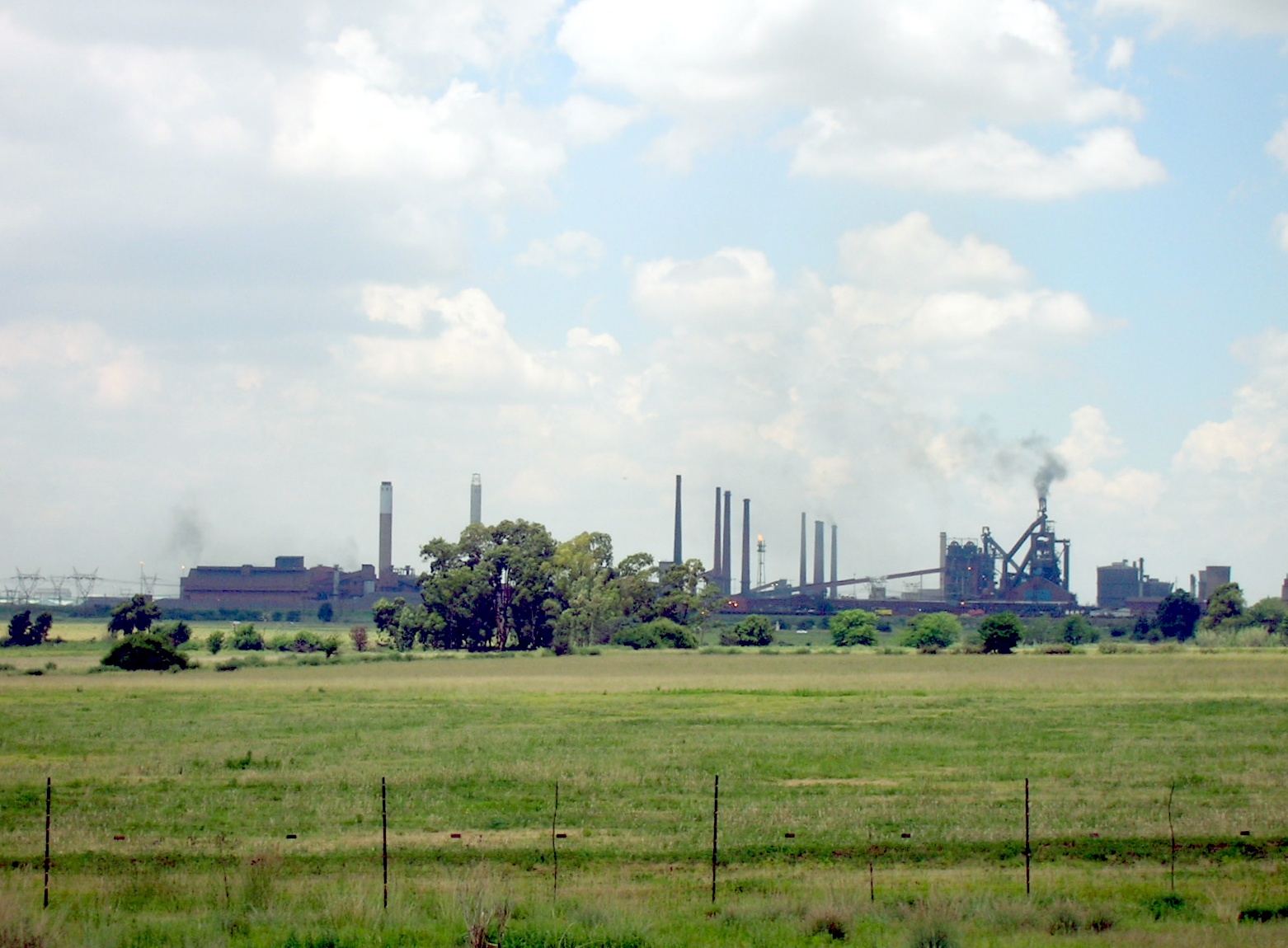
South Africa, the continent’s most industrialised economy, is trying to save a steel industry that is shrinking fast. Its exporters also face the EU carbon border tax, which since January prices the carbon emitted in making steel sold to Europe.
The country’s main steelmaker is ArcelorMittal South Africa, the local arm of the global ArcelorMittal group. By the end of 2025 it had shut its loss-making long-steel business, which made the bars, rods and beams used in construction.
What happened this week
On Friday 18 September, South Africa’s trade regulator published preliminary findings from a sweeping review of steel tariffs. The regulator is the International Trade Administration Commission, known as ITAC.
It proposed raising duties on wire, cables, screws, bolts, tubes and some flat steel to between 10% and 30%. It also proposed a longer list of steel products that need an import permit.
Companies and other interested parties have four weeks to comment before final decisions are made. The move follows the steepest and broadest steel tariffs in two decades, introduced in May, Business Day reported.
The same day, anti-dumping duties took effect on corrosion-resistant steel coil from China, used for roof sheeting. ITAC found dumping margins of 8.21% to 57.84%, following a complaint by ArcelorMittal South Africa and Safal Steel.
Because safeguard duties already apply, only the excess is charged for now. For most Chinese suppliers that means 5.5% in the first year, rising in later years.
Shortages after a plant closure
Protection has a cost for steel users. ArcelorMittal South Africa’s Newcastle Works, in KwaZulu-Natal province, has produced nothing since the long-steel business was wound down.
The Southern African Institute of Steel Construction said this week that its fabricators face shortages of structural steel. It asked for temporary tariff relief until new local supply emerges.
Structural steel from China already faces anti-dumping duties of 74.98%, and from Thailand 20.32%, on top of a 10% general duty. ITAC has indicated that new duty rebates are unlikely before the current comment period ends.
The home market is weak on price as well as supply. The South African Iron and Steel Institute, an industry body, told members of parliament in June that imports reached 38% of primary steel consumption in April.
What the EU carbon border tax is
The Carbon Border Adjustment Mechanism, or CBAM, is an EU charge on the carbon emitted in making certain imported goods. It covers iron and steel, aluminium, cement, fertilisers, electricity and hydrogen.
EU factories already pay for their emissions under the bloc’s carbon market, the Emissions Trading System. CBAM puts a similar price on imports, so that production does not simply move abroad.
From October 2023 to the end of 2025, importers only had to report emissions. Since 1 January 2026, in the so-called definitive phase, they must also pay.
What importers actually pay
The legal duty falls on the EU importer, not the South African mill. The importer must hold one CBAM certificate for each tonne of carbon dioxide embedded in the goods.
The certificate price follows EU carbon auctions. The European Commission set it at €75.36 (about US$86) for the first quarter of 2026 and €75.28 (about US$86) for the second.
Importers buy certificates for 2026 goods from February 2027 and file their first annual declaration by 30 September 2027. Euro figures here use 0.877 euros per US dollar and rand figures 16.30 rand per dollar (open.er-api.com, 26 September 2026).
The bill is reduced while EU steelmakers still receive free carbon permits. Those free permits shrink each year and end in 2034, so the charge on imports climbs steadily.
Carbon prices already paid at home can be deducted. South Africa has taxed carbon since 2019, so exporters with proper records can claim some credit.
Importers without verified plant data must use EU default values, which include a mark-up. That gives an edge to suppliers who measure and certify their own emissions.
The coal problem, for now and later
For steel, the EU currently counts only emissions from the plant itself, not from the electricity it buys. That exclusion covers at least the first two years of the definitive phase.
If power emissions are added later, South Africa would be hit hard, because coal still generates most of its electricity. A South African trade economist warned of this at a workshop with EU officials in October 2025.
Gerassimos Thomas, the European Commission’s top tax and customs official, spoke at the same workshop, Engineering News reported. He valued the affected steel and aluminium exports at about €1.2 billion (about US$1.4 billion) a year.
How exposed South Africa is
The EU is South Africa’s second-largest steel export market, according to the United Nations in South Africa. That makes the rules hard to ignore, even for a shrinking industry.
A 2026 study for UNU-WIDER, a United Nations economics research institute, measured the exposure. It found CBAM-covered goods sent to the EU equal about 0.5% of South Africa’s gross domestic product.
It projected iron and steel exports about 2.5% below where they would otherwise be by 2035. That is a loss of roughly US$200 million.
ArcelorMittal South Africa’s revenue fell 30% to R12.0 billion (about US$740 million) in the first half of 2026. Its headline loss widened to R1.49 billion (about US$91 million).
On 28 August the company said talks with the ArcelorMittal group and the IDC were at an advanced stage. Any deal still needs definitive agreements and approvals.
The green steel plan
The main public decarbonisation effort is a project called Accelerating South Africa’s Steel Decarbonisation. UNIDO, the UN’s industrial development agency, leads it with the IDC and the consultancy Guidehouse Germany.
It would build a pilot plant that makes iron with hydrogen instead of coal, a method called hydrogen-based direct reduced iron. It also covers renewable power for mills, a sector roadmap and cheaper finance.
The Mitigation Action Facility, an international climate fund, picked it as one of seven from more than 500 bids for detailed preparation. Its partners planned to seek implementation funding in April 2026.
The politics
South Africa, together with Brazil, India and China, has criticised CBAM as an unfair burden on developing economies. That has not paused the rules, which apply to every exporter of covered goods.
The wider contest over minerals and green supply chains is covered in Africa: The New Scramble. Europe wants cleaner supply chains, while African governments want factories and export earnings.
What it means for foreigners
Companies building or manufacturing in South Africa should expect tight supply of beams and bars while the tariff review runs. Final decisions will follow the comment period.
European buyers of South African steel now need verified emissions data from suppliers, or they pay more under default values. Investors should watch whether the IDC talks change who controls the main steelmaker.
What to watch next
The Commission publishes the third-quarter certificate price on Monday 5 October. The comment period on ITAC’s tariff proposals runs until mid-October.
Britain starts its own carbon border tax on 1 January 2027. Brussels has also proposed extending CBAM to about 180 steel- and aluminium-heavy products from 2028.
Frequently Asked Questions
What is the EU carbon border tax?
The Carbon Border Adjustment Mechanism (CBAM) makes EU importers pay for the carbon emitted in making certain goods. Since 1 January 2026 payment has applied to steel, aluminium, cement, fertilisers, electricity and hydrogen.
How much do importers pay under CBAM?
They need one certificate per tonne of carbon dioxide, priced at €75.36 (about US$86) for the first quarter of 2026. The bill is reduced while EU mills still get free permits, which end in 2034.
Why is South Africa raising steel tariffs?
Its trade regulator says cheap imports, mainly from China, are hurting local producers. On 18 September it proposed higher duties and more import permits, and anti-dumping duties on Chinese coated coil took effect.
Is South Africa decarbonising its steel industry?
A UNIDO-led project with the IDC and Guidehouse Germany plans a hydrogen-based iron pilot plant and renewable power for mills. Its partners planned to seek implementation funding in April 2026.
Connected Coverage
Sources
- itac.org.za
- engineeringnews.co.za
- businessday.co.za
- engineeringnews.co.za
- businessday.co.za
- taxation-customs.ec.europa.eu
- polity.org.za
- engineeringnews.co.za
- wider.unu.edu
- arcelormittalsa.com
- businessday.co.za
- southafrica.un.org
- trialogueknowledgehub.co.za
- data.worldbank.org
This article was produced by The Rio Times’ automated newsroom system. How we use AI · Report an error
LatAm Markets: Live Signals → — real-time movers, turnover leaders and FX across Latin America.
Read More from The Rio Times