Something strange is happening in Iran: hundreds of girls have been poisoned in recent months in schools
Something very strange has been happening in recent months in Iran.
Since the end of last year, hundreds of Iranian girls in different schools nationwide have suffered attacks of “mild poisoning” for reasons that remain unknown, and it is believed that the poison would have been placed in students’ lunch meals.
This was stated by Bahram Einollahi, Iranian health minister, on Tuesday, after several months of denying reports that girls were suffering from poisoning across the country.

“Today at noon, several students were poisoned at the Khayyam Girls’ School in the city of Pardis, Tehran province,” Tasnim news agency reported Tuesday.
The media outlet reported that 35 students had been taken to the hospital, bringing the number of poisoning cases since November to the hundreds.
Iran’s theocracy officials initially dismissed these incidents, with the health minister calling them “baseless rumors,” refusing to link the cases.
He even went so far as to say that the girls were feeling unwell because of the weather during the Iranian winter.
However, the dictatorship has changed its story, with Einollahi describing the poisonings as intentional attacks involving some 30 schools nationwide.
Many speculate that the girls may have been targeted by religious groups opposed to girls’ education in a country where Islamic extremism rules.
Authorities have not named the suspects, but there is also speculation that the targets of these attacks are focused on trying to close girls’ schools.
Many families are beginning to withdraw their daughters from educational institutions, fearing they will be targeted.
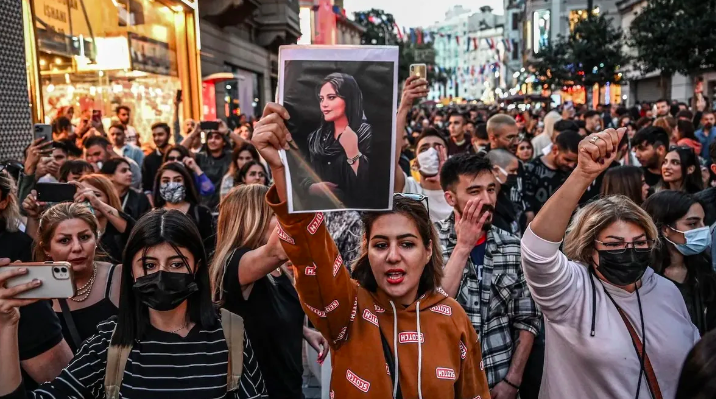
The poisonings come at a critical time for Iran’s theocratic regime, which faced months of anti-government protests sparked by the death of Mahsa Amini, a 22-year-old Iranian woman killed by the Morality Police after being arrested for not complying with the strict dress code of Sharia Law.
The poison attacks began in November in the Shiite Muslim holy city of Qom, about 125 kilometers southwest of Iran’s capital Tehran.
There, students at the Noor Yazdanshahr Conservatory first fell ill in November and then again in December.
After that, girls at schools elsewhere in the country began complaining of headaches, heart palpitations and feeling lethargic or unable to move.
Some described smelling chlorine or cleaning products despite being away from any source of this odor.
While the regime denied all, social media posts began to show many hospitalized girls, with their parents saying they had been poisoned.
Thus, little by little, officials began to take the claims seriously.
Finally, Iran’s Prosecutor General ordered an investigation last month, saying “there are possibilities of deliberate criminal acts.” According to reports, Iran’s Intelligence Ministry also launched an investigation.
Lawmaker Alireza Monadi said the existence of “the devil’s will” to prevent girls from going to school was a “serious threat,” according to the official state-run IRNA news agency. “We have to try to find roots” of this.
On Sunday, IRNA filed multiple stories with officials acknowledging the scope of the crisis. “After several poisonings of students in Qom schools, it was discovered that some people wanted all schools closed, especially girls’ schools,” said Younes Panahi, deputy health minister.
Many parents have already withdrawn their students from classes, even causing the closure of some schools in Qom in recent weeks, which is exactly what the terrorists who committed the attacks would want.
Attacks against women have a long history in Iran. In 2014, people took to the streets in the city of Isfahan after a wave of acid attacks, which appeared to be aimed at terrorizing women who violated the country’s strict dress code.
“If the agents of the acid attacks had been identified and punished then, today, a group of reactionaries would not have united against our innocent girls in schools,” tweeted reformist politician Azar Mansoori.
Several clerics, lawmakers, and senior politicians have criticized the government for failing to stop the poison attacks and giving contradictory reasons, with some warning that frustration among families could ignite new protests.
“Officials are giving contradictory statements (…) one says it is intentional, another says it is linked to security, and another official blames it on heating systems in schools,” said cleric Mohammad Javad Javad Tabatabai-Borujerdi, quoted by state media. “Such statements increase people’s distrust (of the establishment).”

With information from Derecha Diario
Editorial responsibility: Matthias Camenzind, Editor-in-Chief · Editorial standards · Report an error