Why the World Largest Pride Parade Is Shrinking in São Paulo
BRAZIL · LIFE & CULTURE
Key Facts
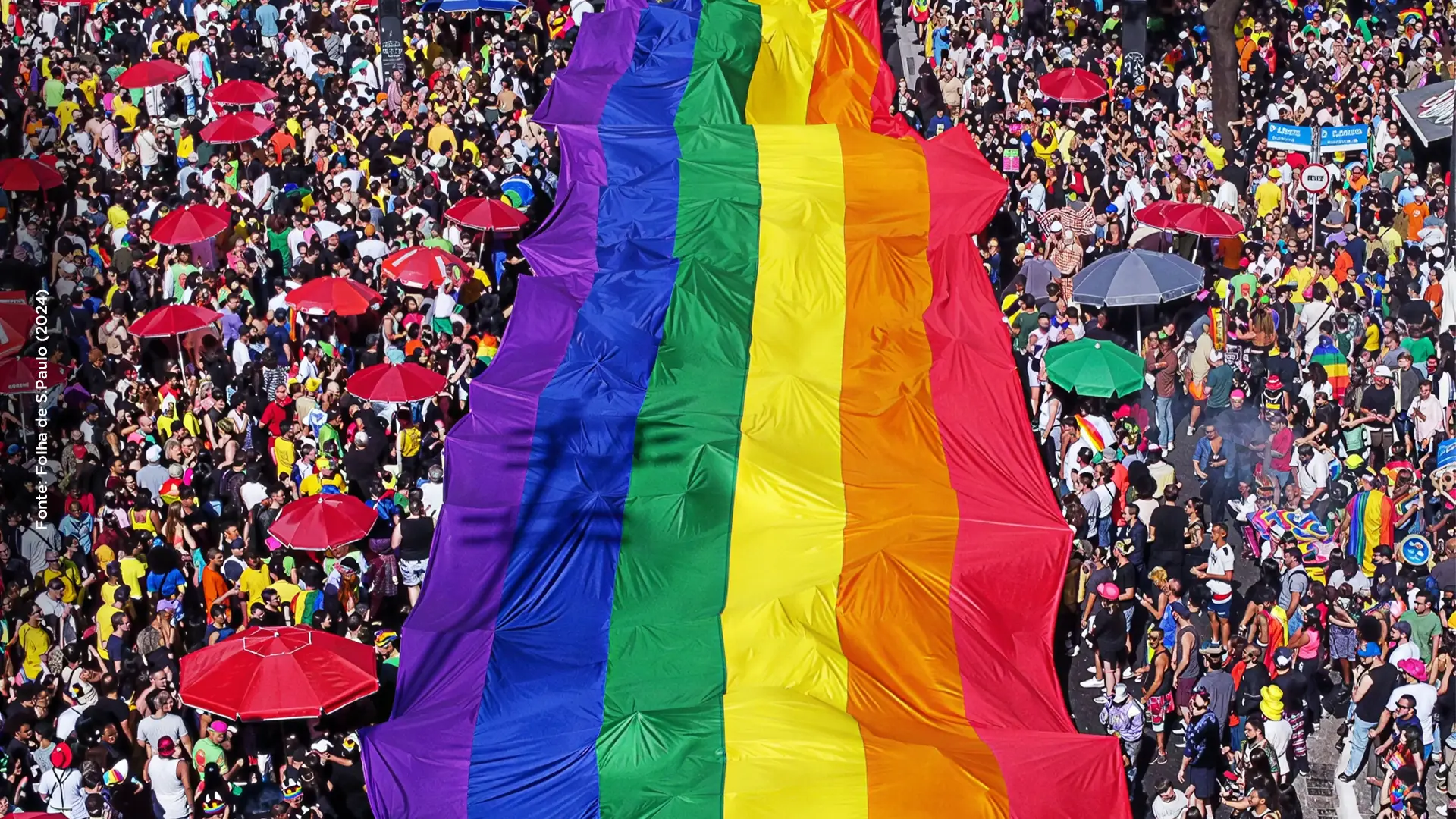
—The event. São Paulo’s Pride Parade, billed as the world’s largest, marked its 30th edition on June 7 on Avenida Paulista.
—The measured peak. A university drone count put the busiest moment at about 36,800 people, down from 48,700 in 2025 and 73,600 in 2024.
—The other number. Organizers still describe total turnout across the day in the millions, a very different measure.
—The money. Sponsors fell from around eleven brands in 2025 to four this year, and sound trucks from nineteen to fourteen.
—The politics. A city council bill, passed in a first vote, would restrict minors at such events and push them indoors.
—The stakes. The parade is a major cultural and tourism draw, so any shrinkage carries an economic cost for the city.
São Paulo Pride, long billed as the biggest in the world, drew its smallest measured peak crowd in at least three years at its 30th edition, and the reasons why, from fleeing sponsors to political pressure, are the part of the story rarely told.
What the São Paulo Pride numbers actually show
The headline figure this year is a decline, but it needs care. A research project at the University of São Paulo, working with a polling group, estimated the crowd from aerial drone images.
Their count put the busiest moment, in mid-afternoon, at about 36,800 people, with a stated margin of error of around twelve percent. That is the peak crowd present at a single instant in the day.
By the same method, the peak was 48,700 in 2025 and 73,600 in 2024. On that consistent measure, the busiest moment has roughly halved in two years.
Organizers, meanwhile, still speak of millions taking part across the whole day, a cumulative tally that counts everyone who passes through, not the crowd at one moment.
The drone study took images at six points through the afternoon and used software to count heads in the fullest frames, a method designed to be repeatable from one year to the next.
Two numbers, one honest caveat
The gap between the two figures is not a contradiction so much as two different questions. One asks how packed the avenue was at its fullest; the other asks how many people showed up at all.
Comparing the drone peak with the organizers’ millions would be misleading, so this piece does not. What can be said is that the peak, measured the same way each year, is falling.
That distinction matters because most coverage simply repeats the round, headline-friendly millions, which obscures any year-to-year trend in how the event is actually drawing.
A shrinking measured peak does not by itself prove the parade is dying, but it is a real signal worth asking about rather than waving away.
It is precisely the kind of trend that gets lost when every report reaches for the same comforting headline number year after year, without ever pausing to ask what it really measures.
Why might it be shrinking?
The most concrete change is money. The list of corporate sponsors fell from around eleven brands in 2025 to four this year, and the number of sound trucks dropped from nineteen to fourteen.
Organizers have linked the funding squeeze to multinationals trimming their diversity budgets, part of a wider corporate retreat from such spending amid a backlash in the United States.
A smaller budget means fewer trucks, less promotion and a less elaborate event, all of which can quietly lower how many people turn out on the day.
There is also a political headwind. A bill passed in a first vote at the city council would restrict the participation of minors and push such events into enclosed venues.
Critics call that measure unconstitutional and aimed squarely at events like Pride, while supporters frame it as child protection, a dispute that hangs over future editions.
On the day itself the mood was defiant rather than subdued, with an electronic ballot-box costume, speeches on rights and calls to scrap a grueling six-day work schedule.
The explanations nobody settles
Beyond money and politics, other forces are harder to pin down. Some argue the novelty has simply faded, with Pride now one of many events rather than a singular annual draw.
Others point to better counting. As drone-and-software methods replace eyeball estimates, the new figures may be exposing how inflated the old crowd claims always were.
There is also a political reading from the other direction, that a charged election-year climate and safety worries keep some families and casual attendees at home.
No single cause is settled, and the honest answer is that the decline in the measured peak probably reflects several of these pressures at once.
Disentangling them is genuinely hard, since a leaner budget, a tense political mood and sharper counting can all pull the headline number down in the same year.
Why it matters beyond the avenue
The parade is not only a celebration; it is a substantial piece of the city’s economy. Last year’s edition was estimated to move hundreds of millions of reais and fill the city’s hotels.
A smaller, leaner event puts some of that spending at risk, which is why the trend is a business story as much as a cultural one.
Hotels, restaurants and shops along the route plan months ahead for the Pride weekend, so a weaker turnout ripples through a stretch of the local economy that counts on it.
It also carries symbolic weight, since São Paulo has used the parade to project an image of itself as open, diverse and cosmopolitan to the wider world.
For now the parade remains the largest of its kind, but the question its 30th edition raises is whether it stays that way, and on whose terms.
The answer will say something about more than one parade, touching on how corporate money, public policy and a changing political climate shape public life in Brazil’s biggest city.
More: Brazil news in English, every day from The Rio Times.
Frequently Asked Questions
Is São Paulo Pride really shrinking?
On a consistent drone-count measure, the peak crowd has fallen from 73,600 in 2024 to 48,700 in 2025 and about 36,800 in 2026. Organizers still cite cumulative turnout in the millions, a different measure.
Why do the crowd figures differ so much?
The drone count measures the crowd at a single peak moment, while the organizers’ millions count everyone who passes through across the whole day, so the two are not directly comparable.
What is behind the decline?
Likely several things: a sharp drop in corporate sponsorship, a smaller event, a city bill restricting such gatherings, possible fading novelty, and more rigorous crowd counting.
Does it still matter economically?
Yes. Recent editions moved hundreds of millions of reais and filled the city’s hotels, so a smaller parade puts part of that tourism spending at risk.
Connected Coverage
São Paulo Pride parade hits a funding crunch at 30
This article was produced by The Rio Times’ automated newsroom system. How we use AI · Report an error · Editorial responsibility: Matthias Camenzind, Editor-in-Chief
Living in or visiting São Paulo? See this month's events and our São Paulo city guide with rents, safety and upcoming concerts.