Brazil’s Lula Nominated for Re-election, Alckmin Back as VP
Key Facts
—Convention — The Workers’ Party (PT) formally nominated President Luiz Inácio Lula da Silva for a new term at its national convention on 2 August 2026.
—Running mate — Geraldo Alckmin of the PSB was confirmed as vice-presidential candidate, repeating the 2022 ticket.
—Venue — The gathering was held at Expo Center Norte in São Paulo, according to O Tempo.
—Election date — Brazil votes in the first round on 4 October 2026, with a possible run-off on 25 October.
—Coalition — The PT-PSB alliance anchors a broad centre-left bloc seeking a fourth Lula term.
—Polling — A Genial/Quaest survey put Lula ahead of São Paulo governor Tarcísio de Freitas in a hypothetical run-off, though margins have narrowed.
—Market lens — Investors are reading every spending decision through a Lula-versus-Tarcísio frame.
Lula’s re-election bid is now formal: on Sunday 2 August 2026 the Workers’ Party gathered at Expo Center Norte in São Paulo to nominate the president for the 4 October vote, with Geraldo Alckmin again at his side. The 2022 ticket has been reassembled, and the nine-week sprint to polling day begins with the incumbent’s coalition fully in place and every fiscal move now filtered through an electoral lens.
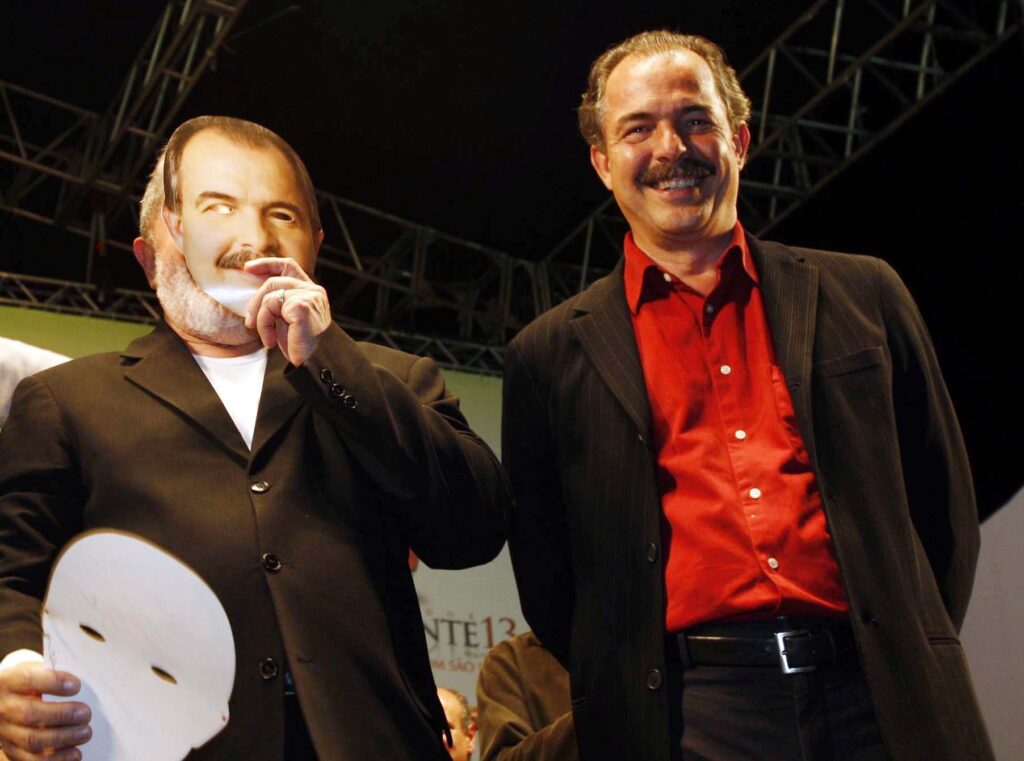
A repeat of the 2022 ticket
The PT convention closed the question that had lingered over the campaign: Lula will lead the ticket, and Alckmin, his vice-president since 2023, will stand again. The pairing first won in 2022, when Alckmin’s centrist PSB helped bring moderate voters to a narrow victory over Jair Bolsonaro.
Alckmin, a former São Paulo governor who spent decades in the centre-right PSDB, has served as vice-president and as minister of development, industry and trade. He is expected to leave the cabinet post before the campaign’s legal deadlines, as Brazilian electoral rules require.
The convention at Expo Center Norte drew party leaders and allied figures, per O Tempo and Tribuna de Jundiaí. The choreography was deliberate: continuity, not reinvention, is the message the campaign wants voters to absorb.
Repeating a ticket is not automatic in Brazilian politics, where alliances often reshuffle between elections. The decision to keep Alckmin signals that the coalition judged its 2022 formula worth preserving rather than renegotiating from scratch, and that the centre-left arc around the PT is holding together as the campaign opens.
The Lula-versus-Tarcísio frame
The most closely watched question is who faces Lula. São Paulo governor Tarcísio de Freitas, a Bolsonaro ally favoured by many investors, is the name markets treat as the reference opponent, even as he has publicly leaned toward seeking re-election in São Paulo rather than the presidency.
A Genial/Quaest poll cited by Bloomberg showed Lula’s lead over Tarcísio narrowing in run-off scenarios, with some surveys registering a technical tie. The gap between a clear Lula win and a competitive second round is what moves Brazilian asset prices.
For now the opposition field is unsettled, with figures linked to the Bolsonaro family and other right-wing names circling. That uncertainty keeps the campaign’s second-round maths fluid, and it complicates any attempt to price the election as a single binary outcome.
Markets dislike this kind of ambiguity. Pricing a race is easier when the two finalists are known; an open opposition slot forces investors to hold several scenarios at once and to react sharply as each new name firms up or fades.
Why investors read every real
With the ticket set, markets shift attention to fiscal policy. Every spending decision, from the 2027 budget framework to salary and social-programme adjustments, is now parsed for electoral intent.
Finance minister Fernando Haddad’s fiscal targets, the trajectory of the Selic policy rate and the real’s level against the dollar form the backdrop. A campaign that leans on public spending can unsettle bond investors; one that signals restraint can steady them.
The nine weeks to 4 October will feature heavy scrutiny of any measure that could be read as vote-buying, from tax relief to new credit lines.
None of this is unique to Brazil, but the country’s history of fiscal stress makes markets especially alert. The memory of past boom-and-bust cycles means investors discount promises and watch execution, weighing announced measures against the room the budget actually allows.
Where the race is decided
Brazil’s electoral map has hardened along regional lines. Lula’s strength is concentrated in the north-east, where social transfers and memories of his first two terms run deep, while the opposition draws on the agricultural centre-west and much of the south. The campaign’s task is to hold that base and win the toss-up voters of the south-east.
São Paulo, the country’s largest electorate and its financial capital, is the single richest prize. It is also Tarcísio de Freitas’s home turf, which is part of why his choices there shape the national picture and why control of the state matters far beyond its borders.
Turnout patterns, evangelical voters and the reach of social media will all bear on the result. None of these blocs is monolithic, and each campaign will spend the next nine weeks trying to peel off slices of the other’s coalition.
Money follows the map. Campaign resources, alliances with regional governors and the allocation of television time all track where the marginal votes sit, which is part of why São Paulo commands such outsized attention in the national contest.
The coalition maths
The PT-PSB core is the spine of a wider centre-left arc that spans several parties. Building a governing majority in Congress, not just winning the presidency, is the harder task facing any winner.
Lula’s first-round strategy rests on consolidating the north-east, courting undecided centrists and defending the gains of social programmes. Alckmin’s role is to reassure business and moderate voters.
As recent Genial/Quaest polling reported by Bloomberg has shown, the second-round gap can be narrow, which keeps down-ballot races in sharp focus.
What comes next
Candidates must register with the Superior Electoral Court (TSE) within the legal window, and free broadcast campaign time begins in late August. Debates and the first authoritative post-convention polls will follow.
The first round is 4 October; if no candidate clears 50% plus one, a run-off follows on 25 October. Lula’s team is betting the continuity ticket can win outright or enter a second round as favourite.
For foreign investors, the calendar is now a series of risk dates. Each poll, debate and spending announcement will be weighed against the base case of a tight but Lula-leaning race.
Key Facts
—Base case. Polls give Lula an edge, but run-off scenarios against Tarcísio de Freitas have tightened toward the margin of error.
—Fiscal watch. Investors will scrutinise the 2027 budget and any pre-election spending for signs of loosening.
—FX and rates. The real and the Selic path are the clearest market barometers of election risk.
—Opposition risk. An unsettled right-wing field means the second-round opponent is not yet fixed.
—Calendar. First round 4 October; potential run-off 25 October 2026.
— Figures and poll numbers change quickly in a campaign; treat every reading as a snapshot, not a forecast.
This is reporting, not financial advice. Confirm current figures with official sources before acting.
Frequently Asked Questions
Who did the PT nominate for the 2026 election?
The Workers’ Party (PT) formally nominated President Luiz Inácio Lula da Silva at its national convention in São Paulo on 2 August 2026. The nomination clears the way for Lula to seek a fourth, non-consecutive term in the first-round vote on 4 October 2026. Party leaders and allied figures gathered at Expo Center Norte to ratify the ticket, according to O Tempo and Tribuna de Jundiaí. The convention completed the coalition’s line-up nine weeks before Brazilians go to the polls, and it removed any lingering doubt about whether Lula would run again.
Who is Lula’s running mate?
Geraldo Alckmin of the Brazilian Socialist Party (PSB) was confirmed as Lula’s vice-presidential candidate, repeating the ticket that won in 2022. Alckmin, a former São Paulo governor and long-time centrist, has served as vice-president and as minister of development, industry and trade since 2023. Under Brazilian electoral rules he is expected to leave the cabinet post before the campaign’s legal deadlines. His presence on the ticket is designed to reassure moderate voters and the business community, a bridge between the PT’s base and the centre that the campaign wants to keep intact.
When is the Brazilian election?
Brazil holds the first round of its general election on 4 October 2026, covering the presidency, Congress and state governorships. If no presidential candidate wins more than 50% of valid votes, a run-off between the top two is scheduled for 25 October 2026. Candidates must first register with the Superior Electoral Court within the legal window, after which free broadcast campaign time and official debates begin. The PT’s convention on 2 August formalised Lula’s candidacy nine weeks before the first round, opening the most intense phase of the contest.
Why does the ticket matter for investors?
With the Lula-Alckmin ticket confirmed, markets shift focus to fiscal policy in an election year. Investors read every spending decision — the 2027 budget, social-programme adjustments, tax measures — for signs of pre-election loosening. The real and the Selic policy rate are the clearest barometers of election risk. A campaign perceived as fiscally disciplined tends to steady bond and currency markets, while heavy spending can unsettle them. The tighter the projected race, the more sensitive Brazilian assets become to each new poll, debate and budget line.
Is Tarcísio de Freitas running against Lula?
São Paulo governor Tarcísio de Freitas is the opponent markets treat as the reference case, even though he has publicly leaned toward seeking re-election in São Paulo rather than the presidency. A Bolsonaro ally favoured by many investors, he has polled competitively against Lula in hypothetical run-offs, with some surveys showing a narrow gap. The wider opposition field, including figures linked to the Bolsonaro family, remains unsettled. Until registrations close, the identity of Lula’s second-round challenger is not fixed, which is one reason the race is hard to price.
Related reading
- Alckmin steps back from ministry to campaign with Lula
- What a Lula-Tarcísio race means for the real
- Brazil’s 2027 budget becomes an election battleground
- Congress maths: can the next president actually govern?
Connected Coverage
Brazil’s Armed Forces to Secure 2026 Election in 7 States
Brazil’s Lula Locks Pre-Candidacy Allies in 25 States for 2026
Sources: O Tempo; Genial/Quaest survey.
This article was drafted with automated assistance and reviewed before publication. How we use AI · Report an error
Read More from The Rio Times