Atacama Lithium: US$3 Billion Plan to End Freshwater Use
Key Facts
—Project — Novandino Litio, the Codelco–SQM joint venture, has entered its roughly US$3 billion Salar Futuro plan into Chile’s environmental review system.
—Timeline — The plan would extend lithium output at the Salar de Atacama from a current horizon near 2030 out to 2060.
—Technology — It centres on direct lithium extraction (DLE), which reinjects lithium-depleted brine back into the aquifer.
—Water — Novandino proposes a transition of about seven years to phase out continental freshwater use, replacing it with recovered process water.
—Filing — The environmental impact study reached Chile’s SEIA in mid-2026, opening a multi-year assessment.
—Communities — Indigenous Lickanantay (Atacameño) groups have long contested brine extraction’s effect on the salt flat’s water balance.
—Stakes — The water case, not the tonnage, is widely seen as deciding whether Atacama keeps its social licence.
The future of Atacama lithium may be decided less by how much metal Chile can pump than by how much water it can keep in the ground. Novandino Litio — the joint venture that binds state copper giant Codelco to producer SQM — has filed a plan worth about US$3 billion, named Salar Futuro, to run the world’s most prized lithium brine field out to 2060. Its central promise is a technology bet: direct lithium extraction that returns depleted brine to the aquifer rather than leaving it to evaporate.
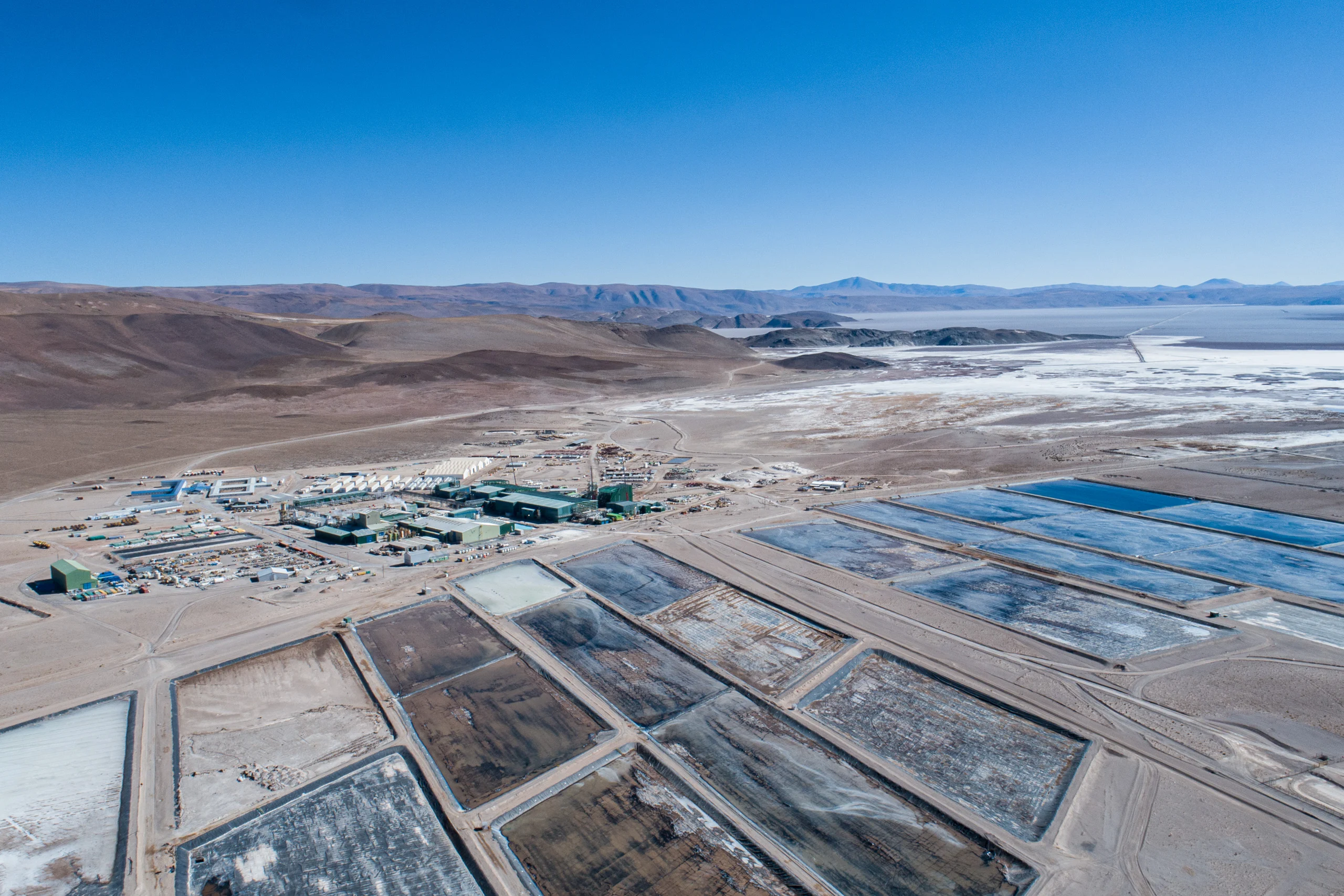
A US$3 billion bid to run Atacama to 2060
Novandino Litio, the operating company created by the Codelco–SQM partnership, has submitted an environmental impact study for a project it calls Salar Futuro. The filing, lodged with Chile’s environmental assessment system (SEIA) in mid-2026, carries an estimated price tag of about US$3 billion, according to Mining.com and BNamericas.
The plan’s headline aim is continuity. Current permits authorise brine extraction at the Salar de Atacama to roughly 2030; Salar Futuro would extend and reshape the operation through 2060. That is a three-decade horizon for a deposit that ranks among the world’s largest and lowest-cost sources of the battery metal.
The timing is deliberate. Chile is rebuilding its lithium industry around a public–private model in which Codelco takes a controlling stake in the Atacama operation from 2031, with SQM staying on as an operating partner. Salar Futuro is the vehicle meant to carry that arrangement into the next generation.
The wider backdrop is demand. Lithium underpins the batteries in electric vehicles and grid storage, and Chile has long been one of the metal’s largest suppliers. Extending Atacama’s life to 2060 is a bet that the world will still want the salt flat’s output decades from now, and that Chile can produce it on terms its own citizens will accept.
Why water, not tonnage, is the story
For years the debate over Atacama lithium was framed in tonnes. Salar Futuro shifts the axis to water. The salt flat sits in one of the driest places on Earth, and the conventional way of producing lithium there — pumping brine into vast ponds and letting the sun evaporate it — consumes volumes of liquid that the desert does not replace.
Researchers estimate that producing a single tonne of lithium carbonate the traditional way evaporates on the order of half a million litres of brine. Multiplied across decades of output, that adds up to what hydrologists describe as an effectively irreversible drawdown from the basin.
That is the pressure point Salar Futuro is designed to answer. Novandino is not primarily selling more lithium; it is selling a promise to make each tonne with far less water taken permanently out of the system. In a region where lagoons and flamingo habitat depend on a delicate balance, the distinction is everything.
Live Company IntelligenceSociedad Quimica y Minera de Chile SA ADR B — the full investor dossier
Wall Street view
Valuation & profitability
Price & risk
$39.7952-wk high
$96.09
Revenue trend · 6y
Ownership
Dividend
The technology bet: direct extraction and reinjection
At the centre of the plan is direct lithium extraction, or DLE. Rather than relying on open-air evaporation, DLE uses chemical or membrane processes to pull lithium selectively from the brine. The depleted brine that remains is then reinjected into the aquifer instead of being left to evaporate away.
Novandino has paired DLE with forced evaporation and membrane steps in a hybrid design, and has proposed a transition of about seven years during which the operation would progressively cut its use of continental freshwater until it is eliminated, substituting water recovered in the process.
If it works at scale, reinjection is the difference between an operation that mines water and one that borrows it. That single engineering choice is what the company is asking regulators, and communities, to believe in.
DLE is not yet proven at the volumes Atacama demands, and cost, energy use and recovery rates remain open questions. The environmental study is where those claims will be stress-tested rather than simply asserted.
Novandino will also have to show that reinjection does not simply move the problem, for instance by altering brine chemistry or pressure in ways that harm the aquifer over time. Those are the second-order questions a rigorous review is meant to surface.
The social licence question
The Salar de Atacama is not empty land. It is the territory of the Lickanantay, or Atacameño, peoples, whose communities have for years contested the effect of brine and freshwater extraction on lagoons, vegetation and the fragile hydrology of the basin.
In the Atacameño view, often expressed in consultations and litigation, the salt flat’s brine and its freshwater are part of a single living system; disturb one and you disturb the whole. Long-running disputes over aquifers such as the Monturaqui–Negrillar–Tilopozo system have fed a broader distrust of company monitoring data.
This is why reinjection is as much a political proposition as a technical one. Salar Futuro must pass through environmental review and Indigenous consultation, and its fate is likely to turn on whether affected communities accept that returning depleted brine to the ground genuinely protects the water they depend on.
Trust is the scarce resource. Years of disputes over monitoring data and lagoon levels mean that promises alone will not settle the question; communities will look for independent verification and enforceable commitments. For Novandino, winning that argument matters as much as proving the engineering, because a permit granted over community objections would be a fragile kind of victory.
The Codelco–SQM alliance under scrutiny
Salar Futuro is also the first big test of the alliance itself. Codelco, the state copper miner, and SQM, the incumbent lithium producer, agreed to jointly operate the Atacama concession, an arrangement that gives the state majority control while keeping SQM’s operational know-how in place.
The joint venture inherits both SQM’s production base and its baggage: a history of environmental scrutiny and community mistrust that a change of ownership does not erase. A smooth environmental approval would validate the model; a contested one would expose its fault lines.
For Chile, the stakes reach beyond one company. The government has staked its national lithium strategy on the idea that the state can capture more value while doing less harm. Readers following the country’s mining policy will recognise the pattern: technology and social licence, not reserves, are now the binding constraint.
What regulators will weigh
Chile’s SEIA process is lengthy, and a project of this scale can spend years in assessment, with rounds of questions, community consultation and possible conditions. Approval is not a formality, and the water claims will draw the closest reading.
Regulators will look for evidence that reinjection does what Novandino says, that freshwater use really falls to zero on the promised timeline, and that monitoring will be independent and transparent. Investors, meanwhile, will watch whether DLE can deliver the recovery rates and costs that justify a US$3 billion outlay.
The outcome will ripple outward. As other producers across Latin America weigh similar technology, Atacama is fast becoming the reference case for whether desert lithium can be produced without draining the desert.
Key Facts
—Investment. about US$3 billion, as reported by Mining.com and BNamericas.
—Operator. Novandino Litio, the Codelco–SQM joint venture.
—Horizon. extends Salar de Atacama production from roughly 2030 to 2060.
—Core technology. direct lithium extraction with reinjection of depleted brine.
—Water plan. a transition of about seven years to end continental freshwater use.
—Status. environmental impact study submitted to Chile’s SEIA in mid-2026.
— Figures reflect company filings and press reports as of 2 August 2026 and may change during environmental review.
This is reporting, not investment advice. Confirm current figures with official sources before acting.
More: Chile news in English, every day from The Rio Times.
Frequently Asked Questions
What is Salar Futuro?
Salar Futuro is a roughly US$3 billion project filed by Novandino Litio, the Codelco–SQM joint venture, to continue and modernise lithium production at Chile’s Salar de Atacama. It would extend operations from a current horizon near 2030 out to 2060 and shift the process toward direct lithium extraction. The plan entered Chile’s environmental assessment system in mid-2026, where it faces a multi-year review that includes Indigenous consultation.
What is direct lithium extraction (DLE)?
Direct lithium extraction uses chemical or membrane technologies to separate lithium from brine without relying mainly on open-air evaporation ponds. In Novandino’s design, the lithium-depleted brine is reinjected into the aquifer rather than left to evaporate. Supporters say DLE can sharply cut water loss and land use, though the technology is still being proven at the very large scale that the Salar de Atacama requires, and its costs and recovery rates remain under scrutiny.
Why is water the main concern at the Salar de Atacama?
The salt flat lies in an extremely arid basin where evaporated brine and freshwater are not naturally replenished. Traditional lithium production can evaporate on the order of half a million litres of brine per tonne of lithium carbonate, which hydrologists describe as an effectively irreversible loss. Indigenous Atacameño communities argue the salar’s waters form one connected system, so extraction that lowers water levels threatens lagoons, vegetation and the wider ecosystem.
Who owns Novandino Litio?
Novandino Litio is the operating company created by the partnership between Codelco, Chile’s state-owned copper producer, and SQM, the established lithium miner at the Salar de Atacama. Under the agreement, the state takes a controlling stake in the Atacama operation from 2031 while SQM continues as an operating partner. The arrangement is central to Chile’s national lithium strategy, and Salar Futuro is its first major project.
When could the project be approved?
There is no fixed date. Chile’s environmental assessment system (SEIA) can take years for a project of this size, with rounds of questions, public participation and Indigenous consultation before any decision. Regulators may approve the plan, reject it, or attach conditions. Because the water and reinjection claims are central and contested, most observers expect a detailed and closely watched review rather than a quick sign-off.
Related reading
- Chile’s lithium strategy and the Codelco–SQM deal
- How direct lithium extraction is reshaping the salt flats
- Water, mining and Indigenous rights in the Atacama
- Latin America’s lithium triangle: who produces what
Connected Coverage
Locarno Latin American Films Take over Swiss Festival 2026
Chile’s Tax Overhaul Is Almost Law: What Changes for Foreign Residents
Sources: Chile’s SEIA.
This article was produced by The Rio Times’ automated newsroom system. How we use AI · Report an error
In depth
Read More from The Rio Times