Brazil’s TSE Brings OpenAI, Anthropic and ElevenLabs Into 2026 Election Disinformation Pact

Brazil · Politics
Key Facts
—The signing. On 16 July 2026, TSE president Minister Kassio Nunes Marques signed cooperation instruments with ten technology companies in Brasília.
—The AI trio. OpenAI, Anthropic and ElevenLabs formally joined the Permanent Programme to Combat Disinformation via adhesion agreements, a first for generative-AI vendors.
—The platform group. Seven social platforms — Kwai, Telegram, Meta, TikTok, Google, X and LinkedIn — signed individual Memoranda of Understanding with the court.
—Regulatory backbone. Brazil enters the October 2026 vote with one of the world’s most detailed AI electoral rulebooks, including a deepfake ban and mandatory AI-content labelling.
—Enforcement gaps. Full legal texts of the AI adhesion agreements remain unpublished, and civil-society groups have questioned Big Tech’s enforcement track record in Brazil.
Runoff · Sunday, 25 October
Brazil Runoff 2026: Lula vs Flávio
Date, polls, debates, odds and how the runoff works, updated every day.
Brazil election 2026 · Brazil election polls · Brazil election odds · Brazil runoff date and results start · Brazil election results · All election stories
Prediction markets · who wins the runoff
Implied chance of winning Brazil’s presidency on 25 October, from traders’ prices.
Polymarket
Flávio Bolsonaro 76.4% · Lula 23.5% (US$185 million traded)
Kalshi (regulated in the US by the CFTC)
Flávio Bolsonaro 76% · Lula 24%
As of 16 October, 4:00 pm ET (21:00 Lisbon), updated every 20 minutes. Prices are bets, not polls, and can move fast.
Why we show this: prediction markets turn real-money bets into a live probability that moves within minutes of the news, which is why investors, campaigns and newsrooms in the United States now follow them closely. We show them next to polls and official results, never instead of them.
Brazil’s Superior Electoral Court has expanded its election disinformation pact to include OpenAI, Anthropic and ElevenLabs, marking the first time generative-AI vendors have been formally integrated into the country’s electoral-integrity architecture — a move that signals rising compliance expectations for technology firms operating across Latin America.
What the TSE signed and why it matters
On Thursday, 16 July 2026, TSE president Minister Kassio Nunes Marques gathered representatives from ten technology companies at the court’s Brasília headquarters to sign a new wave of cooperation instruments. Seven social platforms — Kwai, Telegram, Meta, TikTok, Google, X and LinkedIn — signed individual Memoranda of Understanding, while three artificial-intelligence firms — OpenAI, Anthropic and ElevenLabs — entered the Permanent Programme to Combat Disinformation through formal adhesion agreements.
The ceremony was not merely ceremonial. It represented a structural shift in how Brazil’s electoral authority views the disinformation supply chain, treating AI model providers as upstream actors whose tools can generate synthetic text, images and cloned voices at a scale that social platforms alone cannot police.
Minister Nunes Marques framed the initiative as a defence of electoral integrity rather than a restriction on speech. “This is not about censorship,” he said, “but about ensuring the online environment offers only real information that will add to the electoral process.”
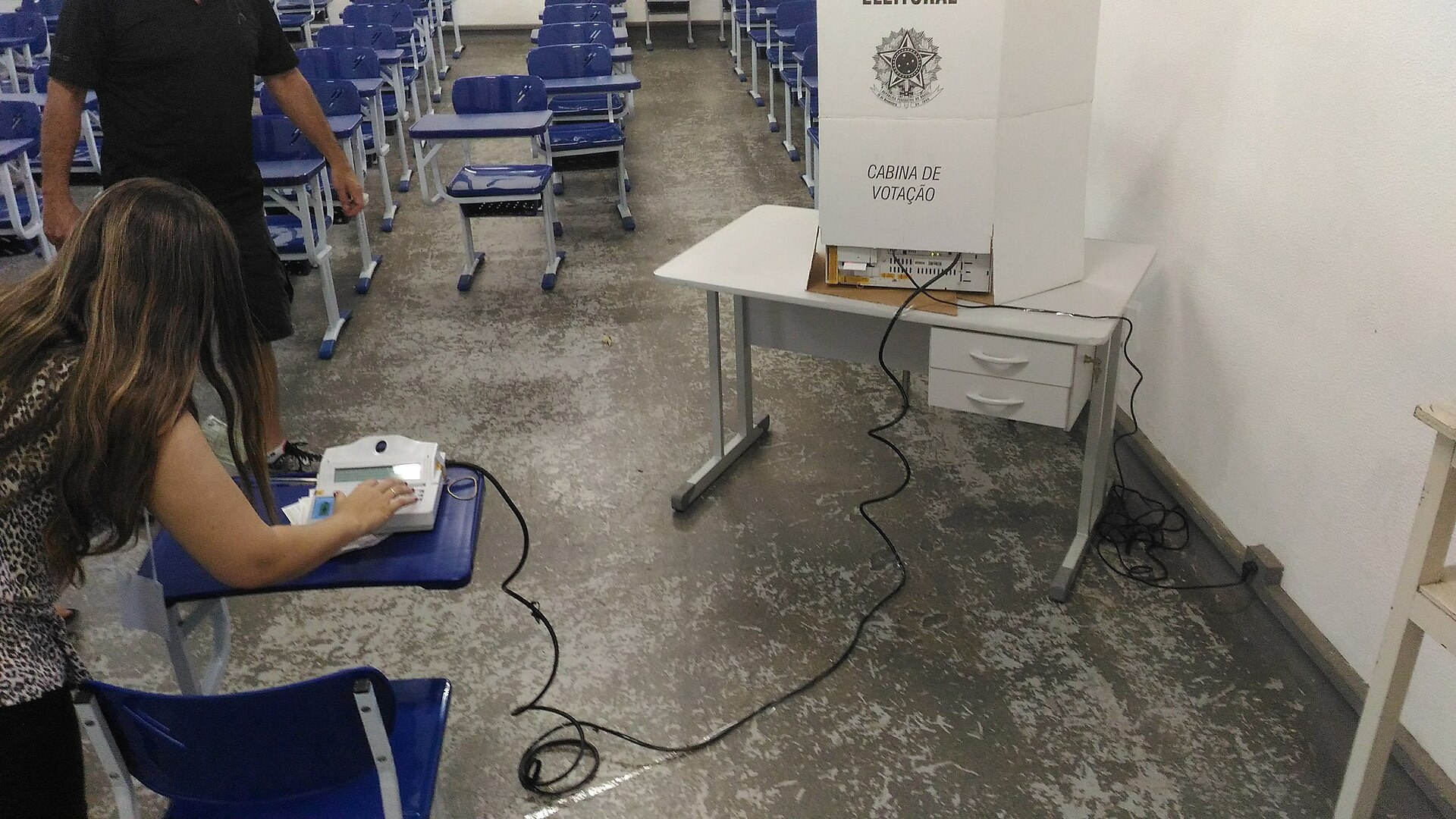
Brazil’s AI rulebook: the tightest in the democratic world
Brazil approaches its October 2026 general elections under a regulatory framework that analysts describe as one of the most detailed AI electoral rulebooks globally. The TSE has layered multiple resolutions — notably Resolução TSE nº 23.732/2024 and the March 2026 update often cited as Resolução TSE nº 23.755 — onto its existing electoral-propaganda code.
The rules impose an outright ban on deepfakes in campaign content, even when the candidate depicted has authorised the manipulation. Any synthetic multimedia used in electoral propaganda must carry prominent, accessible labels disclosing both the fact of AI manipulation and the technology employed.
A particularly stringent provision creates a synthetic-content blackout window: from 72 hours before voting begins until 24 hours after polls close, publishing or boosting new AI-generated material featuring candidates or public figures is prohibited entirely. The court has also barred AI chatbots from recommending candidates, simulating politicians, or expressing electoral preferences — restrictions that fall directly on the large language models developed by OpenAI and Anthropic.
What OpenAI, Anthropic and ElevenLabs are bringing to the election disinformation pact
OpenAI released its global 2026 election plan on 27 May, a five-pillar safeguard package that explicitly names Brazil alongside the United States as a priority jurisdiction. The plan includes integrating live vote counts from The Associated Press into ChatGPT for both countries, embedding SynthID watermarks in all ChatGPT-generated images, and maintaining a public verification tool on its website.
Bruno Lewicki, OpenAI’s executive in Brazil, acknowledged the scale of the challenge, telling local media that the 2026 election “will not be a walk in the park.” The company has also developed an AI-content verification tool that scans for invisible watermarks and metadata in ChatGPT-generated images, presented as a direct countermeasure against electoral disinformation.
Anthropic has deployed a multi-layer election safeguard framework for its Claude models ahead of both the US midterms and Brazil’s general election. The framework focuses on preventing candidate recommendations, restricting political-ad generation, and limiting the production of misleading or voter-suppression content — all aligned with Brazil’s prohibition on AI tools favouring specific candidates.
ElevenLabs, whose voice-synthesis technology makes it central to audio-deepfake risks, has joined the programme without yet publishing detailed mechanisms for detecting or blocking election-related voice clones in Brazil. Its inclusion signals the TSE’s concern about fabricated candidate statements and fake emergency announcements spreading through messaging platforms in the campaign’s final hours.
The business and compliance read-through
For investors and technology firms operating across Latin America, the expanded pact carries concrete implications. Brazil’s TSE is treating AI model providers less as neutral infrastructure and more as co-responsible actors in election integrity, a posture that mirrors the liability framework already applied to social-media platforms under Brazilian electoral law.
The adhesion agreements create a permanent communication channel between the court and the three AI vendors, enabling rapid flagging of problematic content and — under the TSE’s 24-hour takedown rule — the expectation of swift action against demonstrably false material targeting the voting system. Companies may need to maintain Brazil-specific policy layers, dedicated liaison teams, and geographic enforcement of content restrictions, all of which carry operational costs.
The platform liability provisions are equally significant. Internet application providers face joint liability if they fail to promptly remove illegal electoral content ordered down by the TSE, and they must adopt measures to prevent the circulation of “notoriously untrue or seriously out-of-context facts” affecting the electoral process.
What remains unclear — and what to watch
Despite the fanfare, the TSE has not published the full legal text of the adhesion agreements with OpenAI, Anthropic or ElevenLabs. The public record consists of high-level court descriptions and the companies’ own global election-safeguard announcements, leaving detailed obligations — such as whether AI vendors must proactively scan Brazilian election-related traffic or provide investigative tools directly to TSE authorities — unverifiable for now.
Civil-society organisations have also noted that while Brazil’s rules are robust on paper, Big Tech platforms have struggled to deliver consistent enforcement of election-integrity commitments in past cycles. That critique has so far centred on social-media firms, and there is no empirical data yet on how effectively AI vendors will uphold their new Brazilian commitments during a live national election.
Brazilian reporting has flagged the possibility — not yet officially confirmed by OpenAI — that the company could sign further accords with other digital platforms to help identify ChatGPT-generated content circulating on social networks. Without such cross-platform tools, detecting AI-generated material at scale may rely heavily on the platforms’ own classifiers, which vary in accuracy and transparency.
A template for the region
Brazil’s 2026 presidential election is shaping up as one of the first major national votes conducted under an integrated AI-and-disinformation framework that combines substantive AI rules with formal platform and vendor agreements. The model — legally binding electoral resolutions paired with court-led cooperation pacts that reach upstream to model developers — is being watched closely by regulators in other large democracies.
For expats and international investors with exposure to Brazilian assets, the tightening regulatory environment cuts both ways. Stronger guardrails may reduce the risk of a destabilising disinformation event that triggers market volatility or political crisis, but they also raise compliance costs and introduce new legal uncertainties for technology firms whose products are used in the country.
The same companies now bound by Brazil’s election disinformation pact are simultaneously building safeguard frameworks for the 2026 US midterms. How they navigate Brazil’s more prescriptive, court-enforced approach will offer a real-world stress test for AI governance models that other Latin American nations may soon adopt.
More: Brazil news in English, every day from The Rio Times.
Frequently Asked Questions
Why did Brazil’s TSE add AI companies to its election disinformation pact?
The TSE recognised that generative-AI tools can produce synthetic text, images and cloned voices at a scale that social-media platforms alone cannot police. By bringing OpenAI, Anthropic and ElevenLabs into the Permanent Programme to Combat Disinformation, the court aims to address disinformation risks at their source — the models themselves — rather than only at the distribution layer.
This reflects a regulatory view that AI vendors are co-responsible actors in election integrity.
What are the main AI restrictions for Brazil’s 2026 elections?
Brazil’s electoral rules ban deepfakes outright in campaign propaganda, even with the depicted person’s consent. Any synthetic multimedia content must carry prominent labels disclosing AI manipulation and the technology used.
A blackout period prohibits new AI-generated material featuring candidates from 72 hours before voting until 24 hours after polls close. AI chatbots are also barred from recommending candidates, simulating politicians, or expressing electoral preferences.
What does this mean for technology companies operating in Brazil?
AI vendors and social platforms face rising compliance expectations, including the need for Brazil-specific policy layers, dedicated liaison teams, and rapid-response mechanisms for court-flagged content. Platforms face joint liability if they fail to promptly remove illegal electoral material, and the TSE enforces a 24-hour takedown rule for content spreading false claims about the voting system.
These requirements raise operational costs but also create a more predictable regulatory framework for firms willing to invest in compliance.
Connected Coverage
BTG Builds a 14% Méliuz Stake as Batista Miner Addresses Vale Rumours
JBS Denies Slave-Labor Dirty-List Links as GPA Defends Debt Restructuring
This article was produced by The Rio Times’ automated newsroom system. How we use AI · Report an error · Editorial responsibility: Matthias Camenzind, Editor-in-Chief