This week, the powerful Russian naval fleet sailed into Havana, marking a significant moment in global military posturing.
This impressive fleet, featuring the nuclear-powered Kazan submarine and the formidable Admiral Gorshkov frigate, arrived for a strategic five-day outreach.
Accompanying these were the Academic Pashin oiler and the Nikolai Chiker rescue tug, completing a quartet of maritime prowess.
As they glided into Havana Bay, the fleet announced its arrival with a booming 21-cannon salute, met with an equal response from Cuba’s coastal defenses.
The ceremonial exchange highlighted deepening Russia-Cuba ties, celebrated by key dignitaries including Cuba’s naval deputy chief and the Russian ambassador.
The visit isn’t just a routine stop. It’s a carefully choreographed display of diplomacy and strength, closely watched by international powers.
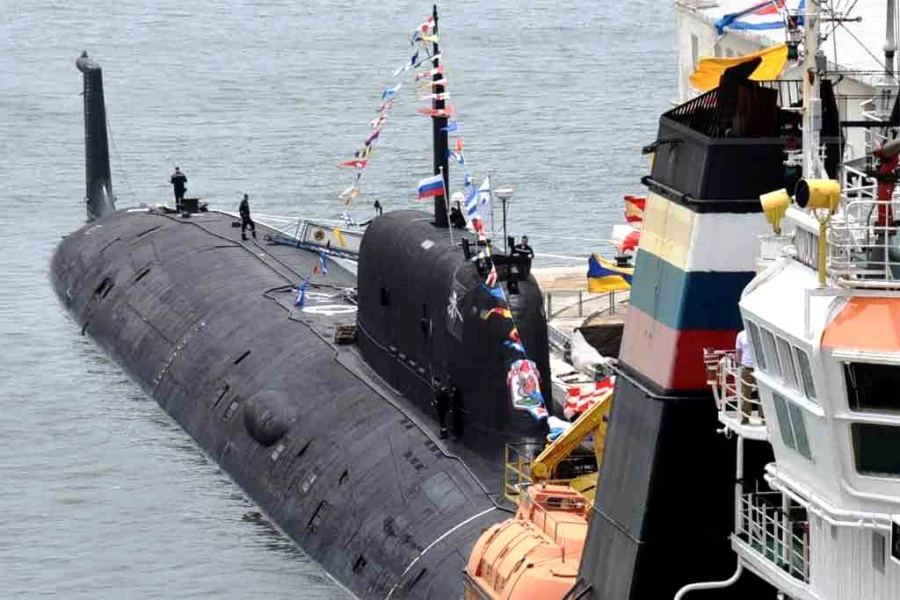
Notably, the U.S. Navy kept a vigilant eye as these vessels navigated the Caribbean waters.
Other ships, including Canada’s HMCS Margaret Brooke and Venezuela’s AB Simón Bolívar, will also dock in Cuba, underscoring its strategic maritime significance.
Powerful Display: Russian Naval Might Anchors in Cuba
Delving into the fleet’s specifics reveals more than mere size. The Kazan submarine stands out with its advanced nuclear capabilities, boasting an unlimited range and a crew of 64.
It can dive up to 580 meters and sprints through water with astonishing agility, powered by a potent nuclear reactor.
Equipped with cutting-edge weaponry including hypersonic missiles, it’s a floating fortress beneath the waves.
Similarly, the Admiral Gorshkov frigate represents the zenith of surface combatants.
Launched from St. Petersburg in 2018, it combines lethal firepower with swift mobility, supported by a hybrid diesel and gas turbine system.
It’s not just a warship; it’s a floating command center, equipped to handle multi-dimensional threats.
This congregation of naval assets at Cuba’s doorstep isn’t just about flexing military muscle. It’s a narrative of emerging alliances and geopolitical shifts.
As these ships anchor in Havana, they subtly mirror to Americans the unease of having a perceived adversary close to home.
A sentiment Russia has experienced for years with NATO forces positioned nearby.
This deployment serves not just as a demonstration of naval strength but also as a poignant reminder of the delicate balance of global power dynamics.
This article was produced by The Rio Times’ automated newsroom system. How we use AI · Report an error · Editorial responsibility: Matthias Camenzind, Editor-in-Chief
Read More from The Rio Times