
Markets
Key Facts
—Listing on hold. Abra Group has pushed back its planned New York initial public offering, saying current conditions make a near-term deal unworkable.
—The reasons. Chief executive Adrián Neuhauser blamed market volatility from Middle East conflict and a jump in fuel prices.
—Who Abra is. The UK-based holding company owns Brazil’s Gol and Colombia’s Avianca, plus stakes in Spain’s Wamos Air and, now, Chile’s Sky Airline.
—Groundwork done. Abra had already filed confidentially with American regulators and delisted Gol from Brazil’s B3 exchange to prepare for the listing.
—Still growing. First-quarter 2026 revenue rose 16.9% to $2.7 billion, and the group now flies more than 300 aircraft.
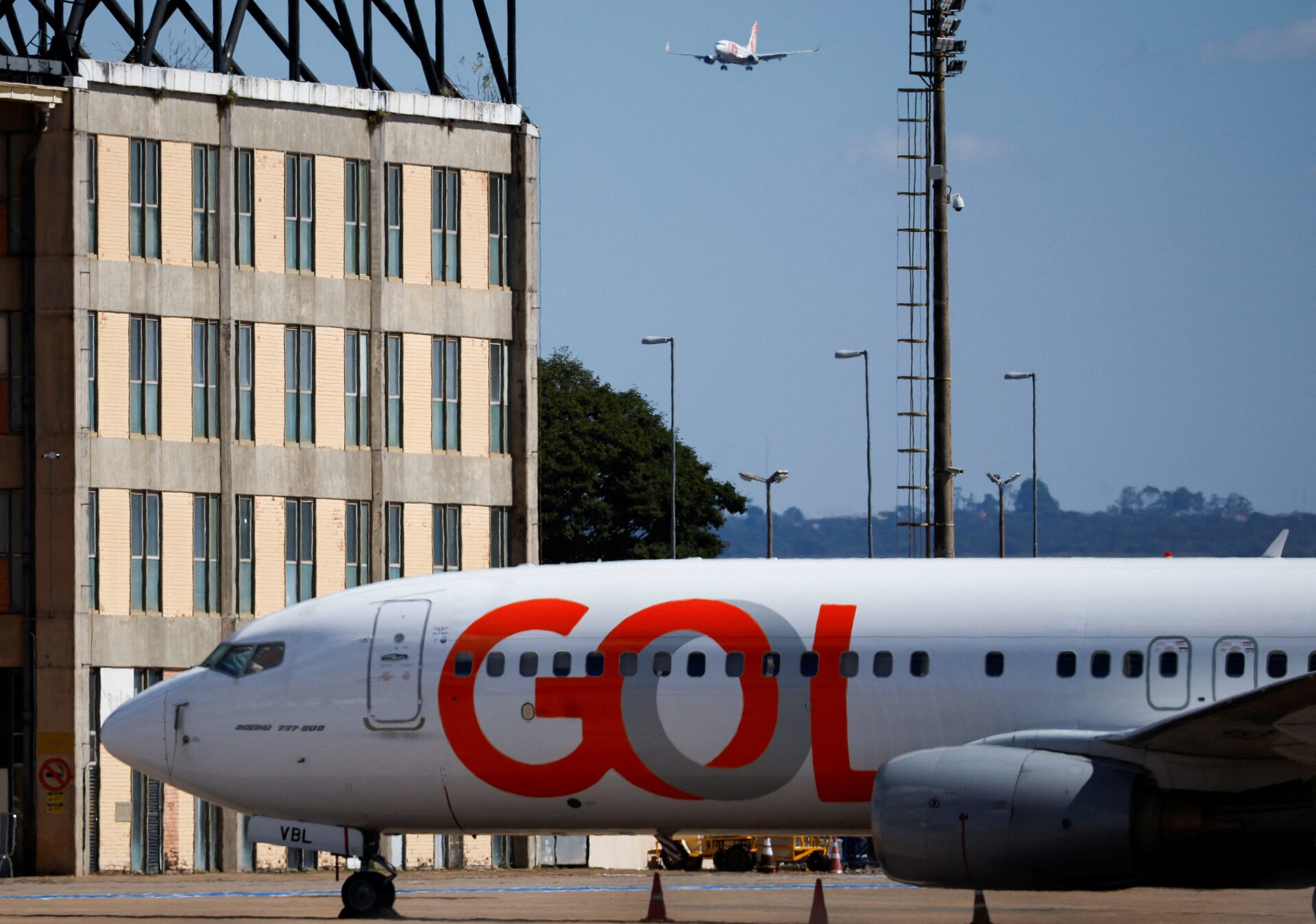
The Abra IPO delay puts one of Latin America’s most anticipated airline listings on ice, with the owner of Brazil’s Gol and Colombia’s Avianca saying market turmoil has made a near-term New York debut impossible. The decision leaves a group that spent two years restructuring for a listing it now cannot execute.
Speaking at an industry conference in Santiago, Chile, chief executive Adrián Neuhauser said the company is still preparing documents and talking to regulators. What it cannot control is the market backdrop.
What is behind the Abra IPO delay
Neuhauser pointed to two forces. Conflict in the Middle East has whipsawed global markets, while the oil-price spike that came with it has lifted jet-fuel costs across the industry.
For an airline heading to market, that combination is toxic. Investors want a stable share price at launch, and volatile fuel bills muddy the earnings picture that a listing is meant to showcase.
Abra has hedged some of its fuel exposure and says recent efficiency gains have kept real fares below where they sat in 2019. Even so, the group has judged that completing the offering in the short term is not viable.
A group already rebuilt for the market
The irony is that Abra spent the past two years doing exactly the housekeeping a public listing requires. It filed a confidential draft registration with American regulators and pulled Gol off Brazil’s B3 exchange to simplify its structure.
It also expanded its board and, in mid-2026, moved to fold Chile’s Sky Airline fully into the group. All of it was meant to present one clean, listable company to global investors.
The Sky deal itself is nearly done, with Brazil’s competition regulator clearing it and only Peru’s sign-off outstanding. Once complete, Abra will control a combined fleet spanning Brazil, Colombia, Chile and Spain.
That footprint is precisely what makes the listing attractive whenever it lands. A single share would offer exposure to several of the region’s largest carriers at once, a rare bet on Latin American air travel as a whole.
The business itself is not the problem. First-quarter revenue climbed nearly 17% to about 2.7 billion US dollars, and the fleet has grown past 300 aircraft as the group leans into premium cabins and loyalty programmes.
For a foreign investor tracking Latin American aviation, the read is straightforward. Abra has the scale to rival LATAM, but it is now hostage to a market window it does not control, and many analysts see the wider listing drought easing only from 2027.
Why does the Abra IPO delay matter for investors?
Abra owns Gol and Avianca, two of Latin America’s best-known airlines, so its listing would be one of the region’s biggest in years. The delay means anyone hoping to buy exposure to the combined group must keep waiting.
Does the Abra IPO delay affect Gol passengers?
No. Flights, tickets and loyalty programmes carry on as normal, and the individual airline brands keep their names. The listing is a financing question at the holding level, not an operational one.
When will Abra try to list again?
The company has not fixed a new date, saying only that it will proceed once conditions improve. Broader forecasts suggest the market window for such offerings may reopen from 2027.
More: Brazil news in English, every day from The Rio Times.
Live Market IntelligenceBrazil — Live Market Board
Rio Times · Live Market Intelligence
Brazil — Live Market Board
-0.22%
204,970.67
-0.22%
68,929.72
+1.87%
10,983.83
+0.12%
2,848,945
—
2,545.85
-0.80%
59,664.64
-0.12%
| Instrument | Last | Change | YoY | Prev. | High | Low | Volume |
|---|---|---|---|---|---|---|---|
| IBOV | 204,970.67 | -0.22% | +21.85% | 205,430.33 | 168,310 | 167,142 | — |
| USD/BRL | 5.16 | +0.01% | -5.13% | 5.16 | 5.18 | 5.14 | — |
| SELIC | 14.00% | — | — | — | — | — | |
| PETR4 | 41.64 | -0.05% | +35.19% | 41.66 | 41.97 | 41.15 | 41,499,400 |
| VALE3 | 72.97 | +0.83% | +30.75% | 72.37 | 73.54 | 72.66 | 17,658,000 |
| ITUB4 | 38.60 | -1.03% | +4.57% | 39.00 | 39.34 | 38.39 | 29,487,800 |
| BBDC4 | 16.85 | +0.36% | +3.50% | 16.79 | 16.90 | 16.67 | 19,416,900 |
| BBAS3 | 19.37 | +0.47% | +0.73% | 19.28 | 19.44 | 19.16 | 11,069,200 |
| B3SA3 | 14.26 | -0.21% | +12.73% | 14.29 | 14.47 | 14.11 | 33,037,800 |
| ABEV3 | 14.89 | -0.80% | +21.91% | 15.01 | 15.07 | 14.81 | 16,453,100 |
| WEGE3 | 47.59 | +0.49% | +29.99% | 47.36 | 48.08 | 47.36 | 3,364,600 |
| PRIO3 | 59.14 | -0.19% | +50.67% | 59.25 | 59.81 | 58.74 | 3,325,600 |
| SUZB3 | 41.33 | +2.35% | -23.55% | 40.38 | 41.48 | 40.35 | 3,914,900 |
| RENT3 | 34.68 | -0.09% | +0.84% | 34.71 | 34.96 | 34.35 | 7,979,100 |
| AZZA3 | 15.89 | -2.63% | -53.76% | 16.32 | 16.42 | 15.82 | 1,330,300 |
| CSNA3 | 4.30 | +0.47% | -42.65% | 4.28 | 4.41 | 4.26 | 10,076,100 |
| GGBR4 | 24.69 | +2.19% | +51.38% | 24.16 | 24.85 | 24.18 | 7,047,600 |
| ENEV3 | 24.21 | -1.38% | +70.49% | 24.55 | 24.64 | 23.99 | 9,297,000 |
Frequently Asked Questions
Why has Abra Group postponed its planned IPO in New York?
Chief executive Adrián Neuhauser stated that current conditions make a near-term deal unworkable, citing market volatility from Middle East conflict and a jump in fuel prices.
Which airlines does Abra Group own or hold stakes in?
The UK-based holding company owns Brazil's Gol and Colombia's Avianca, and also holds stakes in Spain's Wamos Air and Chile's Sky Airline.
What preparatory steps had Abra already taken toward the listing before the delay?
Abra had already filed confidentially with American regulators and delisted Gol from Brazil's B3 exchange in preparation for the initial public offering.
This article was produced by The Rio Times’ automated newsroom system. How we use AI · Report an error · Editorial responsibility: Matthias Camenzind, Editor-in-Chief