Peru Faces El Niño With Savings at a 25-Year Low, Ex-Finance Minister Warns

PERU · ECONOMY
Key Facts
The warning: Former finance minister Alonso Segura says El Niño finds Peru with savings at a 25-year low.
The comparison: In 2017 Peru’s emergency buffers exceeded 4 percent of GDP; today they are largely consumed.
Market exposure: Analysts name cement maker Pacasmayo, food group Alicorp and power utility Engie as most exposed.
The budget: The draft 2027 budget rises 3.5 percent to over S/266.5 billion (US$79.5 billion).
The catch: Peru still has access to markets, but past savings were spent despite record commodity prices.
What comes next: The government weighs three measures against tax breaks costing S/27.7 billion (US$8.3 billion) in 2027.
Peru faces a potentially severe El Niño with its fiscal savings at their lowest point in almost 25 years. The Peru El Niño warning comes from Alonso Segura, the former finance minister who now heads the country’s fiscal watchdog.
Segura’s warning: the piggy bank is empty
Alonso Segura is not just any critic. He ran the finance ministry between 2014 and 2016 and now presides over the Consejo Fiscal, Peru’s official fiscal watchdog.
His message in Gestíón on Monday was stark. El Niño, he said, finds Peru with financial-asset savings at their lowest point in around 25 years.
Every Peru El Niño event tests the state’s coffers. This one arrives at the weakest fiscal position in a generation, and the stock market is already pricing the storm.
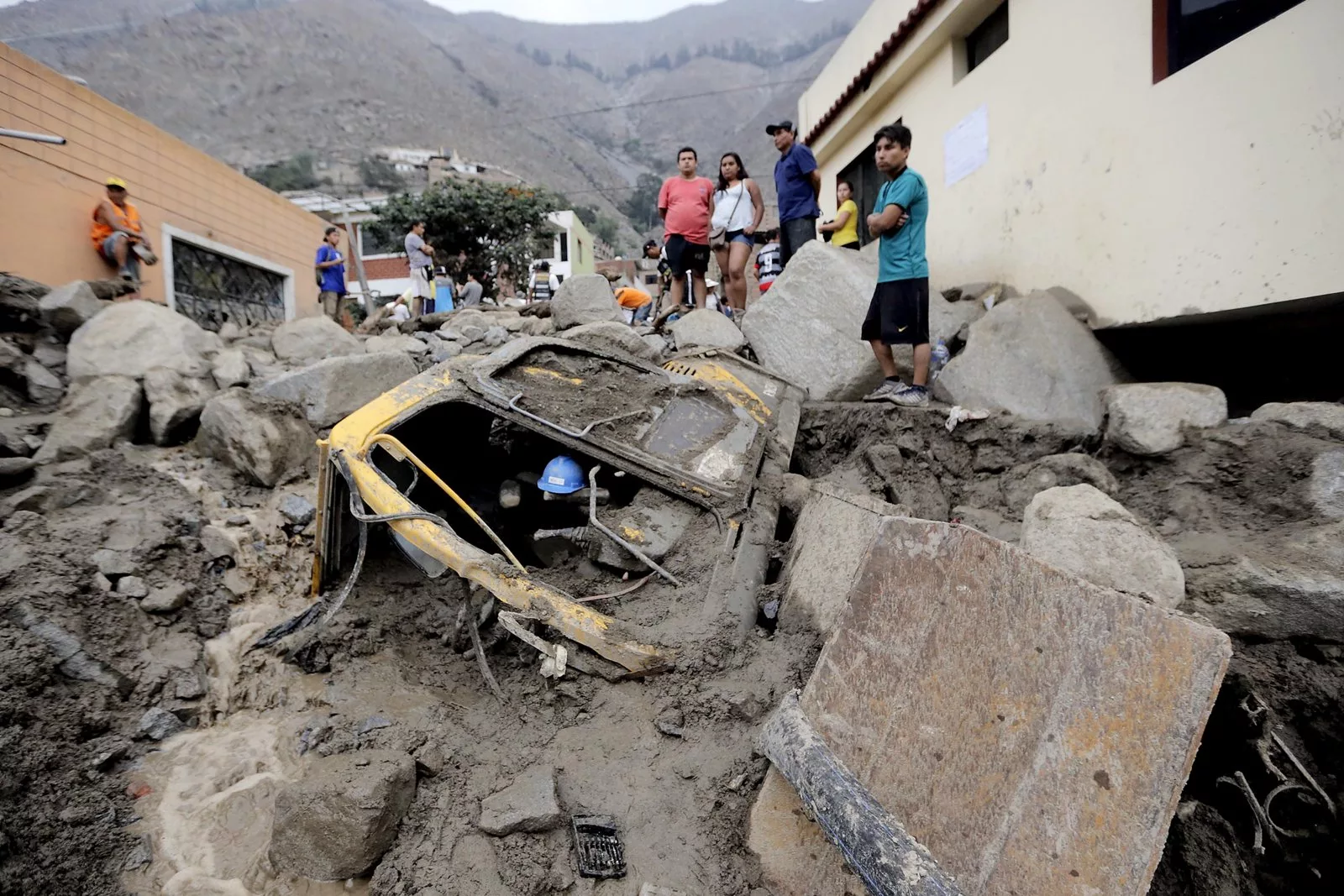
He offered a comparison that should worry investors. When the last big El Niño hit in 2017, Peru’s stabilisation fund, liquidity reserve and contingent credit lines stood at a historic peak above 4 percent of GDP.
Those buffers were then consumed, first by that El Niño and then by the pandemic. What pains him most is that the drain continued through record after record in commodity prices.
Peru still has access to international markets, Segura conceded. The question is whether the government will “throw the house out the window” when it revises the fiscal rules.
The new macro framework and its risks
The backdrop is the Multiannual Macroeconomic Framework for 2027–2030, just published. It is the first such plan of President Keiko Fujimori’s government.
Segura welcomed that the framework admits the deterioration of Peru’s public finances. But he warned it builds in consensus growth forecasts that carry extra risk.
The economy ministry wants to raise the ceilings on the fiscal deficit to fund the El Niño response. The Consejo Fiscal says any such adjustment demands concrete measures to protect sustainability.
His watchdog’s central complaint is about permanence. Much of the spending locked in over recent years, he said, cannot simply be switched off.
That is the quiet story of the draft 2027 budget, which rises 3.5 percent to more than S/266,506 million (US$79.5 billion). Payroll and pension commitments grow by law, while investment is what gets squeezed.
The listed companies in the storm’s path
Gestíón asked Lima’s brokerages which stocks a stronger Peru El Niño would hit hardest. Three names came back: Cementos Pacasmayo, Alicorp and Engie Energía Perú.
César Huiman, senior analyst at Renta4 SAB, said climate uncertainty raises the risk premium and compresses valuations. Prices fall before earnings are even touched.
His history lesson is sobering. In the severe 2015–2016 event, the four stocks he tracks fell 17 percent on average, though copper prices and US rate cycles shared the blame.
In the 2023–2024 event the same names corrected 6 percent on average. The broader Peru Select Index slipped just 0.8 percent over that period.
Pacasmayo carries direct exposure to Peru’s northern coast, where El Niño usually bites hardest. Marco Contreras of Kallpa SAB noted that reconstruction can later turn cement demand positive.
Engie’s risk sits in its hydroelectric assets and scarcer water. Lower rainfall is already pushing generation toward costlier gas and diesel plants, Contreras said.
For food group Alicorp, the weak point is its agricultural business. Its diversification and Peru’s resilient mass consumption should cushion the blow.
The banks are not immune either. Credicorp reports about 9 percent of its loan book in farming and fishing; BBVA in Peru reports 8 percent.
Three measures against S/28 billion of tax breaks
The second fiscal thread runs through tax expenditure. That is the money the state chooses not to collect through exemptions, exclusions, refunds and deductions.
The new macro framework puts this year’s bill at S/26,350 million (US$7.9 billion). For 2027 it projects S/27,697 million (US$8.3 billion), above 2.1 percent of GDP and 12 percent of expected tax revenue.
Exemptions made up 53 percent of tax expenditure between 2021 and 2026. Nearly one sol in three went to exclusions from whole tax categories.
The sales tax, known as the IGV, accounts for almost S/20,800 million (US$6.2 billion) of the 2027 cost. The exemption for farm products alone costs nearly S/4,500 million (US$1.3 billion), and the Amazon region’s exemption nearly S/4,000 million (US$1.2 billion).
The government’s answer has three parts. It promises not to expand tax breaks, to let expiring ones die on schedule, and to tighten the rest.
Thirteen benefits expire this year, worth S/848 million (US$253 million). The biggest are the income-tax exemption for non-profit foundations, at almost S/500 million (US$149 million) a year, and the exemption for bank deposit interest, at S/268 million (US$80 million).
Experts quoted by Gestíón want the knife to go further. Carlos Gallardo of the Peruvian Institute of Economics named breaks for restaurants, hotels and hair salons as the obvious first cut.
Former tax chief Sandro Fuentes urged a full review of the Amazon regime instead. He also warned that the tax agency Sunat needs operating tools, not just legal ones.
What this means for expats and investors
For a foreign resident, the Peru El Niño story is about practical things. Expect pressure on food prices, road closures in the north and east, and a busier state.
For an investor, it is about credibility. Peru’s crown jewel has always been macroeconomic stability, and Segura is warning that the jewel is being pawned.
The dates to watch are close. Congress will debate the budget and the fiscal-rule changes through the spring, while the first heavy El Niño rains are expected toward year-end.
More: Peru news in English, every day from The Rio Times.
Frequently Asked Questions
What did Alonso Segura warn about El Niño?
He said El Niño finds Peru with financial-asset savings at their lowest point in around 25 years. In 2017 the country’s emergency buffers exceeded 4 percent of GDP.
Which Peruvian stocks are most exposed to El Niño?
Renta4 analyst César Huiman named Cementos Pacasmayo, Alicorp and Engie Energía Perú. In the severe 2015–2016 event, the stocks he tracks fell 17 percent on average.
How much do Peru’s tax breaks cost?
The government projects S/27,697 million (US$8.3 billion) in foregone revenue for 2027. That is above 2.1 percent of GDP and 12 percent of expected tax collection.
What three measures is the government examining?
It promises not to expand tax benefits, to let expiring ones lapse on schedule and to tighten the rest. Thirteen benefits worth S/848 million (US$253 million) expire this year.
Who is Alonso Segura?
Segura was Peru’s finance minister from 2014 to 2016. He now presides over the Consejo Fiscal, the country’s official fiscal watchdog.
Connected Coverage
We covered the OECD’s review of these tax breaks in Peru’s tax exemptions under OECD scrutiny and earlier El Niño emergency steps in Peru’s emergency decrees after the Ayacucho quake. The growth side of the story is in Peru’s US$10 billion mining pitch.
Sources: Gestíón, interviews with Alonso Segura and analysis by Ricardo Guerra Vásquez and Zulema Ramírez (31 August 2026); Renta4 SAB and Kallpa SAB for market exposure; the Multiannual Macroeconomic Framework 2027–2030.
This article was produced by The Rio Times’ automated newsroom system. How we use AI · Report an error · Editorial responsibility: Matthias Camenzind, Editor-in-Chief