Mining
Key Facts
—The resource. A Canadian miner has outlined about eight million ounces of gold at its Omai project in Guyana.
—The split. The estimate covers two adjacent deposits, one suited to an open pit and one to underground mining.
—The history. Omai was once one of South America’s largest gold mines before it closed two decades ago.
—The next step. A study on whether the project makes economic sense was due in the second quarter of 2026.
—The context. Gold prices are near record highs, improving the economics of reviving old mines.
Guyana is known to the world for one thing: oil. But a Canadian miner is trying to remind investors that the country has gold too, outlining a large gold project just as bullion trades near record highs.
The company behind it, Omai Gold Mines, has updated the size of its namesake deposit. Its latest estimate points to roughly eight million ounces of gold across two adjacent bodies of rock.
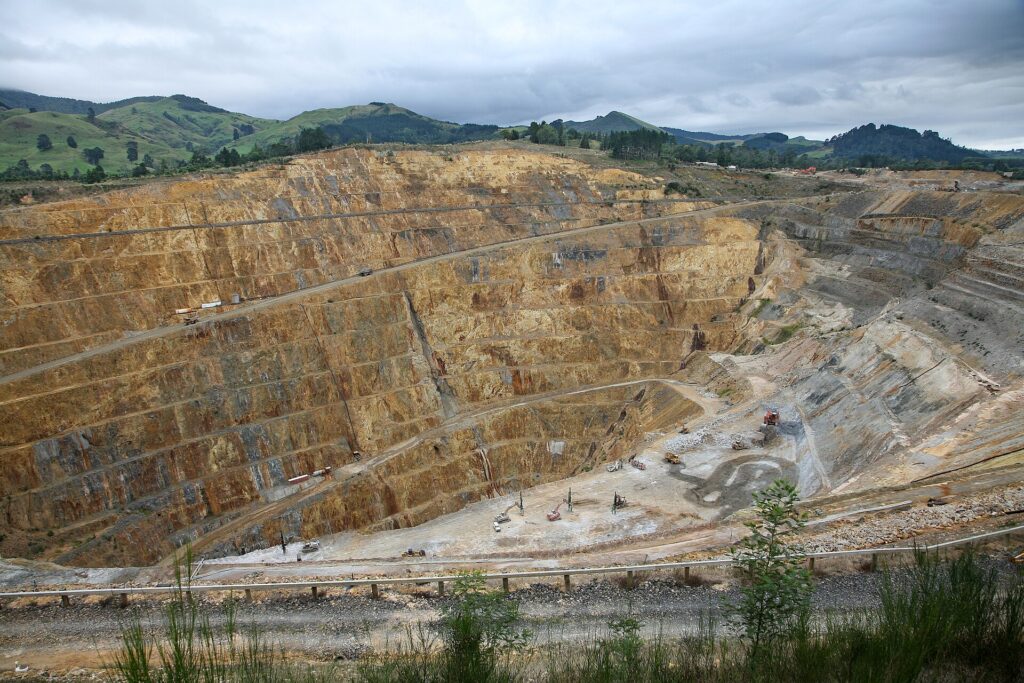
The two deposits suit different methods. One is shallow and wide, fit for a large open pit, while the neighbouring one runs deeper and would be mined underground.
Open-pit mining means digging a large hole from the surface, which is cheaper and faster when ore sits close to the top. Underground mining requires tunnels and shafts to reach deeper rock, adding complexity and cost but allowing access to ore that would otherwise be out of reach.
The name carries weight in the region. Omai was once one of South America’s biggest gold mines, producing for years before it closed in the early 2000s as its old pits were worked out.
Why this gold project matters for Guyana
The appeal is diversification. Guyana’s economy has become almost entirely a story about offshore oil, so a serious mining revival would give it a second engine that is not tied to crude prices.
Economic diversification means spreading risk across different industries so that a downturn in one sector does not cripple the entire country. For a small nation like Guyana, having both oil and mining means more stable revenue streams and a wider base of employment opportunities.
The timing helps the numbers. With gold trading near record levels, deposits that looked marginal a few years ago suddenly make more sense to dig up and process.
Reviving an old mine also lowers some risk. Because Omai was worked before, its geology is well understood and some infrastructure and access already exist, which can trim the cost of a restart.
The company is still drilling. Several rigs have been turning at the site to test how far the larger deposit extends and to firm up the confidence in the resource.
What the gold project still has to prove
A resource is not a mine. The ounces in the ground are only the starting point, and the project must still clear engineering, permitting and financing before a single bar is poured.
In plain terms, finding gold is different from profitably extracting it. A resource estimate tells you how much metal might be there, but turning that into a working mine requires proving you can dig it up, process it, and sell it for more than the whole operation costs.
The key milestone is an economic study. Known in the industry as a preliminary assessment, it was expected in the second quarter and will estimate the costs, output and returns of building the mine.
Funding is the other hurdle. Building a large mine costs hundreds of millions of dollars, so the company will need partners or capital markets willing to back a frontier project.
Guyana’s own boom cuts both ways. The oil wealth has improved roads and power, which helps a miner, but it has also pushed up local wages and costs that a mine would have to absorb.
What a foreign reader should watch
The near-term signal is the economic study. Its numbers will show whether the deposit is a genuine mine in waiting or an interesting resource that needs much higher prices to work.
The bigger theme is Guyana beyond oil. If a gold mine of this size gets built, it would be the clearest sign yet that the country’s resource story is broadening past its offshore fields.
There is a wider regional echo here as well. The Guianas, long overshadowed by their neighbours, are increasingly viewed as a resource frontier, whether the prize is crude beneath the sea or metal beneath the forest.
The honest read is promise that still needs proof. The ounces and the gold price are encouraging, but a frontier mine only becomes real once the study, the permits and the money line up behind it.
More: Brazil news in English, every day from The Rio Times.
Frequently Asked Questions
What is the Omai gold project?
Omai is a gold project in Guyana owned by the Canadian company Omai Gold Mines. Its latest estimate outlines about eight million ounces of gold across two adjacent deposits, on the site of a mine that was once one of South America’s largest before closing in the early 2000s.
Why does it matter for Guyana?
Guyana’s economy has become almost entirely dependent on offshore oil. A large gold mine would diversify that base, giving the country a source of export earnings and jobs that is not tied to crude prices, especially with gold near record highs.
Is the mine being built yet?
Not yet, as the company has only outlined the resource in the ground and was due to publish an economic study, known as a preliminary assessment, in the second quarter of 2026. The project must still clear engineering, permitting and financing before construction could begin.
Connected Coverage
Guyana Natural Resource Fund Withdrawal Falls in 2026
US Firms Eye Guyana Alumina Refinery in Push Beyond Oil
Latin America Economy 2026: Growth, Tariffs and Opportunities
This article was produced by The Rio Times’ automated newsroom system. How we use AI · Report an error · Editorial responsibility: Matthias Camenzind, Editor-in-Chief