A Council That Didn’t Exist Got US$975,000 in Nigeria’s Budget
NIGERIA · PUBLIC FINANCE
Key Facts
—The finding: Nigeria’s Independent Corrupt Practices Commission concluded the Budget Office of the Federation admitted a body into the 2026 budget without due diligence.
—The body: The Presidential Foreign Intervention Promotion Council had no verified establishment instrument, and the presidency says it was never created by the current administration.
—The sum: The 2026 Appropriation Act carries N1,302,978,784 (about US$975,000) against the relevant line.
—Not spent: The commission established that a provision was made, not that money was released or disbursed.
—How it slipped through: Officials relied on a scanned approval never officially transmitted to them, and the budget manager involved said he had never seen the department’s own procedures.
—Separate case: Three permanent secretaries were suspended on 21 August over a different fake agency, not this one.
Nigeria’s anti-corruption commission has found that the Budget Office of the Federation allowed a council with no verified legal existence into the 2026 national budget, with N1.3 billion attached to its name — about US$975,000 at the current rate of roughly 1,340 naira to the dollar. The commission did not find that the money was ever released.
What the Budget Office is said to have missed
The commission’s account is less a story of theft than of a series of unopened envelopes.
On 29 November 2024 the Budget Office received a letter from the Office of the Accountant-General conveying an administrative code for the council, the identifier that lets a body appear in the government’s accounts.
It never received official transmission of the establishment or recruitment waiver said to underpin the council, holding only a scanned copy on file.
No one independently verified the enabling authority, the supervising ministry or the presidential approval said to exist.
An administrative code is a mundane thing, and that is exactly why it works as a key to the building.
Once a body has one, it appears in the machinery of government as though its existence had already been settled.
How the figure was built
The council’s own proposal, submitted on 20 August 2025, claimed personnel costs of N3.85 billion (about US$2.9 million).
The Budget Office rejected that number, and with no approved salary structure available it recalculated using the standard public service scale.
It arrived at roughly N802 million (US$600,000) for personnel and N200 million (US$150,000) for overheads, and added N300 million (US$225,000) of capital, producing the N1.3 billion total (about US$975,000 in all).
The council submitted no overhead or capital estimates at all; officials derived those themselves by comparing it with peer agencies.
The council had delivered its proposal on a flash drive containing expenditure details, which officials accepted at face value.
Nothing in the file established who, if anyone, had authorised the body to exist.
The paperwork problem underneath
The commission found no evidence that the deficiencies were escalated to the Director of Expenditure, as departmental procedure requires.
The budget manager handling the file told investigators he had never seen or used that procedure.
The procedure itself had been due for review in November 2024 and had not been updated.
In the commission’s own summary, these weaknesses created a control gap that enabled the council to be included in the 2026 budget.
Its recommendation is that the full set of establishment documents become a precondition for entering the budget at all.
Who was behind it
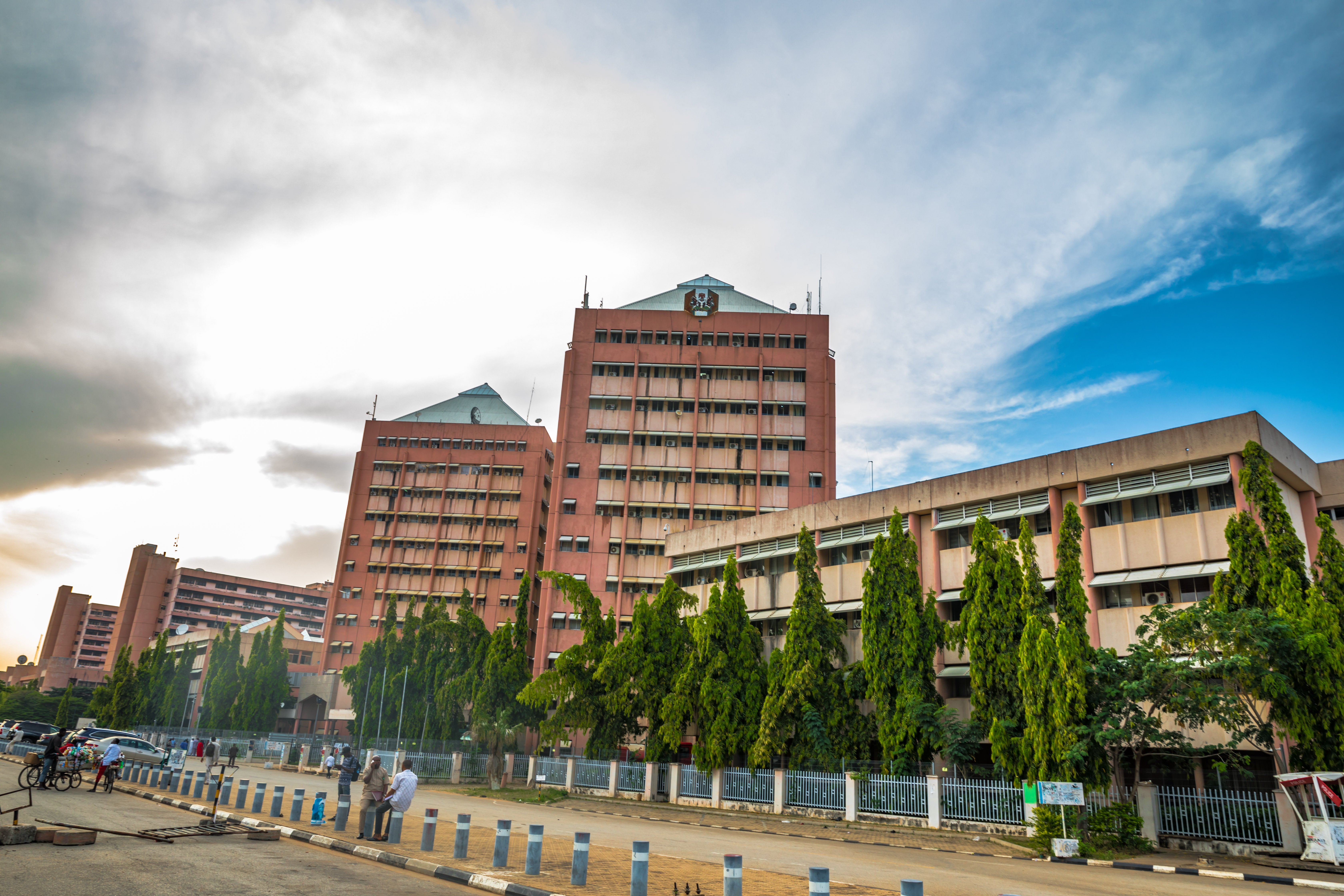
The man who presented himself as director-general of the council, Adeniyi Adeyemi, obtained an office at the Federal Secretariat in Abuja and government correspondence.
The presidency said in early July 2026 that the body was fictitious, that it was never created by the Tinubu administration and that he had never been appointed.
President Bola Tinubu then ordered the commission to investigate and report within 30 days.
Mr Adeyemi faces an eight-count forgery and impersonation charge and denies the allegations, saying he was in police detention while the budget was processed.
In an interim report on 6 August, investigators concluded he had personally forged an appointment letter dated March 2024.
On that basis the commission cleared the president’s chief of staff, Femi Gbajabiamila, whose signature had been imitated.
Two scandals that should not be merged
A second and separate case involves a body called the National Brands Development and Made in Nigeria Special Project Office, allegedly run from inside the office of the Secretary to the Government of the Federation.
It was over that one that President Tinubu on 21 August ordered three permanent secretaries suspended and the alleged promoter, George Nwabueze, arrested.
Investigators say forged legislative instruments were used to give that entity an appearance of legitimacy and to open bank accounts in its name.
No official has been suspended or charged over the Budget Office finding described here, which produced a systems criticism and a recommendation rather than an enforcement action.
Why a paperwork failure is worth reading closely
Budget credibility is the quiet foundation of everything from sovereign yields to donor confidence.
A ghost line item of N1.3 billion — just under US$1 million — is small against a national budget, and that is rather the point.
It was small enough not to be noticed, which says more about the controls than any single large theft would.
For investors weighing Nigerian risk, the encouraging detail is that the commission published the anatomy of the failure rather than burying it.
Nigeria’s budget runs to tens of trillions of naira (tens of billions of US dollars), and no reader should conclude the whole document is fictional.
The finding is narrower and more useful than that: one control failed, and the commission has said exactly which one.
More: Nigeria news in English, every day from The Rio Times.
Frequently asked questions
What did the ICPC find about the Budget Office?
It found that the Budget Office of the Federation admitted the Presidential Foreign Intervention Promotion Council into the 2026 budget without verifying its establishment instrument or enabling authority.
How much money was involved?
The 2026 Appropriation Act carries N1,302,978,784 (about US$975,000) against the relevant line. The commission did not establish that the money was released or spent.
Has anyone been arrested over this?
Not over this finding. The man who presented himself as the council’s director-general faces forgery and impersonation charges brought separately, and denies them.
Were the suspended permanent secretaries connected to this case?
No. The three permanent secretaries suspended on 21 August 2026 relate to a different alleged fake agency run from another government office.
Sources
This report is based on the findings of the Independent Corrupt Practices and Other Related Offences Commission as reported by Premium Times, the budget line as published by TheCable, and the presidency’s statement reported by The Guardian Nigeria.
Connected Coverage
Nigeria’s institutions have been busy this year, from a regulator summoning the biggest cement producers to the retail share sale at the Dangote refinery. Governance risk across the continent is a running theme of Africa: The New Scramble.
This article was produced by The Rio Times’ automated newsroom system. How we use AI · Report an error · Editorial responsibility: Matthias Camenzind, Editor-in-Chief
LatAm Markets: Live Signals → — real-time movers, turnover leaders and FX across Latin America.