Evangelical Pastors Back Nicaragua Constitutional Reform Bill
Nicaragua · POLITICS
Key Facts
- —Backing pastors endorsed the bill at an assembly consultation in Managua on 20 August
- —Terms the Nicaragua constitutional reform sets seven-year renewable presidential terms
- —Bans constitutional bar on candidates tied to the 2018 protests or sanctions support
- —Timeline approval expected in early September, with ratification stretching into 2027
- —Paradox religious groups have reported persecution by the same government
A public blessing for a reform that critics say closes off political competition.
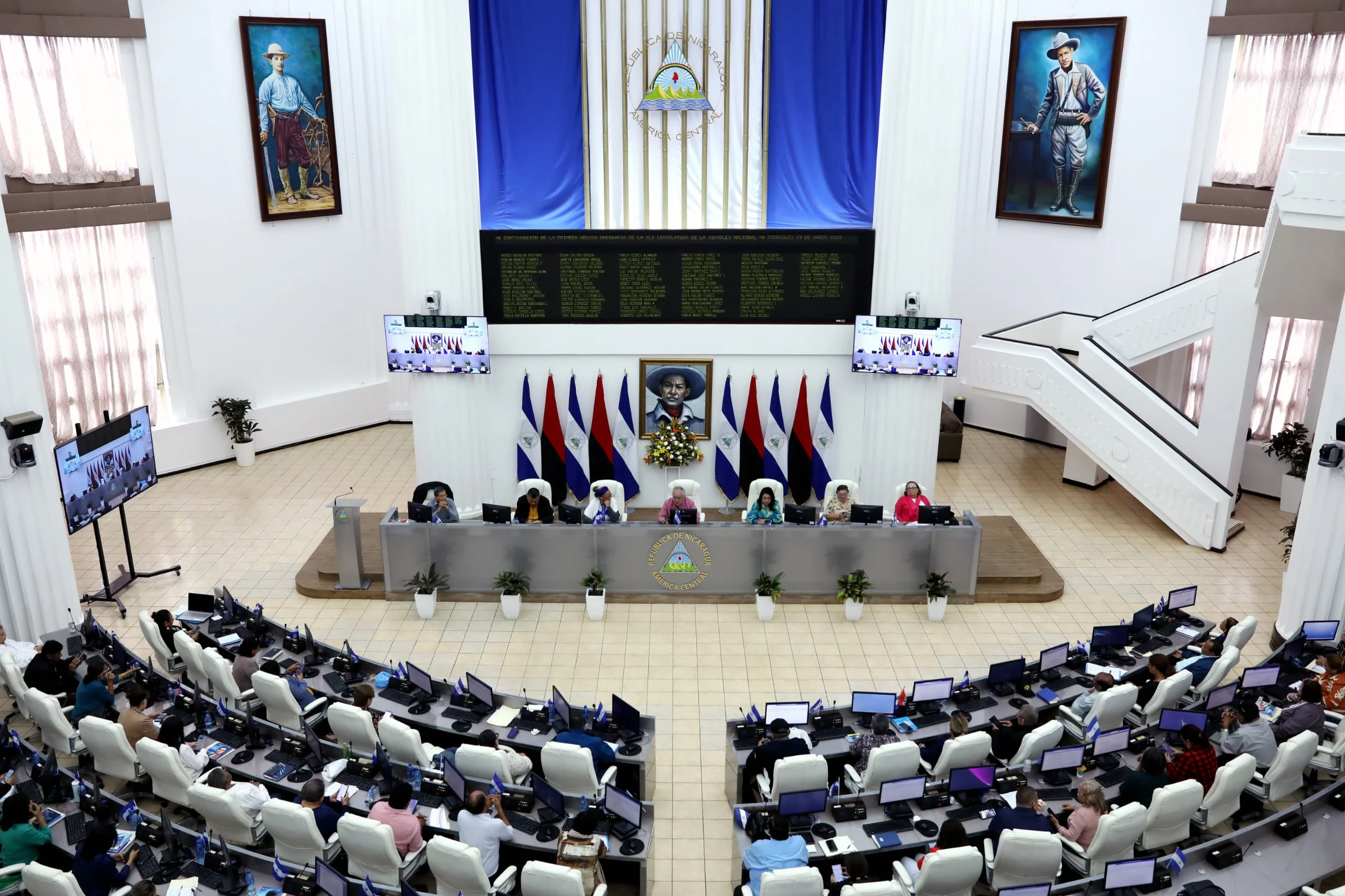
Evangelical pastors and faith leaders have publicly endorsed the Nicaragua constitutional reform bill promoted by co-presidents Daniel Ortega and Rosario Murillo, according to the National Assembly’s news service and the independent outlet La Prensa. The endorsement, delivered at an assembly consultation in Managua on 20 August, is politically striking: it comes from a religious sector that, like the Catholic Church, has reported harassment and persecution by the authorities. The bill would extend presidential terms to seven renewable years and raise to constitutional rank the bans on candidacies for people linked to the 2018 protests or to support for international sanctions.
What the pastors said
The consultation was held at the Carlos Martínez auditorium of the UNAN university in Managua, with 160 pastors and faith leaders connected virtually, according to the National Assembly’s official news service. Participants declared ‘full backing’ for the reform, framed it as a guarantee of peace and stability, and thanked the co-presidents for their support of religious denominations. Pastor Francisco Tinoco, of the Federation of Evangelical Churches, said progress since 2007 justified the change: ‘We are here backing the reform of our supreme law because it guarantees the development and the good we have seen all these years.’
Pastor Omar Duarte, of the Ríos de Agua Viva church, said the Nicaragua constitutional reform would ensure that only Nicaraguans ‘with morals and legitimate rights’ take part in electoral processes, and pledged continued support for ‘our co-president and co-presidenta.’ La Prensa, which operates in exile after its newsroom was confiscated, confirmed that Tinoco, Duarte and pastors Jorge Ulises Sequeira and Roberto Rojas publicly backed the text, with some openly praising the government.
What the reform would change
The bill before the National Assembly would extend presidential terms from six to seven years, renewable, and give constitutional status to the exclusion of candidates linked to the 2018 protests or to support for international sanctions against Managua. The National Assembly opened its consultation process in late July and aims to approve the text in early September, according to the Managua-based outlet Confidencial. Because constitutional changes must pass two legislative periods, final ratification would come in 2027.
This Nicaragua constitutional reform builds on the overhaul approved in November 2024 and in force since February 2025, which created the Ortega-Murillo co-presidency and stretched the term from five to six years, pushing the next vote from 2026 to 2027. The new text goes further: it rewrites the rules of who may ever compete. Ortega declared in July that there would be ‘no more elections,’ while Congress chief Gustavo Porras told diplomats that elections would happen — and then outlined the constitutional wall that would keep opposition candidates off the ballot.
Why the endorsement matters
Religion carries weight in Nicaragua, and the government has worked to court evangelical denominations even as its confrontation with the Catholic Church has become one of the defining conflicts of the past decade. Human rights organizations have documented the closure of religious media, the expulsion of clergy and the imprisonment of priests; religious groups of several traditions have reported persecution. Against that backdrop, a public evangelical endorsement gives the reform a veneer of social consensus that the government badly wants.
Critics read it differently. For the opposition in exile, the pastor endorsement illustrates how the state marshals visible support for a text that would shield the ruling couple from sanctions and further postpone competitive elections. Confidencial reports that the consultation process is designed to conclude quickly, with approval in early September — a timetable that leaves little room for dissenting voices to be heard.
The persecution backdrop gives the scene its edge. The government’s confrontation with the Catholic Church has included the closure of church-run media and charities, the expulsion of foreign clergy and the imprisonment — and later exile — of Bishop Rolando Álvarez of Matagalpa, cases documented by UN experts and regional human rights bodies. Evangelical congregations have also reported harassment. That some evangelical leaders now stand with the government on the Nicaragua constitutional reform shows both the pull of state patronage and the pressure religious communities navigate to keep operating in the country.
What happens next
If the assembly approves the bill in September, the Nicaragua constitutional reform would still require a second vote in the next legislature, putting final ratification in 2027 — the same year the presidential election was moved to by the previous reform. International reaction is likely to be harsh: the OAS, UN experts and the Inter-American Commission on Human Rights have already condemned the earlier changes as the institutionalization of an authoritarian regime.
For the pastors who spoke at UNAN, the calculation is pragmatic: proximity to power offers protection in a country where religious freedom has become conditional. For critics, that is precisely the problem — a constitutional order in which backing the government becomes the price of worshipping in peace.
Background: Brazil Tax Reform Timeline: Tech Sector Faces 2026 Invoice Shock.
Frequently Asked Questions
What does the Nicaragua constitutional reform propose?
The Nicaragua constitutional reform would set seven-year renewable presidential terms and constitutionally bar candidacies by people linked to the 2018 protests or to support for international sanctions. Approval is expected in early September, with final ratification in 2027.
Who endorsed the reform?
Evangelical pastors and faith leaders endorsed the bill at a National Assembly consultation in Managua on 20 August. The assembly’s news service quoted pastors Francisco Tinoco and Omar Duarte; La Prensa also named Jorge Ulises Sequeira and Roberto Rojas.
Why is the pastors’ backing controversial?
Religious groups, Catholic and evangelical alike, have reported persecution by the Ortega government, including closed media, expelled clergy and imprisoned priests. Critics say the endorsement lends a veneer of consensus to a reform that entrenches the exclusion of the opposition.
Connected Coverage
Sources
This article was produced by The Rio Times’ automated newsroom system. How we use AI · Report an error · Editorial responsibility: Matthias Camenzind, Editor-in-Chief