Milei Tours Two Investment Projects in a City That Is Also a Campaign Stop
Key Facts
Argentina’s president spent Friday in a port city that has become the test case for his investment regime. Javier Milei toured two projects in Bahía Blanca worth US$765 million between them.
Both qualify under RIGI, the incentive scheme for large investments that is the centrepiece of his economic programme. Both are also in Buenos Aires province, where his coalition is building for the next election.
What He Saw
The first stop was Compañía Mega, which processes natural gas liquids. Its expansion is worth US$365 million.
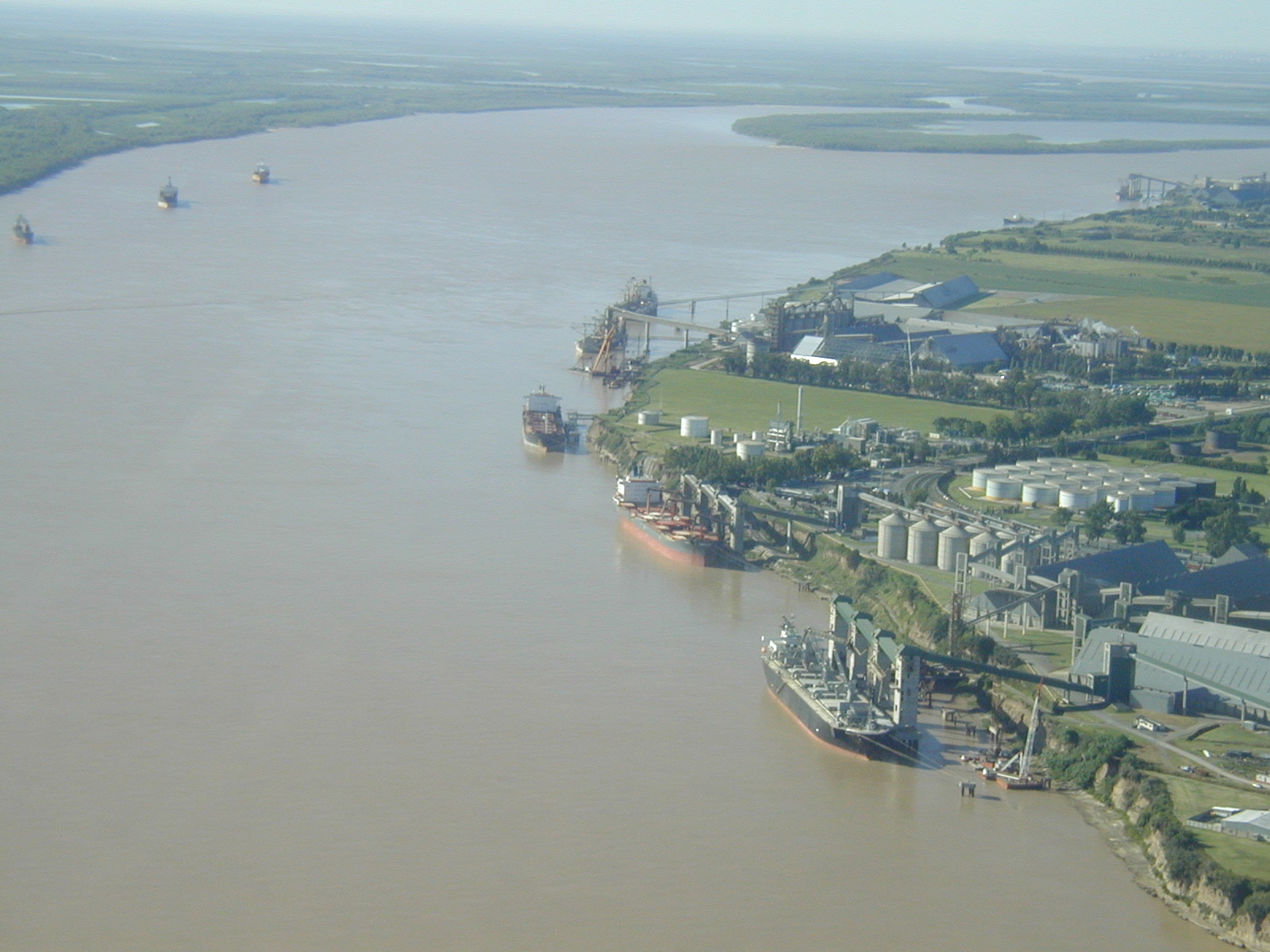
The second was Louis Dreyfus Company at Puerto Galván, where a soy and sunflower processing plant is under construction. That project is worth US$400 million.
He also made an aerial survey of Pampa Energía’s expansion at its Piedrabuena thermal plant. No figure was given for that one.
He was accompanied by his sister Karina Milei, cabinet chief Diego Santilli and the businessman Marcelo Mindlin. The composition of the party made the political purpose plain.
What RIGI Actually Offers
The regime grants tax, customs and currency stability to investments above a threshold, for thirty years. It was created to attract the capital Argentina has struggled to hold.
Its critics argue the concessions are too generous and too long. Its defenders point out that Argentina’s record of changing rules mid-project is the reason such guarantees are demanded at all.
Bahía Blanca has become the regime’s showcase because of its port and its petrochemical cluster. Both projects the president toured export through it.
Neither project is new to the scheme. What Friday added was presidential attention rather than capital.
The regime has attracted commitments faster than it has attracted completed plants. That gap is the fair criticism of it so far.
Bahía Blanca is where the gap is narrowest. Both projects toured on Friday are under construction rather than under consideration.
The Protests
The local branch of the teachers’ union called a strike with a march affecting schools. The state workers’ union called a rally at Plaza Rivadavia.
The city’s mayor, Federico Susbielles, scheduled no official meetings with the national delegation. That absence was itself read locally as a statement.
Turnout had not been reported by Friday afternoon. What is established is that the protests were called, not how large they were.
Bahía Blanca has been a difficult city for the government since the floods of March 2025. Reconstruction funding has been a recurring local grievance.
Buenos Aires province is also the country’s largest electoral district. Any presidential visit there in the months before a vote carries a second purpose whatever its stated one.
The Bond That Priced the Same Week
Vaca Muerta Oil Sur, the company building the pipeline from the shale basin to the coast, issued notes on Thursday. It raised US$233.7 million at a rate of 6.25 per cent over four years.
Demand came to US$233.9 million, so the book was covered almost exactly. It was the company’s first appearance in the capital markets.
The placement is described as the largest local capital markets issue of the year so far. Adcap Grupo Financiero acted as placement agent.
The shareholder list is the who’s who of Argentine energy. It includes YPF, Vista, Pampa Energía, Pan American Energy, Pluspetrol, Chevron, Shell, Tecpetrol and the Neuquén provincial company.
Where the Pipeline Goes
The line runs from the Vaca Muerta formation in Neuquén to the Punta Colorada terminal in Río Negro. It is the infrastructure that turns Argentine shale oil into exports.
Without it, production growth runs into evacuation limits. That constraint has been the binding one on Argentine oil for several years.
Argentine crude output has risen steadily as the shale basin has matured. Getting the barrels to a port has proved harder than getting them out of the ground.
The bond proceeds fund construction. The rate of 6.25 per cent is low by recent Argentine corporate standards.
Local placements of this size have been rare for years. A four-year tenor in pesos-adjacent instruments would have been unthinkable in 2023.
That pricing is the more interesting number in the week. It says something about foreign appetite for Argentine energy risk that no political speech does.
Argentine sovereign risk has been climbing at the same time. Country risk reached 515 on Thursday, its highest reading of the month.
A corporate borrower pricing below that spread is doing something the state cannot. Energy assets with dollar revenue are being treated as a separate credit from the country they sit in.
Frequently Asked Questions
What did Milei visit in Bahía Blanca?
Compañía Mega’s natural gas liquids expansion, worth US$365 million, and a Louis Dreyfus soy and sunflower plant at Puerto Galván worth US$400 million. He also surveyed a Pampa Energía thermal plant expansion from the air.
What is RIGI?
Argentina’s incentive regime for large investments, which grants tax, customs and currency stability for thirty years to projects above a threshold.
Were there protests?
The local teachers’ union called a strike and march and the state workers’ union called a rally at Plaza Rivadavia. Turnout had not been reported by Friday afternoon.
What is Vaca Muerta Oil Sur?
The company building the oil pipeline from Vaca Muerta in Neuquén to the Punta Colorada terminal in Río Negro. Its shareholders include YPF, Vista, Pampa Energía, Chevron and Shell.
How much did the bond raise?
US$233.7 million at 6.25 per cent over four years, in what is described as the largest local capital markets issue of 2026 so far.
Sources: Sudoeste BA on the presidential visit and the projects, LU17 on the investment figures, Infozona on the protests called for the visit, Roadshow on the Vaca Muerta Oil Sur bond, Bloomberg Línea on the placement and its shareholders
This article was produced by The Rio Times’ automated newsroom system. How we use AI · Report an error
In depth
Read More from The Rio Times