Mexico removes all COVID-19 entry requirements including health form
RIO DE JANEIRO, BRAZIL – Mexico—the world’s most popular travel destination throughout the COVID-19 pandemic—has now dropped all COVID-19 entry requirements as of January 1, 2022. El Salvador was the world’s first nation to drop all COVID-19 entry requirements in November 2021, with Mexico now joining El Salvador as the second nation to drop all covid-related entry restrictions.
Unlike most of the world, Mexico has kept its borders open throughout the pandemic. As a result, it’s become the world’s most popular destination since 2020.
THE CHANGES IN RESTRICTIONS
Before January 1, 2022, Mexico still had a health questionnaire required for all flights, including international flights and domestic flights. The Mexican authorities called it the Vuela Seguro.
The form asked health-related questions, such as if the passenger has been in close contact with anyone who’s tested positive for COVID-19 in the previous two weeks. The questionnaire would also ask if travelers have had coughs, fever, and other COVID-19 related symptoms.

Once travelers had completed the digital form, they would receive a QR code to be scanned at the airport. It would allow the passenger to pass through security freely, without airport security taking them for further screening if the responses on the questionnaires contradicted authority sanitary measures.
As of January 1, 2022, Mexico has officially discontinued this form.
Therefore, Mexico has zero COVID-19 entry requirements. Visiting Mexico is now no different from visiting Mexico in 2019.
The website “Travel Off Path” had a reporter take a domestic and international flight in Mexico to test if the Vuela Seguro form was still used. During both flights, the Mexican authorities didn’t request the health questionnaire. IATA has also officially removed all entry requirements in Mexico, which previously had the form listed as mandatory.
In addition, local authorities started reporting on the removal of the health questionnaire form four weeks ago. The secretary of Prevention and Health Promotion of Mexico, Hugo López-Gatell, said that the country would stop requiring the anti-COVID-19 Health questionnaire due to it not providing scientific utility and slowing down airport processes.
While the Vuela Seguro official website is still active, airports no longer require completion of the form.
BUT WHAT ABOUT THE RESTRICTIONS WITHIN MEXICO?
Restrictions are low throughout Mexico. That said, individual states are imposing different measures, depending on the current situation within the state. Mexico has divided its 32 states into a four-tier color-coded system.
- Red Tier – The highest COVID-19 risk and only essential activities are allowed
- Orange Tier – High-risk tier, with more stringent limitations on social and commercial activities
- Yellow Tier – Lower risk tier, with a moderate level of restrictions
- Green Tier – Very low-risk tier, where people can resume their everyday activities
Currently, no states in Mexico are under the red tier. So most places throughout Mexico are open without restrictions. However, some locations may have capacity limitations depending on the state. Many popular tourist destinations within Mexico, including Cancun, are currently ‘yellow’, resulting in a lower capacity for accommodations, restaurants, bars, etc.
At a press conference, the Mexican President, Andrés Manuel López Obrador, said that Mexico has no intention of asking tourists or residents for proof of vaccination for private businesses or public spaces. Individual states, however, may introduce proof of vaccination in the future. For example, the bi-law in Mazatlán, Sinaloa, currently requires proof of vaccination to enter restaurants and bars, although it’s rarely enforced.
Regardless of their vaccination status, Americans will require a negative covid test result before flying back to the United States. The cost of an antigen test ranges from US$20 to US$60, and in some cases, may be covered by the hotel or resort.
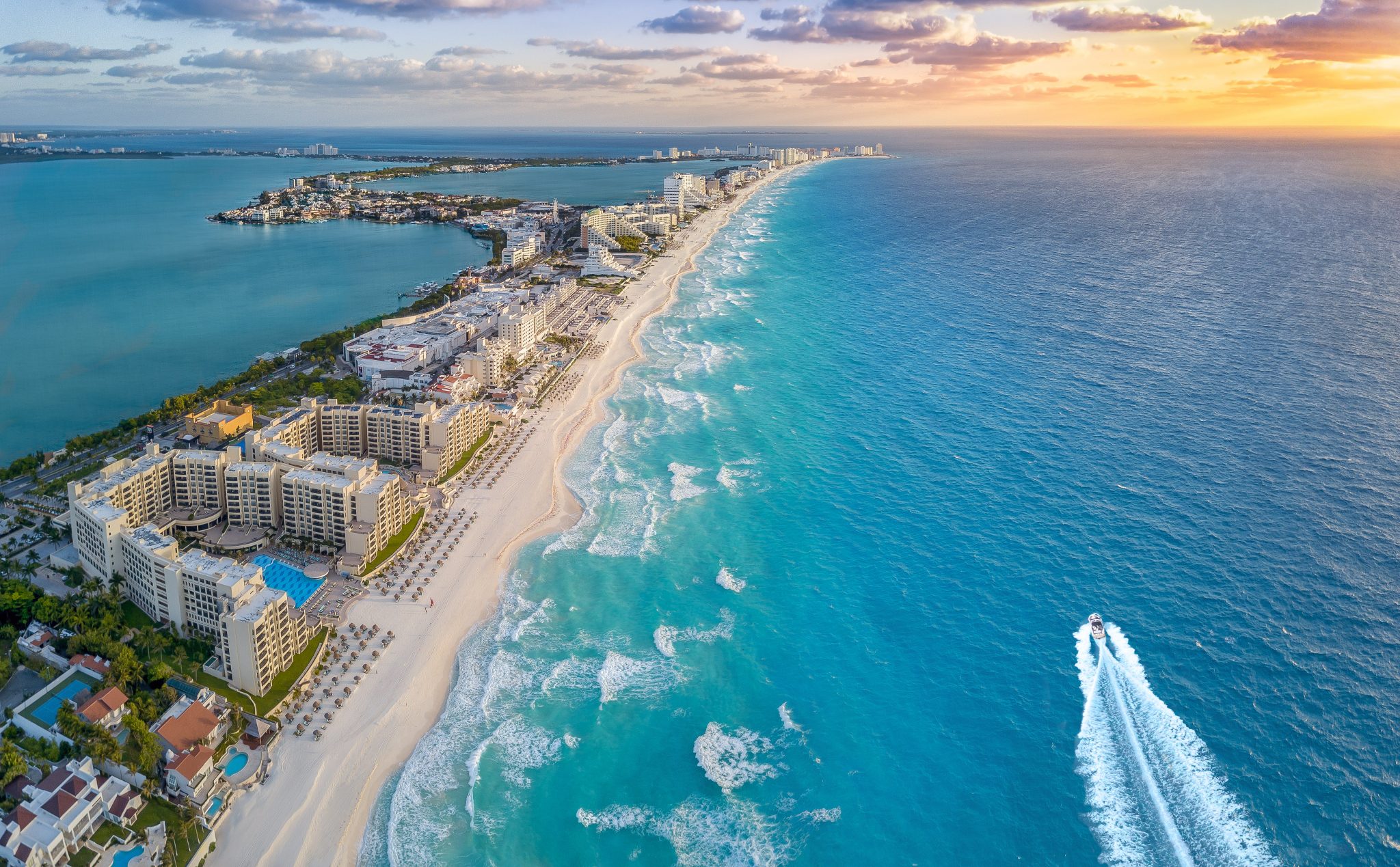
AIRPORTS IN MEXICO ARE BUSIER THAN EVER
Since Mexico has been the king of tourism throughout the pandemic, international arrivals are surpassing 2019 levels and setting new records. Tourists should be prepared for delays arriving and departing from Mexican airports, especially in Cancun.
SNOWBIRDS AND LONG-STAY TOURISTS BE AWARE
Another situation that long-stay tourists should be prepared for is the amount of time they may receive on their tourist visa card. It’s been Mexico’s longstanding policy to automatically award 180 days to foreign tourists arriving, but that was not always the case throughout the past year.
The 180 days some snowbirds are expecting are instead 15, 30, or 60 days, in an alleged attempt to crack down on those abusing the immigration system, encouraging them to apply for residency instead.
THE CURRENT COVID-19 SITUATION IN MEXICO: JANUARY 11, 2022
Like the rest of the world, Mexico is witnessing a COVID-19 surge at the moment. The 7-day case average stands at 18,846; that’s a significant increase from the 2,756 7-day case average two weeks ago. However, Mexico hasn’t enforced any further restrictions since the Omicron wave started.
Mexico stopping all COVID-19 entry requirements is a step back to normality for the world.
More: Brazil news in English, every day from The Rio Times.
This article was produced by The Rio Times’ automated newsroom system. How we use AI · Report an error · Editorial responsibility: Matthias Camenzind, Editor-in-Chief