Malawi Explained: Mutharika, the Kwacha Crisis, the IMF and What to Watch in 2026

GUIDES · MALAWI
Key Facts
- —Capital Lilongwe. Malawi is a small, landlocked, rural state between Zambia, Tanzania and Mozambique. It is one of the poorest countries in the world.
- —Population About 22.2 million in 2025 (World Bank), growing around 2.6 percent a year. Fewer than one in five people live in towns.
- —Currency The Malawian kwacha, held near 1,750 to the US dollar at the official rate. On the street a dollar costs more than twice as much.
- —Language English is the official language. Chichewa is the most widely spoken, and Chitumbuka dominates in the north.
- —GDP About US$14.9 billion in 2025, or roughly US$670 a person (World Bank, current dollars). Growth was an estimated 2.5 percent.
- —Government A presidential republic under the 1994 constitution. President Peter Mutharika of the Democratic Progressive Party has held office since 4 October 2025.
Malawi explained from the ground up: who governs this lakeside country of 22 million, and why it keeps running out of dollars and fuel. Its stalled IMF talks matter to anyone doing business there.
Malawi explained in one sentence: a peaceful democracy with a broken currency market. Voters changed the government peacefully in 2025. Yet the country still earns far fewer dollars than it spends, and that gap shapes prices, fuel supply and every talk with the IMF.
What kind of country is this?
Malawi covers 118,484 square kilometres, a little smaller than England. About a fifth of that is water. Lake Malawi runs along most of the eastern border, and a national park at its southern end is a UNESCO World Heritage site.
Malawi is a country of small farms: agriculture produced about 30 percent of output in 2025, according to the World Bank, and most workers still depend on their own farms. Only about 17.6 percent of people live in towns. Lilongwe, the capital, and Blantyre, the commercial hub in the south, are the two largest cities.
Malawi became independent from Britain on 6 July 1964 and a republic two years later. Hastings Kamuzu Banda then ruled a one-party state for three decades. Multiparty elections arrived in 1994, together with the constitution that still applies today.
The 2018 census counted 77.3 percent of Malawians as Christian and 13.8 percent as Muslim. Regional loyalty matters at the ballot box: the centre tends to back the Malawi Congress Party, the south the Democratic Progressive Party.
Poverty is the defining fact of daily life. The latest household survey, for 2024/25, puts 47.3 percent of people below the national poverty line, down from 50.7 percent. Yet food poverty rose from 20.5 to 24.0 percent over the same period, the World Bank reports.
Who runs Malawi and how
The president is both head of state and head of government, elected directly for five years. Since a 2020 court ruling, the winner needs more than half of the votes cast. There is no prime minister.
That rule has a history. In February 2020 the Constitutional Court annulled the 2019 election, which Peter Mutharika had won, over irregularities. Lazarus Chakwera won the rerun later that year.
Mutharika took his revenge at the ballot box. On 16 September 2025 he won 56.76 percent of the vote against 33.01 percent for Chakwera, on a turnout of 76.39 percent. Mutharika was sworn in on 4 October 2025, aged 85, the oldest person to take the office.
This is Mutharika’s second spell in power. He was president from 2014 to 2020, and his late brother, Bingu wa Mutharika, held the office from 2004 to 2012. Jane Ansah, his running mate, is vice-president.
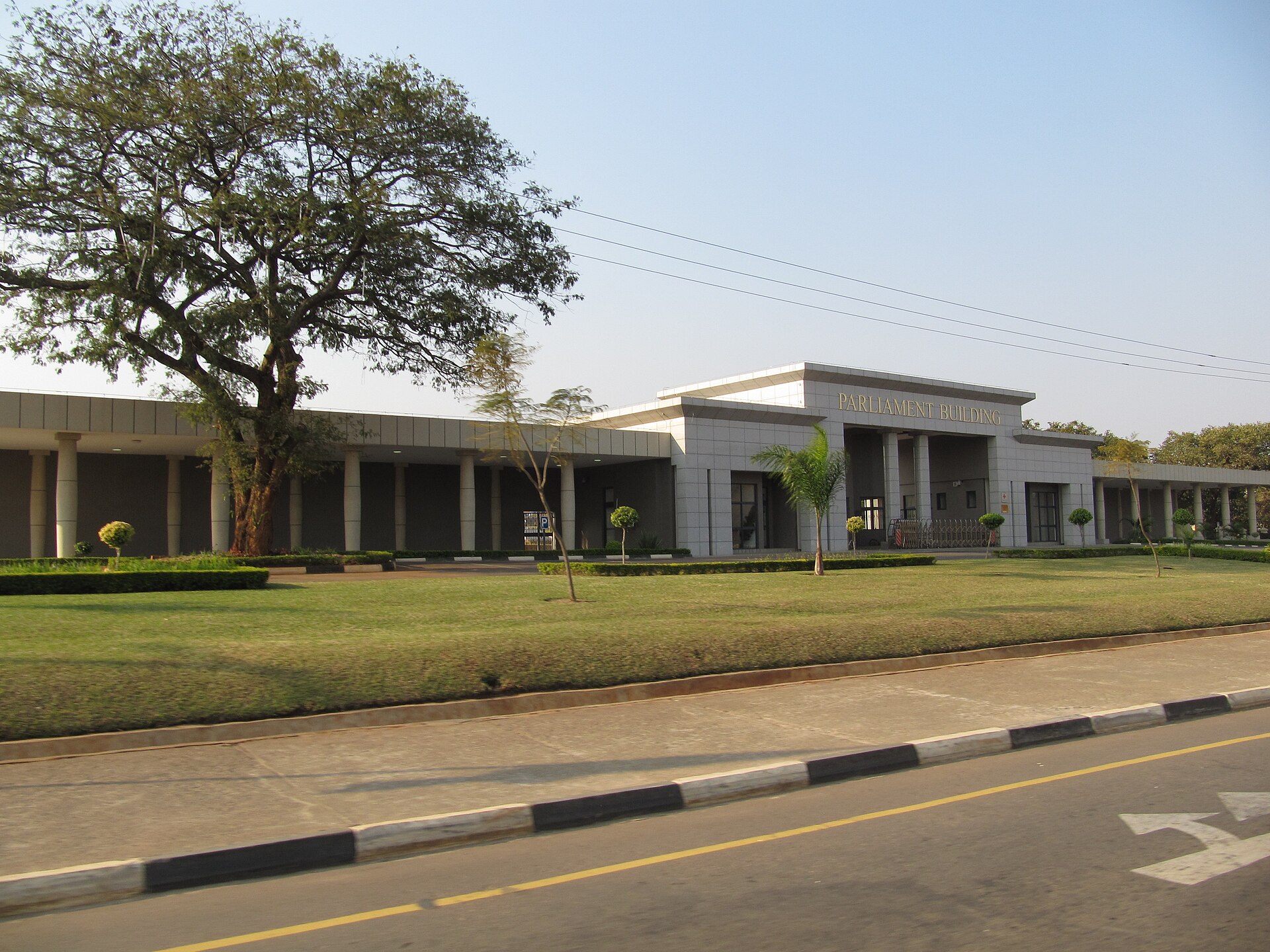
Parliament is a single chamber, the National Assembly, enlarged from 193 to 229 seats for the 2025 vote. The Democratic Progressive Party won 78 seats, independents 73 and the Malawi Congress Party 52. The president therefore needs independents to pass laws, and the Speaker, Sameer Suleman, comes from his party.
Joseph Mwanamvekha is finance minister. George Partridge, a former chief executive of the conglomerate Press Corporation, has run the Reserve Bank of Malawi since January 2026. Justin Saidi is Chief Secretary to the Government.
How the economy works
Malawi sells leaf and buys almost everything else. Tobacco brings in about 40 percent of export earnings, according to the World Bank. In 2025 exports of goods and services came to about US$1.56 billion, while imports reached about US$4.51 billion.
That gap is the core of the story, because fuel, fertiliser, medicine and machinery must all be paid for in dollars. Donor grants, which once plugged much of the hole, are shrinking. Britain plans to cut aid by 60 percent in 2026/27, according to African Arguments.
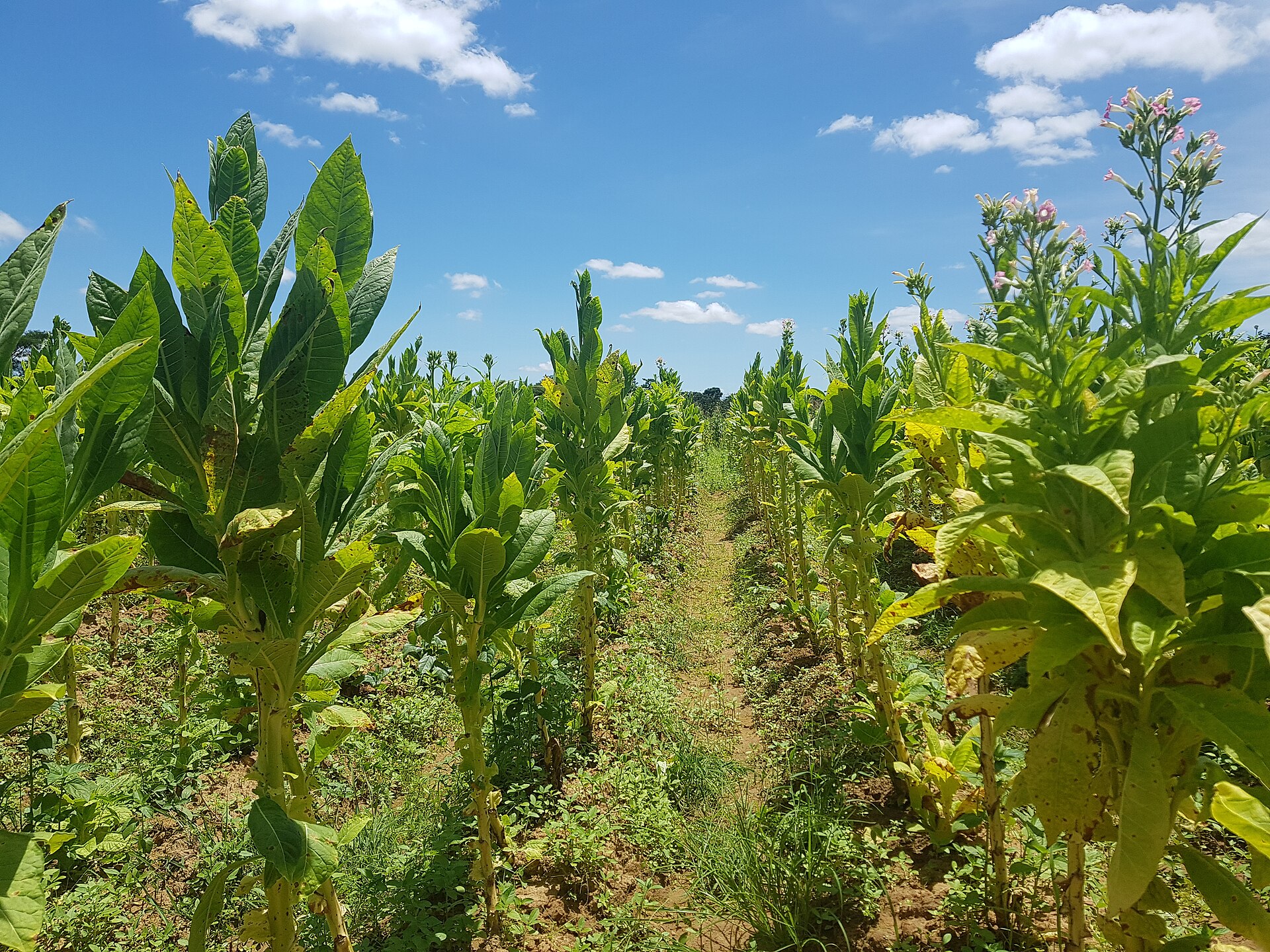
Tobacco earnings swing hard: the 2025 season earned a record US$540 million on 221,000 tonnes, the Tobacco Commission said. After 19 weeks of the 2026 season, sales stood at US$282.5 million, against US$500.4 million a year earlier. The average price fell from US$2.54 to US$1.98 a kilogram.
The central bank holds the kwacha near 1,750 per US dollar, but dollars at that price are rationed. The World Bank puts the premium on the parallel market at about 130 percent in June 2026. The Economist Intelligence Unit quoted a street rate of about 4,400 per US dollar in July.
Malawi has devalued twice in recent years: by 25 percent in May 2022 and by 44 percent in November 2023. Both times, prices rose sharply. Official reserves now cover less than one month of imports, the World Bank says, against a target of three.
Inflation averaged 28.4 percent in 2025. It has since eased for seven months in a row, to 20.01 percent in August 2026, the National Statistical Office reported. Food makes up more than half of the price basket, so the maize harvest drives the headline number.
The state is deep in debt. Public debt reached 98.0 percent of output in 2025, the World Bank estimates, and has been rated “in distress” since 2022. Talks to restructure debts owed to commercial foreign lenders have dragged on for years.
Parliament approved a budget of 10.98 trillion kwacha (about US$6.3 billion) in March 2026 for the fiscal year to March 2027. The World Bank says the deficit narrowed to 8.8 percent of output in 2025/26. For the first time in several years, spending stayed within approved limits.
What is happening right now
As of 24 September 2026, Malawi is negotiating for a new IMF loan. It refuses the step the Economist Intelligence Unit expects the Fund to press for: a market-set exchange rate. The previous four-year, US$175 million Extended Credit Facility, approved in November 2023, terminated automatically on 14 May 2025 after no review was completed.
An IMF staff visit from 9 to 18 June 2026 ended without a deal, with the Fund saying discussions would continue. An IMF team returned in late September for fresh talks, with local press reporting a mission running to 3 October. Mwanamvekha said in May that there would be “no discussion on devaluation”.
On 24 September John Kapito of the Consumers Association of Malawi warned against another devaluation. He said it would hit food, fuel, fertiliser and medicine prices. The World Bank, by contrast, calls for the exchange rates to be unified.
The central bank has tightened controls instead. Notices issued on 18 September 2026 bar any individual from holding more than US$1,000 in foreign cash without permission. Travellers may take only 100,000 kwacha (about US$57) across the border without approval, and cross-border traders kwacha worth about US$5,000.
Fuel has been the sharpest pain. Petrol rose about 42 percent in January 2026 and reached 6,672 kwacha (about US$3.82) a litre in April. On 12 September the regulator, MERA, held petrol at 5,619 kwacha (about US$3.22) and diesel at 5,863 kwacha (about US$3.36).
Interest rates have started to come down. The Reserve Bank cut its policy rate from 26 to 24 percent on 5 March 2026, the first move since February 2024. It held the rate on 6 August and expects inflation to average about 22 percent in 2026.
What to watch
First, the IMF talks. A staff-level agreement would be the clearest signal that fresh money, and probably exchange-rate reform, is coming. Another mission without a deal would extend the dollar squeeze into 2027.
Second, the Reserve Bank’s next rate decision, due on Thursday 29 October 2026. September inflation, due in October, will show whether the fall below 21 percent holds as the lean season approaches.
Third, the weather. Forecasters expect El Niño to peak between December 2026 and February 2027, with below-normal rain in the south. The government’s preparedness plan needs 488.5 billion kwacha (about US$280 million) and had raised only about a third of it in early September.
Fourth, the commercial debt deal. The World Bank says negotiations with external commercial creditors appear to be nearing a conclusion. Whether the terms restore debt sustainability is the question that matters for bondholders and lenders.
Finally, the numbers on the street. The gap between the official and parallel kwacha rates, and the length of fuel queues, are the quickest guide to whether policy is working. The World Bank projects growth of just 2.7 percent in 2026, barely above population growth.
What this means for foreigners
Visitors from the United States, Britain and many European Union countries can enter without a visa for up to 30 days, extendable to 90. The exemption list has been revised more than once, most recently in January 2026. Others apply online through the official e-visa portal.
Money is the practical headache. Formal channels often cannot supply dollars, and the new central bank notices cap the foreign cash an individual may hold at US$1,000 without permission. Anyone arriving with more should check the rules with the Reserve Bank or their bank beforehand.
For investors, the key risk is getting money out. With reserves this thin, businesses and travellers complain that banks cannot supply dollars, local press reports. The World Bank also flags export surrender rules, trade bans and unreliable power as brakes on business.
There are openings too: the government wants electricity capacity to rise from under 600 megawatts to more than 1,000 by 2030. It is also building a sovereign wealth fund for mineral revenue. Mining investors should note that the World Bank recommends a legal cap on the free stake the state takes in new mines.
Day to day, English works in offices, banks and hotels. Plan for fuel gaps and power cuts, carry some cash, and expect prices to move quickly. That, in short, is Malawi explained for newcomers: friendly, poor and short of dollars.
Connected Coverage
Malawi Will Not Devalue, and the IMF Will Not Sign
Malawi Inflation Falls to 20.01% in August, a Seventh Straight Drop
Mutharika Returns to Power in Malawi as 23.8% Inflation Crisis Tests His Comeback
Malawi El Niño Plan Is Only One Third Funded
One Civil Servant Chairs Three Malawian Power Companies That Must Negotiate With Each Other
The World’s Largest No-Strings Cash Experiment Is Paying Out in Malawi
Sources: World Bank data and the September 2026 Malawi Economic Monitor, the IMF, the Reserve Bank of Malawi, the National Statistical Office, the Tobacco Commission, the Malawi Energy Regulatory Authority and the Inter-Parliamentary Union, accessed 24 September 2026. Exchange-rate conversions use 1,747 kwacha to the US dollar (open.er-api reference rate, 29 September 2026).
- World Bank — Malawi Economic Monitor, Building Stability to Unlock Growth (September 2026)
- World Bank Open Data — Malawi population, GDP and urban share, 2025
- IMF — Press Release 26/212, IMF staff completes visit to Malawi (18 June 2026)
- Inter-Parliamentary Union — Malawi National Assembly election, 16 September 2025
- Malawi24 — Reserve Bank of Malawi holds the policy rate at 24 percent
- The Nation — Reserve Bank foreign-exchange notices of 18 September 2026
- Malawi24 — Tobacco Commission sales data, 2026 season
- Malawi24 — MERA pump prices, 12 September 2026
- UNESCO — Lake Malawi National Park World Heritage listing
What Is Not Known
Whether an IMF deal comes, and on what terms. The government rules out devaluation, while the World Bank calls for a unified exchange rate. Neither side has published what a compromise would look like.
How many dollars Malawi really has. The World Bank puts official reserves below one month of imports. Local reports of central bank data cite about US$600 million and 2.4 months of cover in July. The two figures appear to use different definitions, and no reconciliation has been published.
How hard El Niño will hit the 2027 harvest. Forecasts point to below-normal rain in the south, but the size of any maize shortfall will not be clear before early 2027.
Whether the debt restructuring restores sustainability. Talks with commercial creditors have run since 2022, and the World Bank itself says there is little clarity on the outcome.
Frequently Asked Questions
Who is the president of Malawi in 2026?
Peter Mutharika of the Democratic Progressive Party. He won the election of 16 September 2025 with 56.76 percent of the vote and was sworn in on 4 October 2025. He had previously been president from 2014 to 2020.
Why does Malawi have a foreign-exchange shortage?
Malawi imports far more than it exports. In 2025 exports of goods and services were about US$1.56 billion against imports of about US$4.51 billion, and tobacco earns about 40 percent of export income. Official reserves cover less than one month of imports, according to the World Bank.
Does Malawi have an IMF programme?
Not at present. The previous US$175 million Extended Credit Facility terminated on 14 May 2025. A staff visit in June 2026 ended without a deal, and an IMF team returned in September 2026 for fresh talks.
What is the inflation rate in Malawi?
Annual inflation was 20.01 percent in August 2026, the seventh monthly fall in a row, according to the National Statistical Office. It averaged 28.4 percent in 2025.
Do Americans and Europeans need a visa for Malawi?
Visitors from the United States, Britain and many European Union countries can enter without a visa for up to 30 days, extendable to 90. The exemption list has been revised more than once, so travellers should check before booking.
This article was produced by The Rio Times’ automated newsroom system. How we use AI · Report an error · Editorial responsibility: Matthias Camenzind, Editor-in-Chief
LatAm Markets: Live Signals → — real-time movers, turnover leaders and FX across Latin America.