Libya Central Bank Governor Resigns Amid Political Pressure Over Oil Money
Libya · FINANCE
Key Facts
—Resignation submitted: Governor Naji Issa handed his resignation to the House of Representatives and the High Council of State on 9 August 2026, describing the reasons as sensitive.
—Stay-on request: High Council of State head Mohamed Takala urged Issa to remain temporarily to preserve financial, economic and political stability.
—2024 precedent: A move to dismiss then-governor Sadiq al-Kabir in August 2024 triggered an oil-production halt by eastern factions and a UN-mediated compromise.
—Central bank power: The Central Bank of Libya controls oil-revenue distribution, foreign-currency allocation, banking supervision and state financing.
—Split state: Libya remains divided between rival eastern and western institutions, with the central bank sitting at the junction of fiscal policy, monetary policy and elite patronage.
—External players: Turkey, Russia, the United Arab Emirates, Egypt, France, the United States, the European Union, Qatar and Saudi Arabia all hold equities in Libya’s financial architecture.
Libya’s Central Bank Governor Naji Issa submitted his resignation to the country’s rival legislative chambers on 9 August 2026, reigniting a struggle over the institution that controls the nation’s oil revenues, foreign-currency supply and state spending.
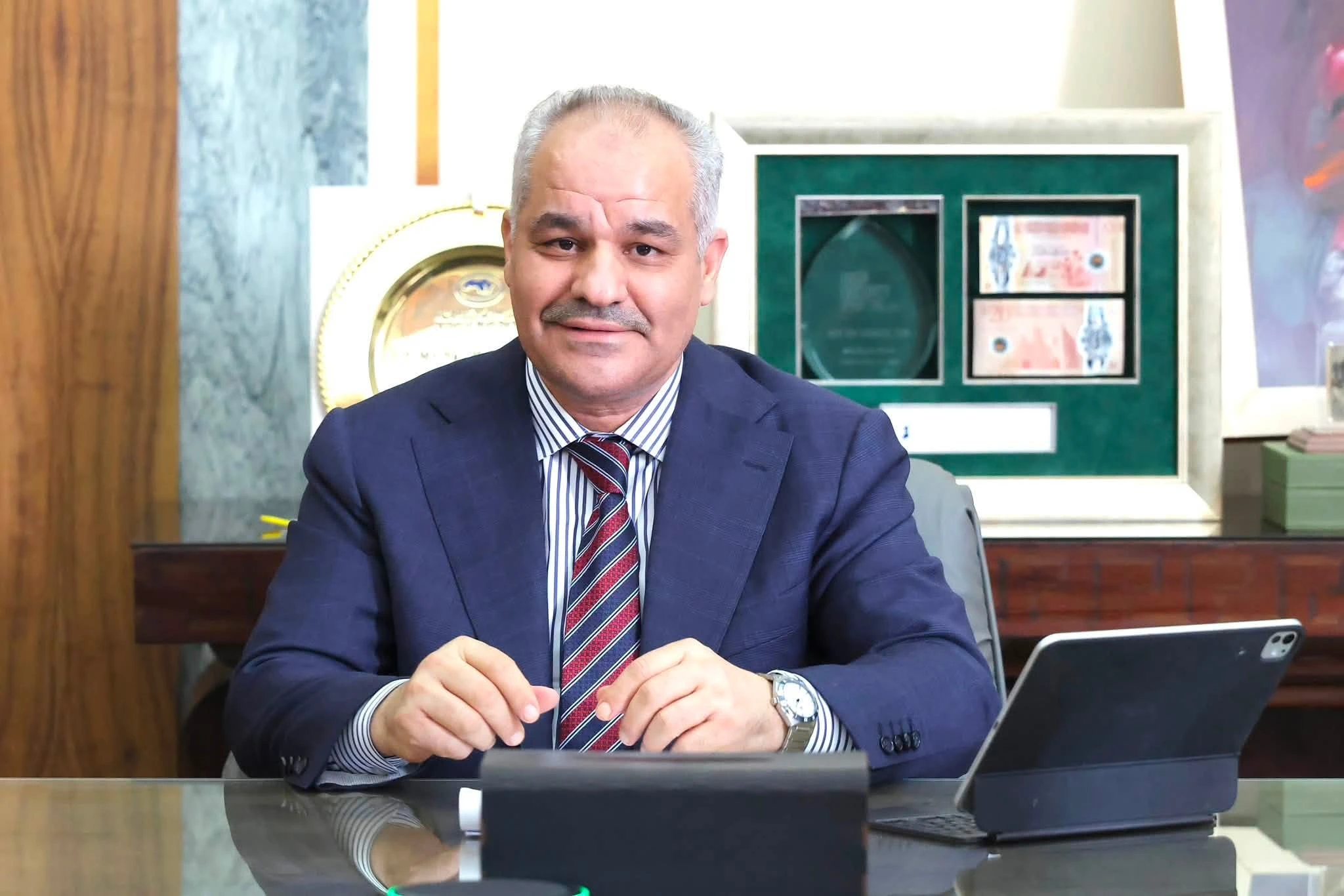
A resignation that shakes the Libya central bank
Naji Issa confirmed the authenticity of resignation documents seen by Reuters, saying only that the reasons were sensitive. He submitted the request to both the House of Representatives in the east and the High Council of State in the west, the two bodies that had brokered his appointment under a United Nations-mediated compromise.
Mohamed Takala, head of the High Council of State, immediately urged Issa to stay on temporarily. Takala framed the request as essential “in order to maintain financial, economic and political stability” until the resignation is formally processed.
The departure, even if delayed, exposes the fragility of Libya’s financial governance. The Central Bank of Libya is no ordinary monetary authority: it distributes oil export proceeds, allocates hard currency through letters of credit, supervises state-owned banks and effectively decides which government entities can spend.
Why the central bank governorship is a political prize
In Libya’s oil-dependent economy, control of the central bank translates directly into control over the state’s financial lifeblood. Hydrocarbon revenues provide the overwhelming share of state income, and the institution that manages those flows can shape patronage networks, subsidy programmes and the survival of rival governments.
The bank also holds ownership stakes in public banks and authorises import finance, making it a gatekeeper for everything from food supplies to infrastructure contracts. Research from Chatham House notes that the central bank’s powers extend far beyond monetary policy into the core of Libya’s political economy.
The World Bank’s Libya Financial Sector Review describes a banking system structurally distorted by state dominance, where the central bank is simultaneously regulator, shareholder and allocator of foreign currency. That concentration of power makes the governor’s office one of the most contested posts in the country.
The 2024 crisis that set the stage
The current turmoil echoes the events of August 2024, when western authorities moved to dismiss long-serving governor Sadiq al-Kabir. That attempt triggered an immediate backlash from eastern factions, who saw the move as a power grab over oil revenues and responded by suspending crude production and exports.
The standoff paralysed a large share of Libya’s oil infrastructure and forced a UN-mediated settlement. The compromise produced a new leadership structure: Naji Issa became governor and Maraai al-Baraasi became deputy governor, under a deal between the House of Representatives and the High State Council.
That settlement now looks increasingly strained. Issa’s resignation, coming less than two years after the compromise, suggests that the underlying battle over who controls Libya’s financial core remains unresolved and may be intensifying again.
Exchange-rate pressure and economic fragility
The resignation lands in a fragile economic environment marked by exchange-rate volatility and inflationary pressure. Disputes over public spending and monetary policy have compounded the uncertainty, with the black-market exchange rate serving as a barometer of confidence in the dinar.
Libya’s banking system remains cut off from foreign correspondent banks, a legacy of the post-2011 fragmentation that al-Kabir himself highlighted in September 2024. That isolation complicates import finance and forces businesses to rely on informal currency markets, amplifying the economic pain of political instability.
Any prolonged vacuum at the top of the central bank risks deepening these pressures. Investors and traders watch the governorship closely because it signals which faction holds the upper hand in the perpetual negotiation over state resources.
Great-power competition and the currency battlefield
Libya’s central bank fight matters far beyond its borders because external actors have deep equities in the country’s financial architecture. Turkey, Russia, the United Arab Emirates, Egypt, France, the United States, the European Union, Qatar and Saudi Arabia all back rival factions with military, financial or political support.
A particularly sensitive dimension is currency issuance and sanctions risk. Analysts have documented Russian involvement in supplying Libyan dinars to eastern Libya, including large shipments of Russian-printed currency during earlier phases of the conflict. A central bank crisis therefore affects not just budget politics but also payment channels and external financial connections.
The struggle fits squarely within the wider contest for influence that Africa: The New Scramble tracks across the continent. Whoever controls Libya’s central bank gains use over oil-revenue management, import finance and the country’s alignment in a region where great-power competition is intensifying.
What to watch as the resignation unfolds
The immediate question is whether Issa stays on in a caretaker capacity, as Takala requested, or whether the rival chambers move quickly to name a successor. Any protracted vacancy would raise the risk of a repeat of the 2024 oil shutdown, with eastern factions likely to react forcefully if they perceive a western power play over the bank.
The UN and external powers will face pressure to mediate another compromise, but the political landscape has grown more complex. The resignation suggests that the 2024 settlement may have papered over deeper disagreements about economic adjustment, reserve management and the distribution of oil wealth.
For international investors and businesses with exposure to Libya, the central bank governorship remains the single most important indicator of financial stability. The coming weeks will reveal whether the resignation becomes a managed transition or the trigger for a wider crisis over who controls the country’s money.
Frequently Asked Questions
Why did Libya’s central bank governor resign?
Naji Issa submitted his resignation on 9 August 2026, describing the reasons as sensitive and not publicly spelling out the precise cause.
What happened during the 2024 central bank crisis in Libya?
Western authorities attempted to dismiss governor Sadiq al-Kabir, prompting eastern factions to halt oil production until a UN-mediated compromise installed Issa as governor and Maraai al-Baraasi as deputy.
Which foreign powers are involved in Libya’s central bank dispute?
Turkey, Russia, the UAE, Egypt, France, the United States, the EU, Qatar and Saudi Arabia all back rival factions and hold equities in Libya’s financial architecture.
Connected Coverage
The struggle over Libya’s financial core is part of the wider contest for influence across the continent, tracked in our pillar Africa: The New Scramble.
Sources
This article was produced by The Rio Times’ automated newsroom system. How we use AI · Report an error
LatAm Markets: Live Signals → — real-time movers, turnover leaders and FX across Latin America.
Read More from The Rio Times