Leapmotor Stacks Its EVs in Crates to Reach Brazil Faster
Autos · Brazil
Key Facts
—The method. Leapmotor straps cars onto open steel flat-rack frames lifted by cranes, instead of driving them aboard Ro-Ro car carriers.
—The debut. The first run at Sepetiba Tecon in Itaguaí (RJ) landed 700-plus cars on about 270 flat racks; over 1,800 have arrived since.
—The backer. Leapmotor is a Stellantis-led joint venture (NYSE: STLA), the only Chinese brand in Brazil using a global carmaker’s logistics chain.
—The deadline. Brazil’s import duty on fully built electric cars reaches its full 35% rate in July 2026, ending years of cheap entry.
—The prices. The B10 starts near R$182,990 ($36,000) and the C10 near R$204,990 ($40,000), levels a full duty would lift.
—The wave. Eleven new Chinese brands entered Brazil in 2026, and China has overtaken Argentina as the top vehicle-import source.
The Leapmotor flat rack method, lifting China-built electric cars onto ships in steel frames rather than driving them aboard, is how the Stellantis-backed brand is racing more vehicles into Brazil before a tariff jump.
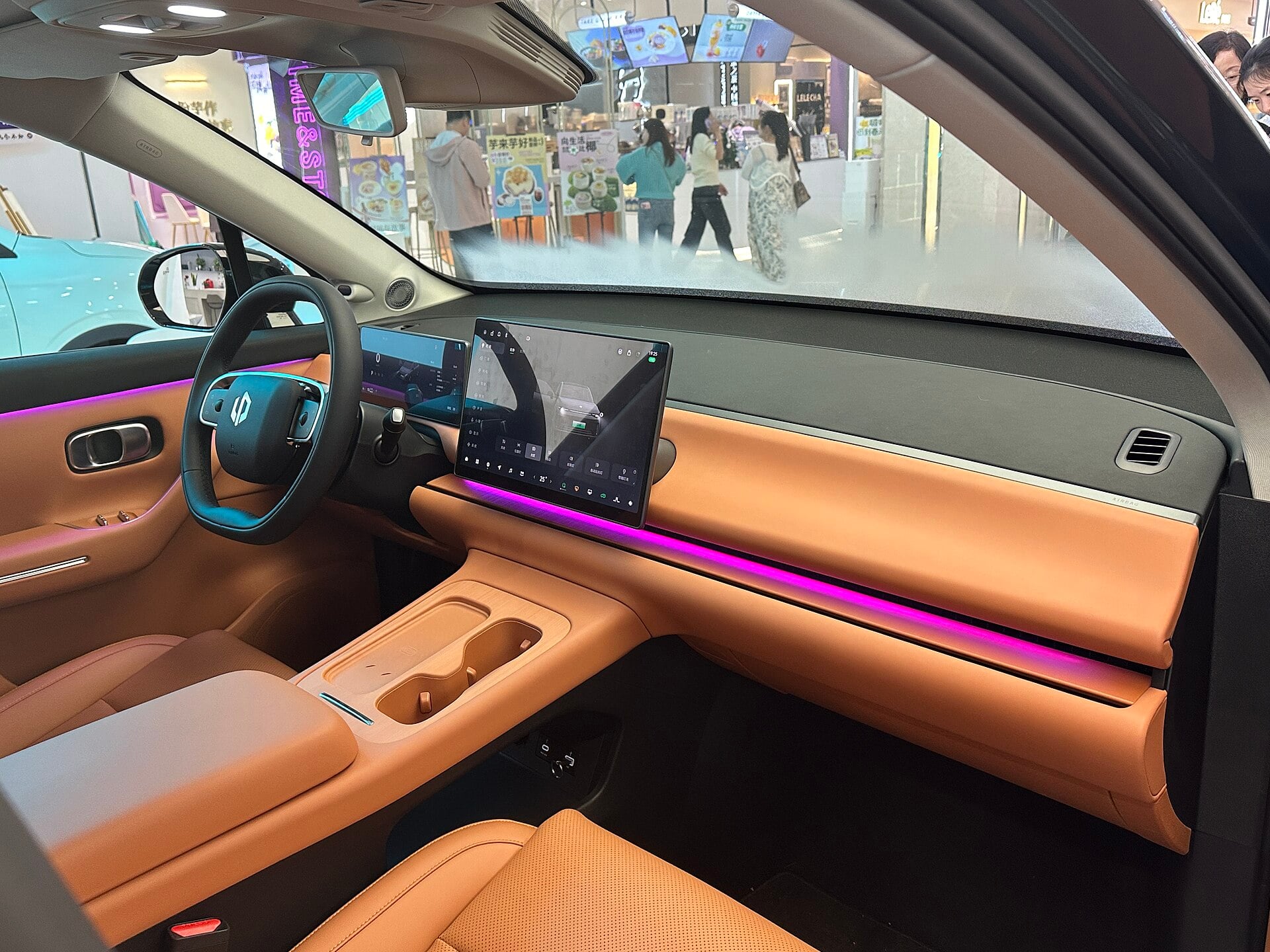
A Chinese carmaker has quietly changed how it ships cars to Brazil, and the tweak says a lot about the wider contest for the country’s roads. The brand is Leapmotor, part-owned and run abroad by the Franco-Italian-American giant Stellantis.
Most cars cross the ocean on dedicated vessels called Ro-Ro ships, short for roll-on, roll-off, where vehicles simply drive on and off. Leapmotor has added a different method on top of that, and it is the kind of detail that rarely makes headlines but quietly reshapes supply.
How the Leapmotor flat rack method works
A flat rack is an open steel frame, the same footprint as a shipping container, that a car is strapped onto and stacked. The cars never drive aboard; cranes simply lift the frames on and off, using the same equipment that handles containers.
According to Stellantis, that frees the brand from relying only on specialist car carriers. It can load onto ordinary cargo ships, speeding up port operations and adding flexibility when demand spikes.
The method made its debut at the Sepetiba Tecon terminal in Itaguaí, in Rio de Janeiro state. The first run landed more than 700 vehicles on roughly 270 flat racks, and the brand says over 1,800 of its cars have now arrived through the port.
From the dock, the cars travel by car-carrier truck to Stellantis sites in Porto Real, also in Rio state, and Juiz de Fora in Minas Gerais. There they pass pre-delivery inspection before reaching dealers through the group’s existing network.
That last point is the real advantage. Leapmotor is the only Chinese brand in Brazil plugged into the logistics and dealer chain of a global carmaker, letting it scale far faster than a newcomer building its own pipeline.
Why the timing matters
The push to move cars faster is not happening in a vacuum. Brazil is closing a tariff window that has let electric and hybrid imports in cheaply for years.
Under a schedule set by the government’s foreign-trade committee, the import duty on fully built electric cars climbs in steps to its full rate of 35 percent in July 2026. The official trade-ministry notice lays out the rising path from the earlier zero rate.
The Rio Times connects those two threads. A brand-new shipping method that lands cars faster, arriving just as the cheap-import window shuts, points to a clear motive: get as many vehicles in as possible before the duty bites.
The stakes are commercial as well as logistical. Leapmotor sells the B10 from about 182,990 reais ($36,000) and the C10 from roughly 204,990 reais ($40,000), prices a 35 percent duty could push sharply higher.
The bigger picture is a flood of Chinese arrivals. Eleven new Chinese brands entered Brazil this year, and China has overtaken Argentina as the country’s top source of imported vehicles.
Why it matters for investors
For a foreign investor, the logistics tweak is a small window onto a large shift. The same tariff that is meant to push carmakers to build locally is, for now, triggering a race to import before the rules tighten.
Stellantis is hedging both ways. It plans to assemble Leapmotor at its Goiana plant in Pernambuco eventually, while using tricks like the flat rack to keep cars flowing in the meantime.
The scale behind the brand explains the urgency. Leapmotor has passed one and a half million deliveries worldwide and is chasing one million in a single year, a pace that needs every port channel it can open.
More: Brazil news in English, every day from The Rio Times.
Frequently Asked Questions
What is the Leapmotor flat rack method?
It is a shipping approach in which each car is strapped onto an open steel frame, the size of a container, and lifted onto a vessel by crane. That lets Leapmotor use ordinary cargo ships rather than only specialist Ro-Ro car carriers, speeding up port handling.
Why is Leapmotor shipping cars faster now?
Brazil’s import duty on fully built electric cars rises to its full 35 percent rate in July 2026, ending years of cheap entry. Landing more cars before then helps the brand build stock and protect prices ahead of the change.
Why does this matter for investors?
It shows how Chinese brands, backed in this case by Stellantis, are racing to capture the Brazilian market before tariffs tighten. The same duty meant to push local production is, for now, driving a surge of imports and intense price competition.
Connected Coverage
Leapmotor Posts First Profit, Eyes Brazil Output
Brazil Auto Sales Hit 257,801 in March as Chinese Brands Claim Five Top-50 Spots
This article was produced by The Rio Times’ automated newsroom system. How we use AI · Report an error · Editorial responsibility: Matthias Camenzind, Editor-in-Chief
LatAm Markets: Live Signals → — real-time movers, turnover leaders and FX across Latin America.