Keeping Tango Alive Means Letting It Change: Ollantay Rojas on the Past, Present and Future of the Dance
Argentina · Culture
From curating tango programming at Casa de la Cultura to organising a tribute to Tango Argentino creator Claudio Segovia at the Buenos Aires Legislature, choreographer Ollantay Rojas is preserving tango’s legacy while challenging the conventions that may be holding back its future.
BUENOS AIRES — Ollantay Rojas is spending this year’s tango season occupying an unusual position: somewhere between guardian and disruptor.
At Casa de la Cultura, he is curating tango programming during the period surrounding the Tango BA Festival y Mundial, bringing performances, classes and conversations into one of Buenos Aires’ cultural spaces.
Across the city, he is also organising a tribute at the Buenos Aires Legislature to Claudio Segovia — who created, with Héctor Orezzoli, the production Tango Argentino that helped transform tango from an Argentine tradition into an international phenomenon.
And then there is Rojas’s own work. With Noestango, the contemporary tango collective he founded with Lisandro Eberle and Milagros Rolandelli, he deliberately questions some of the same theatrical conventions that decades of international tango productions helped establish.
The apparent contradiction is precisely the point. Rojas does not believe preserving tango means freezing it. “When you have a heritage, you can discuss it,” he said during an interview at Casa de la Cultura.
‘A crisis of tango as a performative activity’
For Rojas, that discussion has become increasingly urgent. “I think that we are running a crisis of tango as a performative activity,” he said. Ten or 15 years ago, he recalled, there were “10, 12 companies, big companies, travelling all around the world for many, many years.”
Today he sees international engagements that may last only a few weeks before artists return home. The problem, in his view, is not that tango has lost its global appeal. Tango is danced, taught and celebrated around the world. The question is whether its theatrical language — and the ecosystem supporting the artists who create it — has evolved alongside its global audience.
From law school to contemporary dance
Rojas knows tango’s traditions from the inside. He began dancing at 14 and went on to teach, perform and travel internationally with companies. Alongside his artistic career he studied law, an education that would later prove unexpectedly useful in navigating cultural production and turning artistic ideas into viable projects.
Then contemporary dance changed his trajectory. “I started studying contemporary dance,” Rojas recalled. “I love theatre, and in one moment, I said, ‘Okay, I have to mix these two backgrounds’ and produce my own artistic expression.”
That exploration led to Grupo Noestango, founded in 2017 by Rojas, Eberle and Rolandelli. The company’s stage and audiovisual productions grew out of two years of research and collaboration with artists across theatre, dance and music, examining the tension between tango’s celebrated past and a contemporary cultural industry that its creators believe can leave too little space for reinvention.
The company is explicit about its intentions. “This is not just another homage, this is not a ‘tango show,’” its artistic statement declares. “It is an open question.”
Five dancers, five musicians, one stage
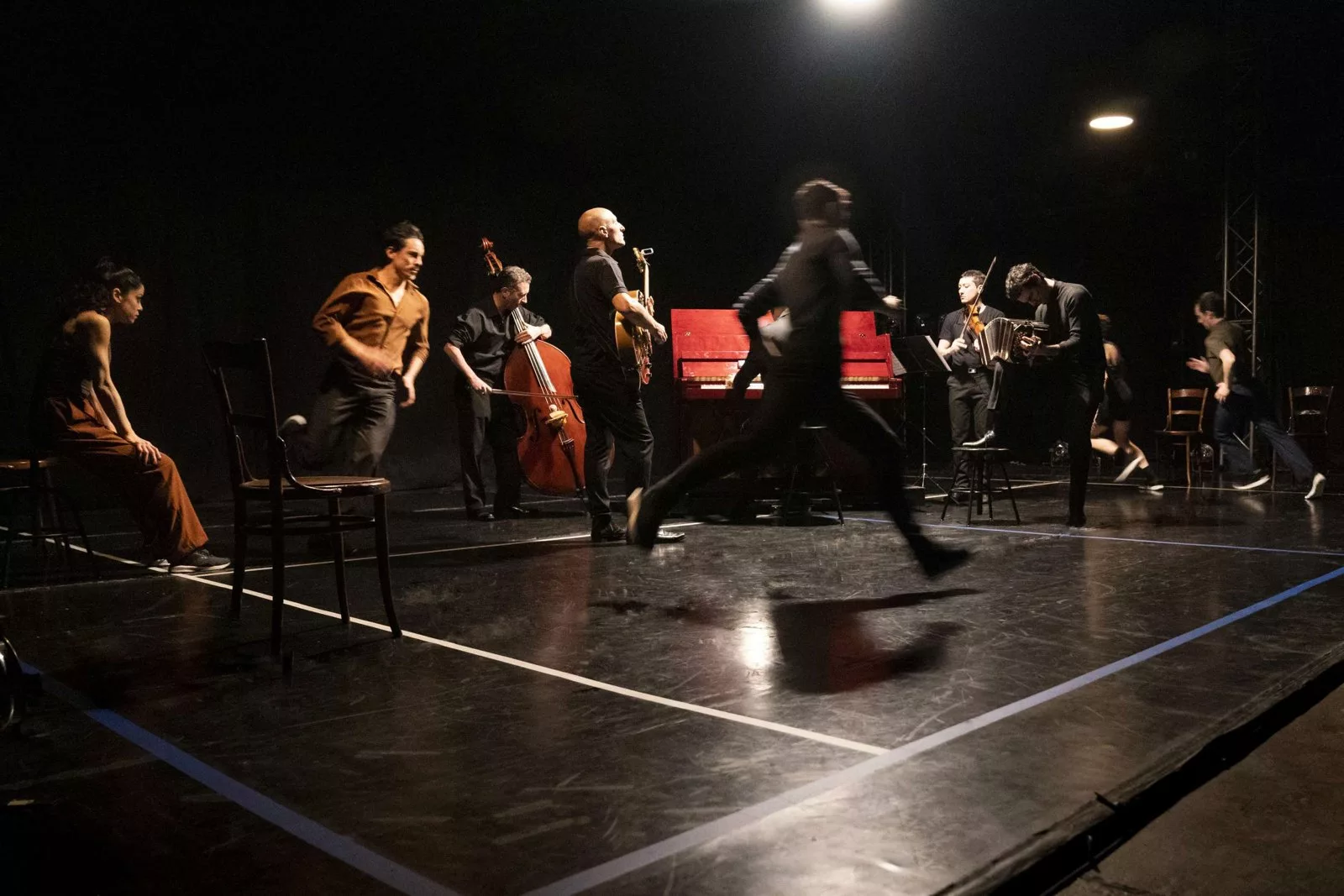
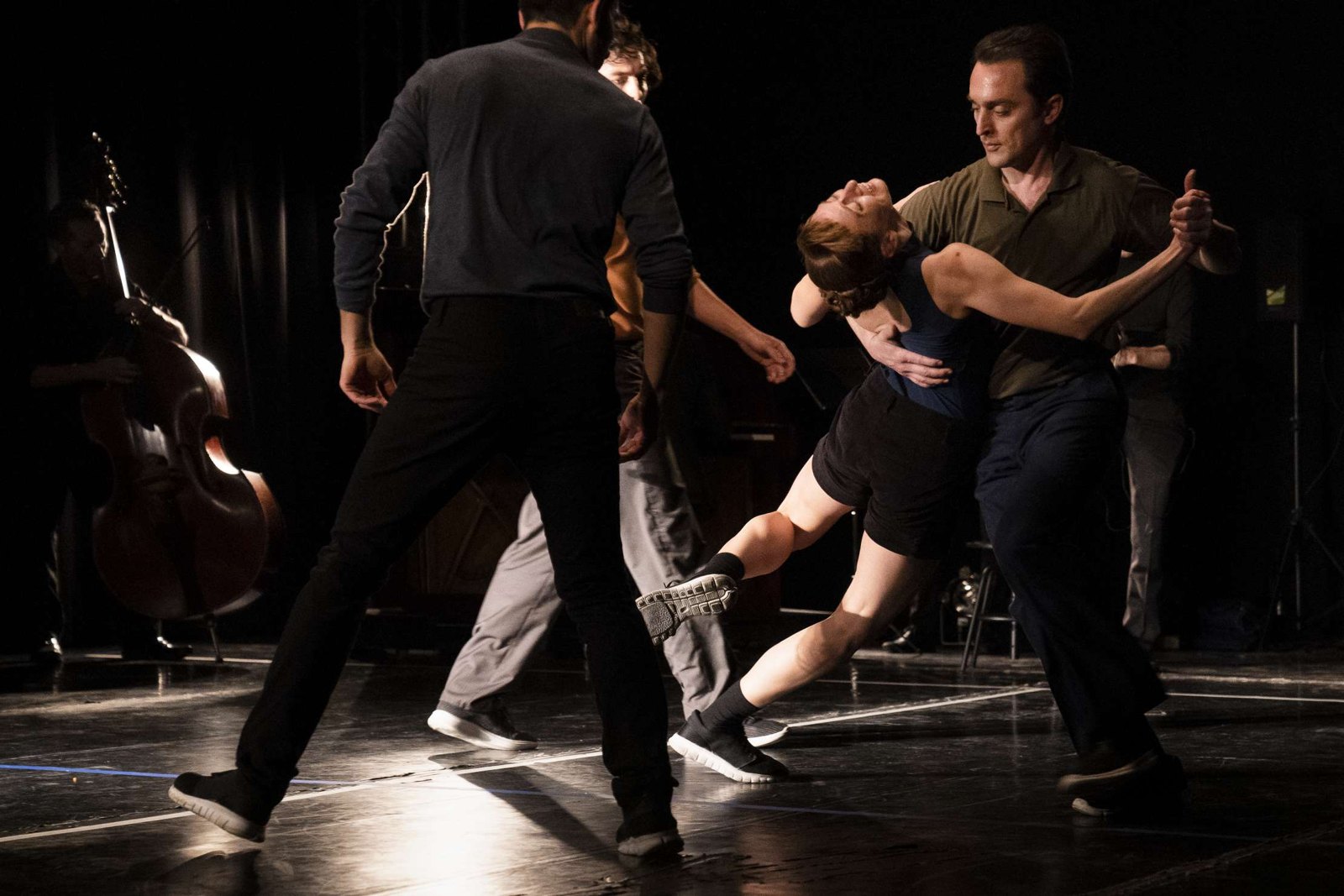
That question becomes physical onstage. In Noestango, five dancers encounter five musicians working with the music of Astor Piazzolla. The musicians are not simply accompaniment positioned behind the dancers; they enter the same theatrical environment. “They walk between the dancers,” Rojas explained.
Sometimes the musicians perform amplified, at other moments acoustically. Music, movement and bodies share the stage as the conventional separation between dancer and orchestra begins to dissolve.
A manifesto against high heels and rag dolls
Noestango’s creators describe their purpose as pushing tango’s limits in search of “another poetics, another language, another universe.”
Their challenge extends beyond choreography. Inspired by the artistic manifesto Piazzolla wrote for the Octeto Buenos Aires in 1955, Noestango wrote its own deliberately provocative 10-point manifesto for dance: “We will not wear high heels, or wear clothes from the ’40s, or pay tribute to yesterday’s glories.”
And, in a line challenging the gendered spectacle historically associated with stage tango: “We will not shake women around like rag dolls.”
Even these rules are not sacred. The manifesto allows exceptions when conventions are being used specifically to expose them as problems. Its penultimate declaration goes further: “We will challenge it relentlessly.”
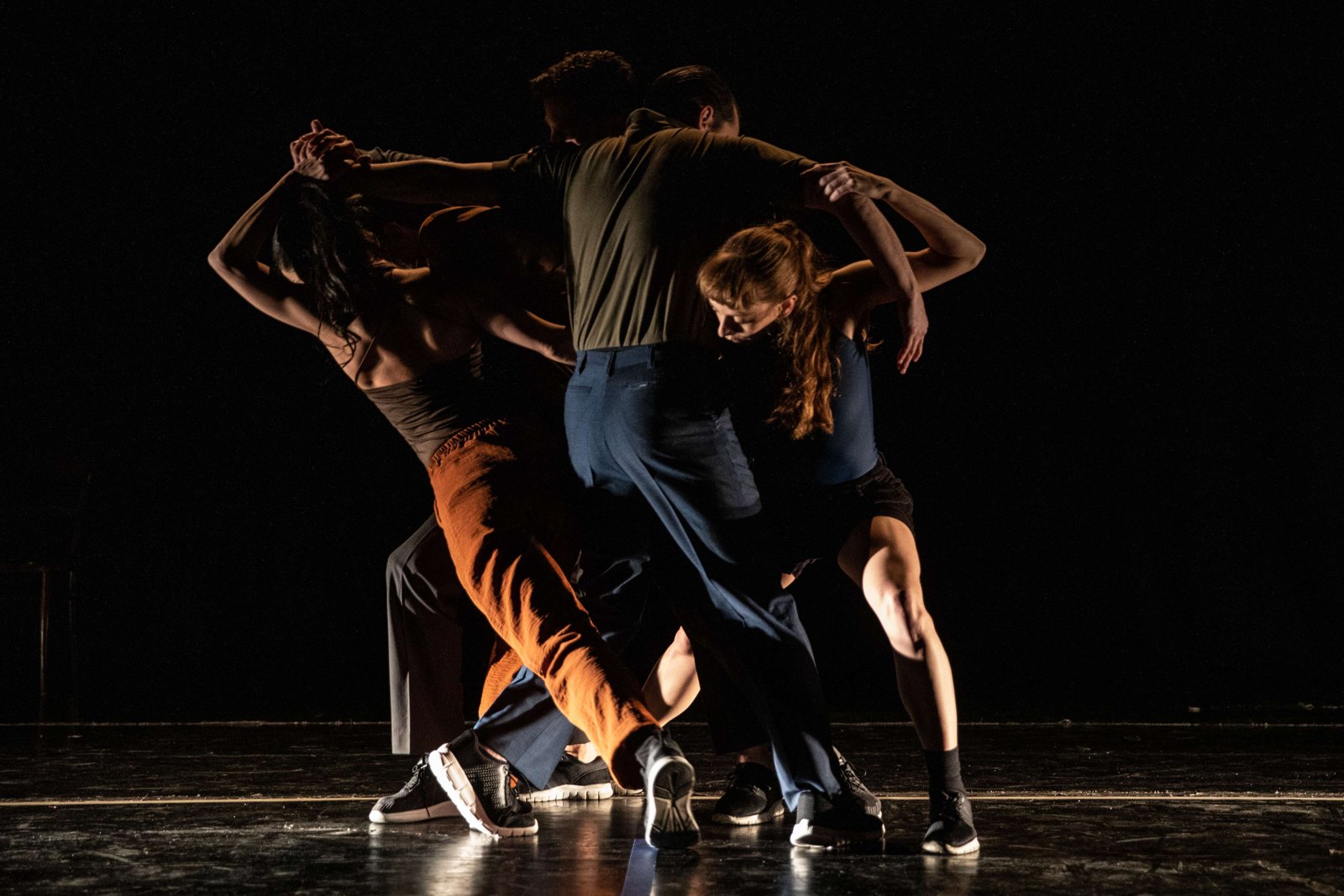
It is difficult to imagine a better distillation of Rojas’s relationship with tango. He is not asking artists to erase the past. He is arguing that knowing the past gives them permission to interrogate it.
Where can new tango actually be shown?
That interrogation is not purely aesthetic. Rojas believes tango faces a structural challenge as a performing art. Its international success created an enormous cultural ecosystem of dancers, musicians, teachers, choreographers, costume designers, producers, cultural managers, festivals, milongas and tourism. But he sees fewer opportunities today for substantial tango companies to circulate internationally for extended periods.
In an earlier interview with the Argentine Cultural Association, he argued that tango has gradually lost ground within broader theatre, music, folk-dance and contemporary-art festival circuits, while becoming increasingly concentrated within tango’s own commercial ecosystem.
The paradox is striking. Tango may be one of Argentina’s most recognisable cultural exports, yet artists creating new theatrical work within the form can struggle to find international stages on which to present it.
His own company has been building precisely those bridges. Noestango emerged from a 2021 artistic residency at Centro Cultural San Martín and went on to take part in FIBA 2023. The group has performed at venues including Usina del Arte, Timbre 4, Centro Cultural Borges and Teatro Metropolitan, as well as Festival Identidades in Antofagasta, Chile.
For Rojas these are not simply achievements for one company. They represent possible routes back into a broader performing-arts conversation.
Competition is not the whole art form
That distinction is particularly visible during the Tango BA Festival y Mundial, when dancers from around the world converge on Buenos Aires and competition naturally commands enormous attention.
Rojas is not opposed to competition. It simply is not the centre of his relationship with tango. “For me, it’s social, cultural or it’s art,” he said. “Competition is another thing.” Competition can be an important expression of tango, he explained, but it should not be confused with the entirety of the art form.
The championship demonstrates tango’s extraordinary global reach and technical evolution. But what happens alongside it? What are contemporary tango artists creating? What new ideas are emerging from Buenos Aires? And where are the stages capable of carrying those ideas into the world?
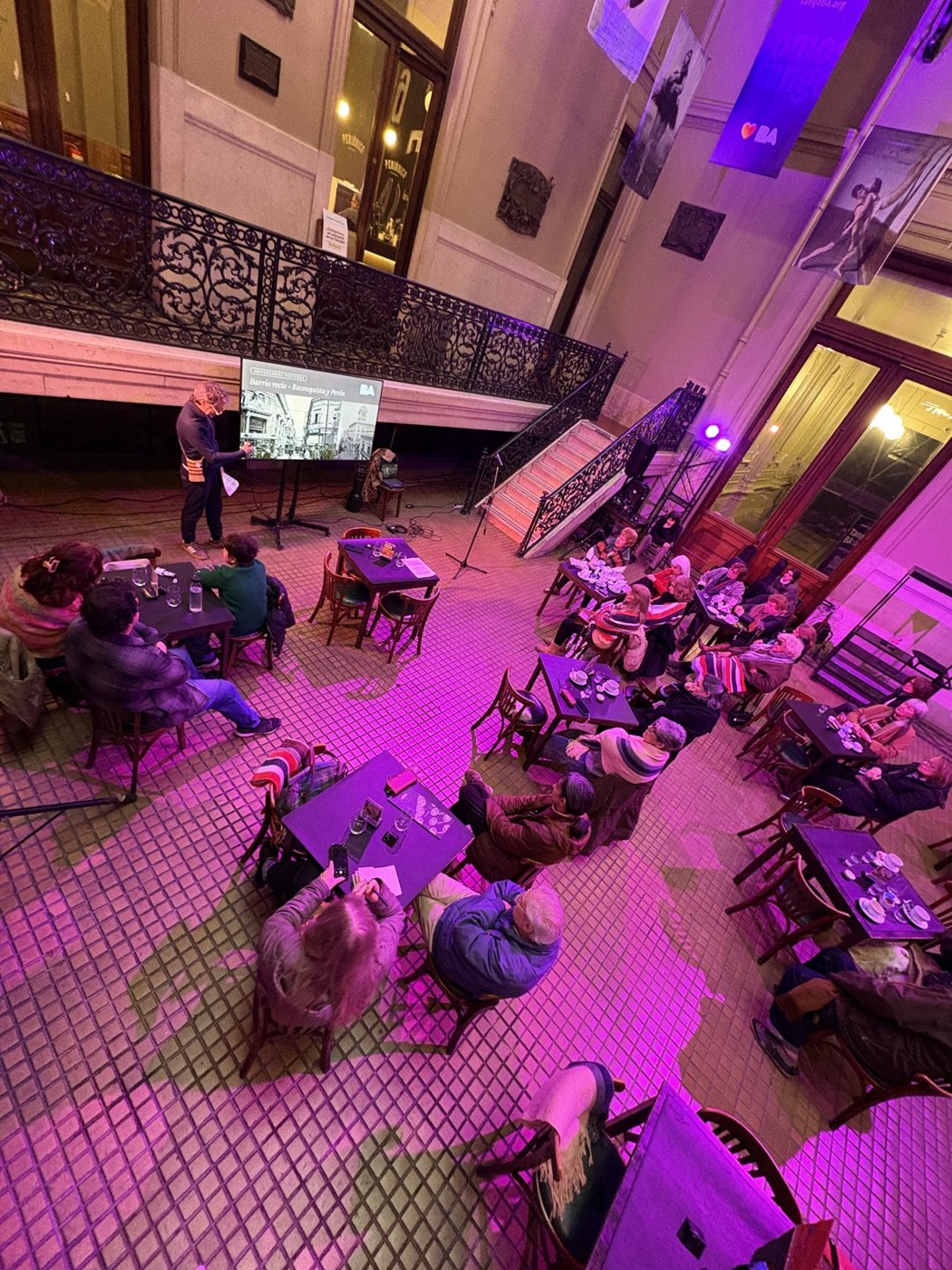
Those questions help explain Rojas’s work at Casa de la Cultura, where his role moves beyond that of performer to curator — creating space for tango to be taught, discussed, performed and considered from different perspectives. For him, Buenos Aires should not function merely as the repository of tango’s history; it should remain a place where its future is being made.
The long shadow of Tango Argentino
That future is impossible to discuss without confronting the work that helped define tango’s modern international image. Tango Argentino, created by Claudio Segovia and Héctor Orezzoli, premiered in Paris in 1983 and later became a sensation on Broadway. Its influence extended far beyond the theatre.
The production introduced international audiences to extraordinary Argentine dancers and musicians and helped accelerate a global tango revival. Demand grew for Argentine teachers and performers. New schools, festivals and milongas followed. It also influenced fashion and helped establish a visual vocabulary through which international audiences came to recognise tango. “It was really, really important,” Rojas said.
A theatrical formula that works gets repeated. Over time, images that once appeared electrifyingly new can become expectations: particular costumes, particular relationships between men and women, particular musical choices and particular ways of delivering a climax for an audience. What begins as innovation can eventually become convention.
For Rojas this does not diminish the achievement of Tango Argentino — quite the opposite. His involvement in organising the Segovia tribute at the Buenos Aires Legislature places him directly inside the effort to honour and preserve that history. Segovia’s death has made that work particularly immediate; Rojas described the complexity surrounding the creator’s archive and the efforts now under way among family members and artists who worked with him to protect and reconsider that legacy.
It places him in a fascinating position. The choreographer challenging tango’s inherited theatrical codes through Noestango is simultaneously helping honour one of the artists responsible for transforming tango theatre globally. He is preserving the legacy, and asking what artists should do once they inherit it.
What cannot be lost: contact
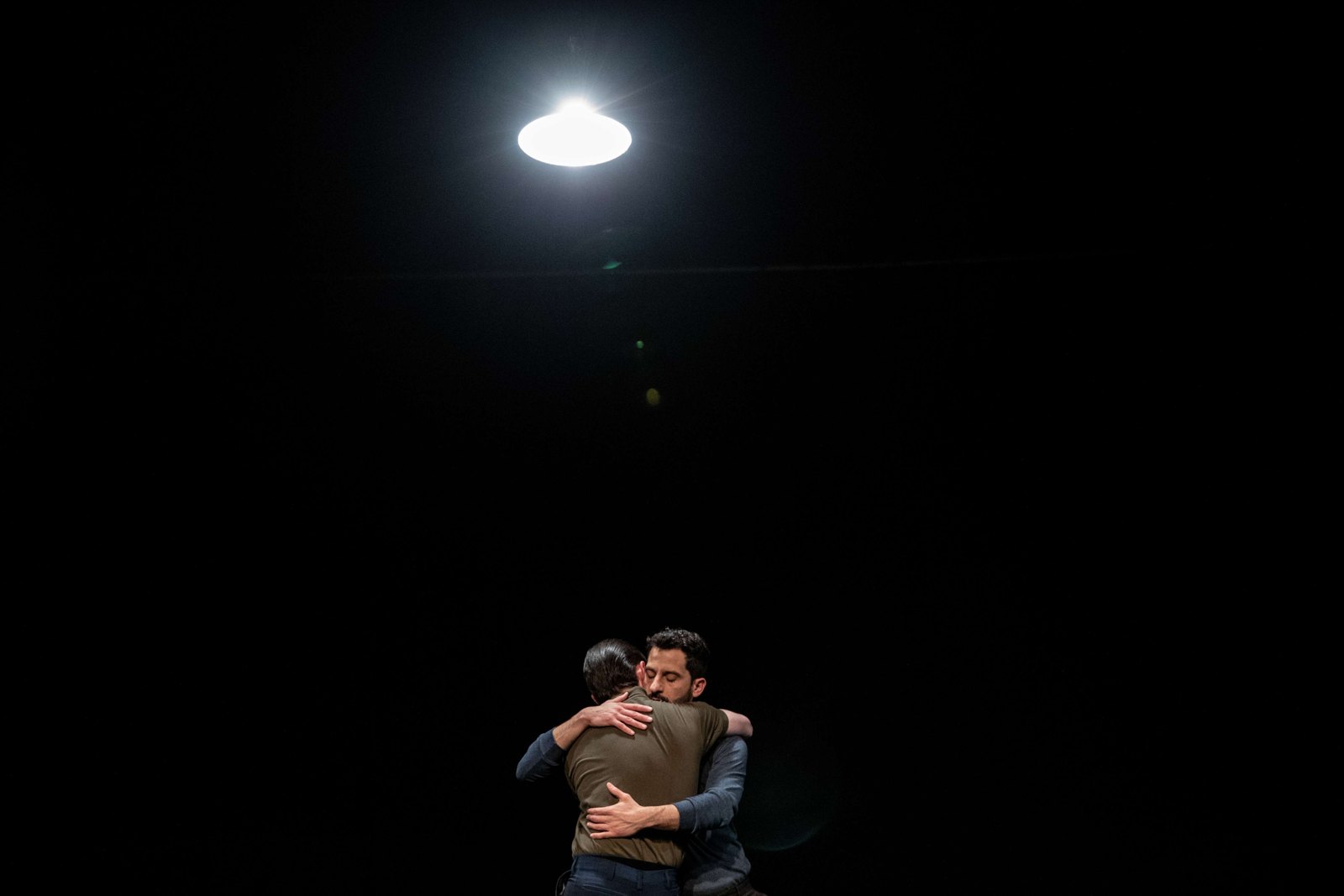
For all Rojas’s experimentation, there is something elemental he does not want tango to lose: contact.
Contemporary choreography can alter tango’s vocabulary. Musicians can leave their chairs. Costumes can change. Traditional gender roles can be questioned. Piazzolla can be reconsidered. The boundaries between tango, theatre and contemporary dance can become porous. But the encounter between human beings remains central — and that is where Rojas’s seemingly radical argument becomes deeply traditional.
Tango has always depended on a negotiation between bodies listening, responding and discovering something neither person can entirely determine alone. The form can evolve because its essence is not contained in a red dress or a particular step. It is contained in an encounter.
Tango’s globalisation makes the question of reinvention even more urgent. Dancers no longer need to travel to Argentina to encounter tango; it is taught in cities around the world, and international communities have their own teachers, orchestras, festivals and milongas. Local dancers increasingly develop their own interpretations and traditions.
That extraordinary reach is one of tango’s greatest achievements, but it also creates a challenge for Buenos Aires. If much of the tango experience can now be found elsewhere, what makes Argentina essential? Rojas’s answer is creation: Buenos Aires must be more than the place where tango’s history is preserved. It should be the place the world watches to discover where tango is going next.
A new Tango Argentino, in 2029
That ambition may ultimately bring Rojas back to the production that helped launch tango’s last great international expansion. He shared an idea he is developing for 2029: a contemporary response to Tango Argentino. “For me, in 2029, my artistic approach, personal, is to make a new version of Tango Argentino,” he said.
Nearly half a century after the original production transformed tango’s international image, Rojas wants to ask what has happened since. “What’s happening now?” he said. “How to give life again to this legend, to this myth?”
The date is not arbitrary. In 2029, tango will mark 20 years since its inscription on UNESCO’s Representative List of the Intangible Cultural Heritage of Humanity — a natural moment to consider not only what the world has inherited from tango, but what another generation intends to contribute to it.
What would a Tango Argentino for the 21st century look like? What role would women occupy within it? How would musicians and dancers share the stage? How would contemporary dance alter its movement language? What should remain, and what needs to disappear for something new to emerge?
Rojas does not pretend to have all the answers. Noestango itself was conceived not as an answer but as an open question. During a season in which Buenos Aires is celebrating tango on an enormous scale, he finds himself simultaneously curating its present at Casa de la Cultura, honouring Segovia at the Legislature, and imagining what that legacy might become for another generation.
The past, present and future of tango are suddenly occupying the same stage. Rojas’s proposition is that keeping a cultural legacy alive may require the courage to let it change.
Editorial responsibility: Matthias Camenzind, Editor-in-Chief · Editorial standards · Report an error