Is There Economic Recovery Under Bolsonaro? Answer Depends on Whom You ask
RIO DE JANEIRO, BRAZIL – Throughout 2019, the world heard the name of Brazil’s ultra-right-wing president, Jair Bolsonaro. Whether for denying the fires in the Amazon, silencing himself before human rights violations in the country or for his taunts to a number of figures who criticize him for his positions against the environment, the press or minorities.
From Leonardo DiCaprio to Emmanuel Macron as targets, Bolsonaro put energy into promoting insults, in a disruptive narrative that keeps him in play.

However, when his interlocutors are entrepreneurs, Bolsonaro is a charm. “You are true heroes,” he repeats in his speeches to the private sector, to which he has pledged to simplify life so that they may invest and prosper.
“Whatever is disturbing you, we will take care of it and create a decree. It will only take a few days before submitting any proposal to our legal counsel. And if necessary, we will change the decree,” he said in a recent meeting with the private sector.
In the battle between Brazil’s economic development and the worldwide concern with nature preservation, the Brazilian president chose one side. Bolsonaro governed for the private sector in his first year, sowing reforms to ease business.
In this regard, he is not alone. The Brazilian Congress, which debuted with him in January 2019, today has a majority of politicians with their eyes on the economy, seeking to reduce the role of the state and encourage business investment. It was this combination between the Executive and Legislative that guaranteed the approval of the Welfare reform in Brazil this year, a battle that seemed lost decades ago.
Today, the Brazilian economy is moving in dribs and drabs, but enough to start a rebound, or at least climb further away from the recession experienced between 2015/2016.
If the country grew by one percent this year, by 2020 it will surely exceed 2.2 percent of GDP, a boost for Brazil following years of recession and a whirlwind of political crises that have ensued since 2015.
“Our plan was to grow one percent this year. Now, we expect two percent in 2020, three percent in 2021 and four percent in 2022,” Economy Minister Paulo Guedes said in an interview.
Guedes has set a reform agenda for 2020, such as tax and administrative measures, as part of a plan to reduce the bureaucratic maze that has left Brazil among the worst positioned countries in the global “Doing Business” report.

Guedes is also preparing to privatize 300 state-owned companies, from government technology companies to the power generation group of companies headed by Eletrobras – the latter, dependent on the approval of Congress.
In addition, a new legal framework to increase private investments in basic sanitation is expected to generate investments of R$700 (US$175) billion by 2033 and boost the infrastructure sector, which has been stalled since 2014, when operation Lava Jato reached corrupt construction companies.
The companies are confident that Bolsonaro’s government is able to keep its promises because it has already untied some knots that seemed eternal. This is the case with the traded agreement between the European Union and Mercosur, which was closed in late June.
The announcement that the two blocs had finally reached a consensus made it clear that Brazil’s openness was no longer such a distant reality. “That forces us to think big,” says José Augusto Castro, president of the Association of Foreign Trade Companies (AEB). “We had a restricted agreement with countries like Egypt or Palestine. Now it is a high-level agreement,” he says.
The approval of the social welfare reform completed in October, also sounded like music to the ears of the private sector, for opening a long-term horizon with more controlled public spending.
“This brought tranquility to companies, which are encouraged to invest a little more,” says Marcelo Lico, a partner at Crowe Audit. Lico had to postpone his December vacation to meet the demand for new projects and plans from his clients for the new decade.
He himself will expand Crowe’s team by 40 percent. “It will certainly be a fantastic year”, says the entrepreneur. Like him, most are enthusiastic and consider that Brazil is on the right track.
Some facts and figures are beginning to support an incipient optimism. Idle sectors, such as construction, are slowly starting to generate jobs. This Christmas season’s sales were the best in the past seven years, with an estimated increase of five percent compared to 2018, reports the National Confederation of Trade.
The Government helped boost sales by permitting early withdrawals from the FGTS (Severance Premium Reserve Fund), as well as by more competitive interest rates, with a drop from 6.5 percent in January to 4.5 percent in December, its lowest in the historical series. The average had always exceeded ten percent until 2017 – and 30 percent in the 1990s -, with some exceptions in the years of Dilma Rousseff (2011-2016), which also led to inflation and helped public accounts to get out of control.
Employment also recovered at the end of the year, after a drop in the first half. There were 33.4 million workers on the payroll by November, almost 400,000 signed formal employment contracts between September and November.
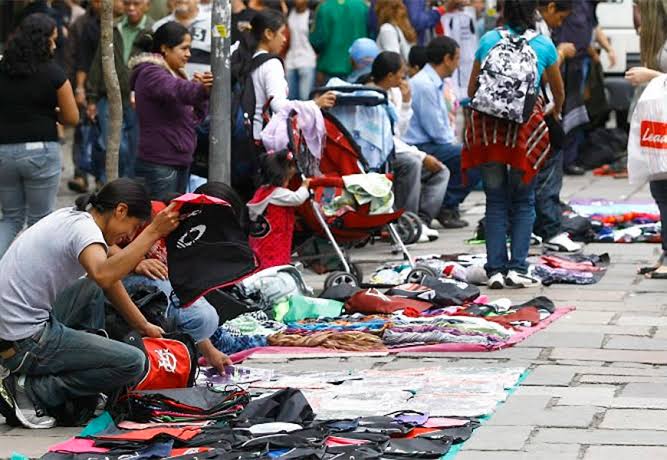
However, 38.8 million people in Brazil are without having formal employment law guarantees, according to calculations by the Brazilian Institute of Geography and Statistics (IBGE) – they work on their own, often in precarious conditions (like Uber, or unregistered companies, for instance), or in the private sector without a signed worker’s record book.
Unemployment affects 11.9 million Brazilians, while informal employment reaches 41 percent of those who have an occupation (94.4 million working, including those who get work one day a month). “It’s good news that we’ll reach the end of the year with new formal jobs, but informality shows that a turning point in the economy is not certain,” says Adriana Beringuy, of IBGE.
This reality contrasts with the euphoria of the government and entrepreneurs. Brazilians with lower purchasing power have been the most affected by the recession and are the least hopeful of a better future.
A Datafolha survey shows that the poorest are the most pessimistic about the economy. While 57 percent of the wealthiest are confident the area will improve by 2020, only 39 percent of those earning up to two minimum wages have faith in the future.
Bolsonaro’s government has deepened a severe fiscal adjustment, which had already begun in Michel Temer’s government (2016-2018). The economic team of Minister Paulo Guedes has cut social programs for those who have very little. His persecution of the left-wing has also reduced investments in education and culture, always with an aggressive discourse.
In recent months, Bolsonaro has also seen increased accusations of corruption against his son Flávio Bolsonaro, who is now a senator, on suspicion of money laundering when he was a state representative.
The charges may reach the president himself. This explains why his popularity is low among the population. Today, 38 percent disapprove of his government and only 29 percent rate him as good.
The government considers that the first year was the only one in which the bitter remedy of fiscal adjustment could be applied. But, within its liberal philosophy, it expects businessmen to correspond to its pro-business policy with new projects that generate jobs and change the mood of those who complain today.
Public investments have been reduced to a minimum to force companies and banks to dare to go more into the market for investment. Private investment today stands at 16.3 percent of GDP, well below what is needed for Brazil to go beyond what has become known as mere “chicken flights” (short, abrupt growth periods), with an average annual expansion over the last 20 years of just over two percent.
During this period, Brazil has experienced extreme expansion, such as 7.5 percent in 2010 and two negative years around 3.5 percent in 2015 and 2016.
Today, the expansion of the economy is mainly based on family consumption, which accounts for two-thirds of GDP. The government’s challenge is to change this axis, which hides the debt trap.
In October, Brazilians committed 44.8 percent of their income to pay debts. There was relief from the release of the FGTS funds, but this solution has limited effects. Therefore, Brazil’s challenge now is to support growth in more private investments, which can generate jobs, greater income and encourage a virtuous cycle.
Economist Armando Castellar, of Fundação Getúlio Vargas (FGV), trusts that 2020 will bring more investments from companies due to a set of indicators that provide higher stakes. “We have the lowest interest rates in history, which eases credit, and annual inflation of 3.9 percent. It will certainly be a much better year,” says the economist, who is more optimistic than the government in his projection of three percent growth this year.
More: Brazil news in English, every day from The Rio Times.
This article was produced by The Rio Times’ automated newsroom system. How we use AI · Report an error
Read More from The Rio Times