Mauritius Bets on Indian Ocean Blue Economy Hub as Seychelles Blue Bonds Mature
Economy · Africa
—The stakes. Small island states are converting vast ocean territories into climate-linked financial instruments and investment corridors.
—The date. As of September 2026, Mauritius is drafting a Blue Economy Blueprint with UN support and Seychelles-linked financing partners.
—The transaction. Seychelles issued the world’s first sovereign blue bond in 2018, a USD 15 million placement at 6.5% with three US investors.
—The target. Mauritius wants to double the blue economy’s GDP share to 20% while Seychelles has already protected 30% of its ocean.
—The foreign angle. Investors face a structural mismatch between Mauritius’ new climate finance architecture and outdated ESG fund narratives.
The Indian Ocean’s small island states are converting their outsized maritime zones into financial instruments and investment corridors. Mauritius is building the architecture of a blue finance hub while Seychelles has already proven that debt-for-nature swaps and sovereign blue bonds can reshape national ocean policy.
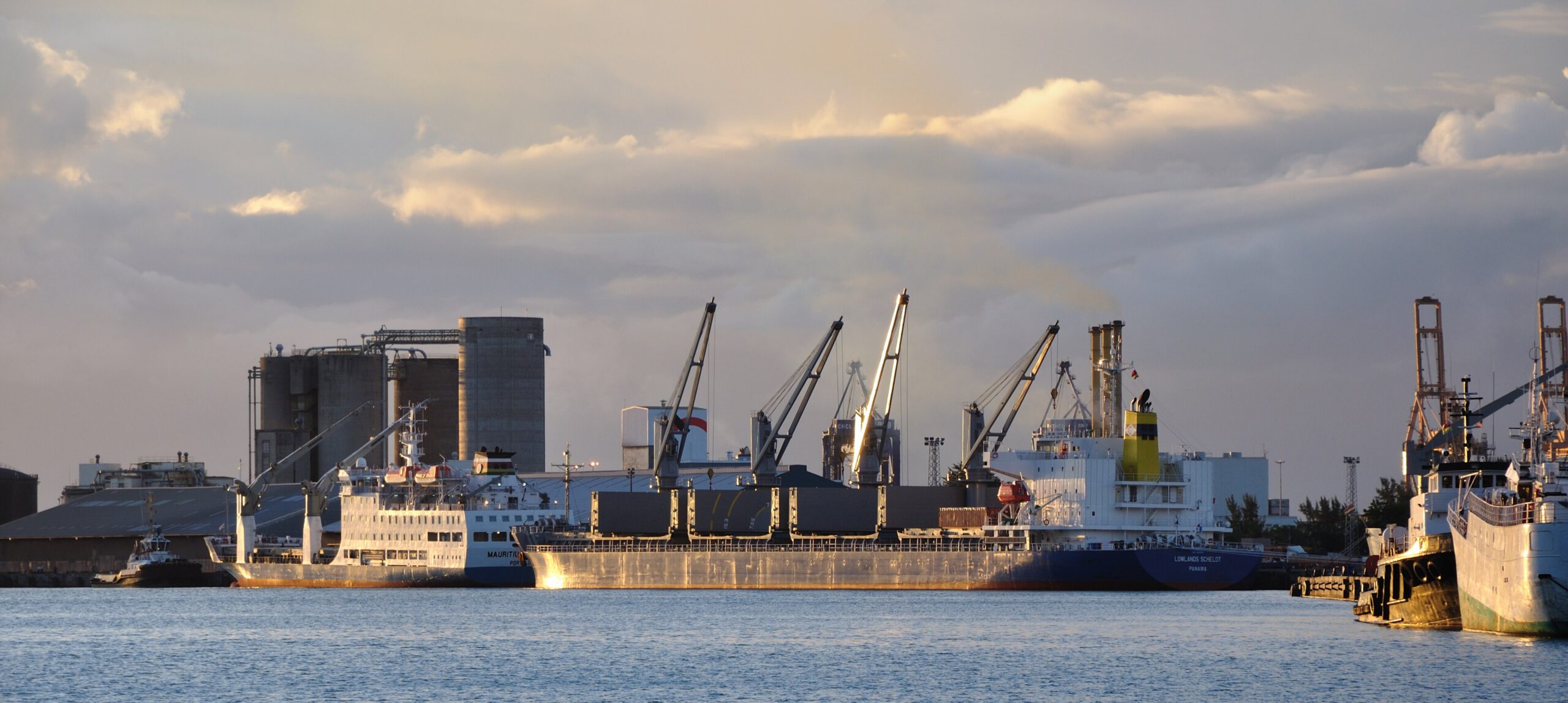
Mauritius builds a blue finance hub
Mauritius has strategically positioned itself as a financial hub, fostering offshore banking and financial services as a core pillar of its economic model.
The blue economy, excluding coastal tourism, represented 10.3% of Mauritius’ GDP and employed around 10,000 people according to the Economic Development Board.
Government policy aims to increase the blue economy share of GDP to 20% in the medium term.
The 2013 Ocean Economy Roadmap set a target of raising the blue economy from 10.8% to 20% of GDP by 2025, which Mauritius missed.
Traditional ocean sectors include coastal tourism, fishing, seafood processing and seaport activities.
Mauritius is explicitly expanding into marine biotechnology, ocean-based renewable energy and other new areas.
Budget 2025-2026 opens an investment corridor
The Mauritius 2025-2026 national budget, titled From Abyss to Prosperity, reaffirms the country’s role as a financial hub.
It stresses stronger regulatory standards, AML/CFT capabilities, bullion banking, and positioning Mauritius as an African investment gateway.
The budget places environmental considerations and the blue economy at the heart of policies.
It opens what the government calls a vast investment corridor in the blue economy and organises Assises de l’Océan to develop a new blue economy blueprint.
The budget names six strategic ocean economy sectors for the blueprint including sustainable fisheries and aquaculture, ocean-based renewable energy, and sustainable ocean tourism.
Marine transport and trade, research and innovation, and blue finance complete the six-sector framework.
A blueprint drafted with Seychelles and Cabo Verde
This signals a regional approach to ocean-linked financial instruments across Indian Ocean and Atlantic island states.
The Commonwealth Climate Finance Access Hub held its 7th Steering Committee Meeting in Port Louis on 11 September 2025.
That meeting signalled Mauritius’ growing role as a platform for sustainable and climate finance, including in the blue economy.
Structural mismatch in Mauritius climate finance
By mid-2026, analysis of the Mauritius International Financial Centre describes a structural mismatch in its climate finance offering.
Mauritius offers world-class climate and sustainable finance architecture including a Climate Finance Hub.
The Bank of Mauritius runs a Climate Change Centre, its climate-related financial risk guideline took effect in January 2024, and the Variable Capital Companies Act is now in force.
Yet many fund managers are still using outdated ESG narratives that fail to capture the new legal framework.
Mauritius submitted its NDC 3.0 in September 2025, articulated around six climate pillars.
Advancing the ocean and blue economy is one of those six pillars.
Seychelles 2015 debt-for-nature swap
In 2015, Seychelles concluded a debt-for-nature swap with The Nature Conservancy to buy back USD 21.6 million of its official bilateral Paris Club debt.
Seychelles paid a discounted price of USD 20.2 million for that debt.
The TNC financing package consisted of a USD 15.2 million concessional loan at 3% for 10 years plus USD 5 million in grants.
Under the debt conversion agreement, Seychelles issued two 3% promissory notes.
One note of USD 15.2 million had a 10-year tenor for repayment of the concessional loan.
A second note of USD 6.4 million had a 20-year tenor dedicated to funding marine conservation through a local trust fund.
SeyCCAT and the 30% marine protection target
The Seychelles transaction established SeyCCAT, the Seychelles Conservation and Climate Adaptation Trust, as a long-term financing mechanism.
SeyCCAT receives government repayments and funds marine conservation and climate adaptation programs.
As part of the debt-for-nature swap, Seychelles committed to protecting 30% of its marine waters.
It also committed to safeguarding 15% of high-biodiversity areas.
Seychelles agreed to implement a Marine Spatial Plan to update coastal zone management, fisheries and marine policies.
The explicit impact outcome was to increase marine protected areas from less than 1% to 30% of Seychelles’ ocean, a target achieved in March 2020.
The world’s first sovereign blue bond
In 2018, the Government of Seychelles issued the world’s first commercially-financed sovereign blue bond.
The bond was USD 15 million with a 10-year tenor at a 6.5% coupon.
It was placed privately with three international investors: Calvert Impact Capital, Nuveen, and Prudential Financial.
Each investor put USD 5 million into the bond.
The Seychelles blue bond was supported by a USD 5 million partial guarantee from the World Bank.
A concessional loan from the Global Environment Facility partially subsidised coupon payments.
Blue bond proceeds and lasting policy template
Proceeds from the blue bond were directed primarily to SeyCCAT and other national mechanisms.
The funds supported sustainable fisheries reforms, marine conservation, and expansion of marine protected areas.
The proceeds also supported climate adaptation measures across Seychelles.
International finance analyses identify the Seychelles debt-for-nature swap and blue bond as a template for subsequent nature bonds.
Mauritius Budget 2026-2027 pushes blue economy
A 2026 legal and business commentary on the National Budget 2026-2027, labelled Future Ready Economy, highlights six strategic pillars.
These pillars are AI and digitisation, SMEs and start-ups, economic modernisation, sector re-engineering, blue economy, and investment growth.
The budget notes Mauritius’ evolution into a trusted and innovation driven international financial centre.
AI, blockchain and fintech are being embedded into the legal framework.
A maritime-focused review of Budget 2026-2027 stresses measures to develop the potential of the blue economy.
The stated aims are sustainable growth, food security and job creation, including fisheries reform and climate-linked marine projects.
Regional maritime and blue finance positioning
A 2026 Ecofin Agency piece describes Mauritius as attempting to position itself as a regional maritime and blue finance hub within the Indian Ocean.
The country links its vast maritime zone to opportunities in fisheries industrialisation, marine biotechnology, logistics, renewable energy and climate-linked financing.
Mauritius is using its financial centre to connect ocean-based assets with international capital markets.
The Seychelles model demonstrates that small island states can restructure sovereign debt into marine conservation outcomes.
Mauritius is now building the institutional and regulatory architecture to scale that model across the Indian Ocean.
For foreign investors, the question is whether the new blue finance infrastructure can overcome the lag in fund manager adoption.
Climate vulnerability shapes the investment case
Small island states face direct climate vulnerability from sea-level rise, ocean warming and extreme weather events.
Seychelles converted part of its sovereign debt into a long-term commitment to protect marine ecosystems.
Mauritius is embedding the ocean and blue economy into its next nationally determined contribution under the Paris Agreement.
The Commonwealth Climate Finance Access Hub meeting in Port Louis signals that international climate finance institutions are engaging with the region.
Both countries are using climate-linked financing to turn ecological vulnerability into investable conservation assets.
The Indian Ocean blue economy in 2026 is therefore a contest between financial innovation and the physical reality of climate exposure.
What comes next for investors
Mauritius is drafting a Blue Economy Blueprint with UN support and partnerships from Seychelles and Cabo Verde.
The blueprint’s six sectors include blue finance, which creates a clear entry point for foreign capital.
The structural mismatch in Mauritius means that regulatory architecture is ahead of fund manager practice.
Investors who understand the Variable Capital Companies Act and Climate-Smart Regulation can gain early access to new blue economy fund structures.
Seychelles has already shown that a USD 15 million blue bond can catalyse a national marine protection target.
The question for 2026 and beyond is whether Mauritius can repeat that model at a larger scale across the Indian Ocean.
Connected Coverage
DR Congo: Kinshasa Comics Festival Returns After Six Years
The Big Picture
Latest developments
- Eritrea Cuts Ties With Ethiopia After Embassy Order — 2 October 2026
- Uganda MPs Demand Answers on Late School Land Titles — 1 October 2026
- Kenya Demands Exporters’ Paperwork for Imports at Port — 1 October 2026
- Kenya Leads Boat Operator Training Push for 9 Nations — 1 October 2026
This article was produced by The Rio Times’ automated newsroom system. How we use AI · Report an error · Editorial responsibility: Matthias Camenzind, Editor-in-Chief