
Economy: Guyana
Key Facts
—Who. The World Bank, in its Latin America and the Caribbean Economic Update.
—What. Raised its 2026 growth forecast for Guyana to 23.7%, up from 16.3% in April.
—Where. Guyana, on South America’s north-east coast, an oil producer since December 2019.
—When. Report published on Tuesday 6 October 2026.
—Numbers. Forecast growth of 18.7% in 2027 and 15.3% in 2028, after an estimated 19.3% in 2025.
—US link. US companies ExxonMobil (45%) and Chevron (30%) hold stakes in the Stabroek oil block.
—As of. 7 October 2026, 22:30 GMT.
The World Bank now expects Guyana’s economy to grow 23.7% in 2026, the fastest rate in Latin America and the Caribbean. The forecast, published on Tuesday 6 October 2026, is far above its April estimate of 16.3%.
What the World Bank Report Says
The World Bank’s October 2026 Latin America and the Caribbean Economic Update estimates that Guyana’s economy grew 19.3% in 2025. It projects 23.7% for 2026, 18.7% for 2027 and 15.3% for 2028.
In April, the same report forecast 16.3% for 2026, Caribbean360 reported at the time. That is a revision of 7.4 percentage points in six months.
The bank describes a “dual-track reality” in the Caribbean, with oil-driven expansions in Guyana and Suriname set against slower recoveries on the islands. It says Guyana stands out within the region for exceptionally rapid and sustained growth.
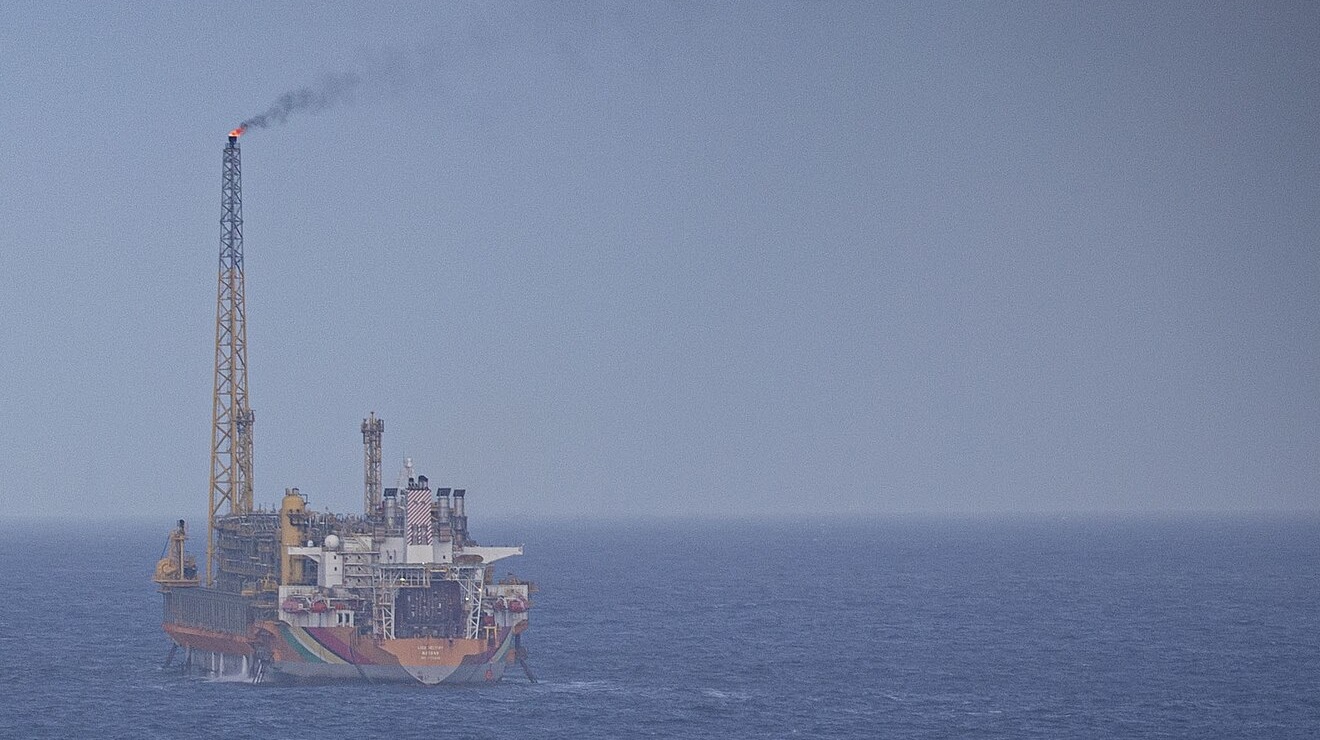
Oil From One Offshore Block
Guyana’s offshore oil comes from the Stabroek block, where ExxonMobil is the operator with 45%. Chevron holds 30% through its purchase of Hess, and China’s CNOOC holds 25%.
Gross output from Stabroek averaged more than 900,000 barrels a day in the first half of 2026, according to the Finance Ministry’s mid-year report. Uaru, the fifth project, will add a ship with capacity of 250,000 barrels a day, and ExxonMobil has guided to a start in the fourth quarter.
Government and Critics
The government’s own mid-year report raised its 2026 growth projection to 20.8% from 16.2%, according to the Finance Ministry’s mid-year report. The World Bank forecast is higher still.
Terrence Campbell, parliamentary leader of the opposition alliance APNU, said on 18 September that oil, gas and support services made up 78.9% of real output in the first half of 2026, up from 74.4% a year earlier. “The challenge is not that Guyana has oil; it is that our economic base is becoming more concentrated,” he said, according to Demerara Waves.
He also cited a 0.5% fall in agriculture, forestry and fishing, and the mid-year report puts non-oil growth at 10.1% in the first half. The figures come from the government’s report, while the concentration argument is the opposition’s, and we have not seen a government rebuttal.
What Is Not Known
This article relies on the report’s headline figures as published in Guyanese media, so it does not cover country detail beyond them. It is not clear how much of the upgrade comes from oil and how much from other sectors.
Output depends on new ships starting on time, and a delay would change the path for 2026. Oil output in the coming months will show whether the forecast holds.
What It Means for US Readers and Investors
ExxonMobil and Chevron, both US companies, hold 75% of the Stabroek block between them, so the boom feeds directly into US corporate earnings. Guyana’s growing output is also a source of crude outside the Middle East for US refiners.
For expatriates and visitors, an economy growing this fast usually means rising costs and heavy construction in the capital, Georgetown. Budgets should allow for price changes.
Our report on Guyana’s non-oil growth looks at the sectors outside oil. Our World Bank growth map compares the wider region.
Frequently Asked Questions
How fast will Guyana’s economy grow in 2026?
The World Bank forecasts 23.7% growth in 2026, after an estimated 19.3% in 2025. It expects 18.7% in 2027 and 15.3% in 2028.
Why is Guyana’s economy growing so fast?
Offshore oil from the Stabroek block, operated by ExxonMobil, has driven output since production began in December 2019. Gross output averaged more than 900,000 barrels a day in the first half of 2026.
How does Guyana compare with the rest of the region?
The World Bank’s update shows Guyana leading the region on growth. It describes a “dual-track reality” in the Caribbean, with oil economies growing faster than the islands.
What do critics of the oil boom say?
The opposition APNU says oil, gas and support services made up 78.9% of real output in the first half of 2026. It warns that the economic base is becoming more concentrated.
Sources
World Bank (Latin America and the Caribbean) · Guyana Chronicle · Caribbean360 (April 2026 forecast) · Demerara Waves · Guyana Ministry of Finance (Mid-Year Report 2026) · ExxonMobil Guyana
Cover photo: Stabroek Market in Georgetown, December 2015. Photo: Dan Sloan / Wikimedia Commons (CC BY-SA 2.0).
This article was produced by The Rio Times’ automated newsroom system. How we use AI · Report an error · Editorial responsibility: Matthias Camenzind, Editor-in-Chief