Guyana-Suriname LNG Could Supply 12M Tonnes at US$6 Cost
Guyana · Energy
Key Facts
—LNG potential. Wood Mackenzie estimates Guyana and Suriname could jointly supply around 12 million tonnes per annum of LNG in the 2030s.
—Resource base. The basin holds roughly 13 trillion cubic feet of non-associated gas, mainly in Guyana’s Haimara cluster and Suriname’s Block 52.
—Breakeven cost. The estimated LNG supply cost is about US$6 per million British thermal units, making it competitive with other new global supply.
—SLB revenue. SLB reported Latin America revenue of approximately US$1.71 billion in Q2 2026, up 12 percent sequentially.
—Growth drivers. The company cited higher offshore drilling in Brazil, Guyana and Mexico, plus production systems sales in Guyana.
*Offshore gas discoveries in the Guyana–Suriname basin are reshaping the region’s energy future, while oilfield services revenue signals how quickly projects are moving from drawing board to development.*
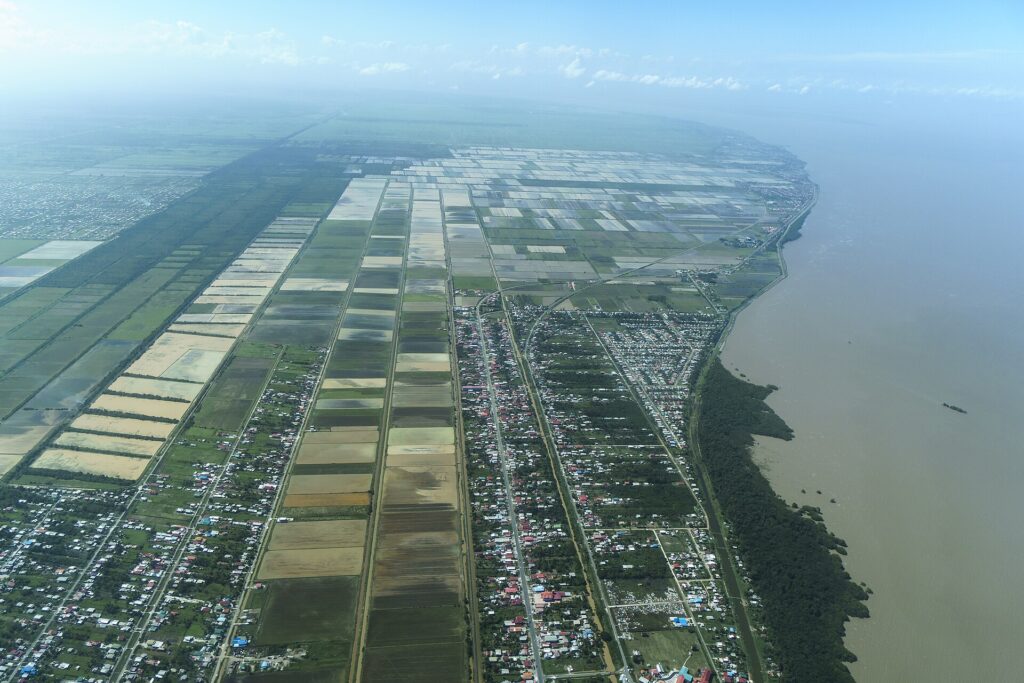
A new gas frontier takes shape
Guyana and Suriname are emerging as potential LNG exporters on a scale that could matter globally. Wood Mackenzie’s analysis points to around 12 million tonnes per annum of combined export capacity in the 2030s, drawn from non-associated gas resources estimated at 13 trillion cubic feet.
The key deposits are Guyana’s Haimara cluster and Suriname’s Block 52, home to the Sloanea discovery. With a breakeven LNG cost of roughly US$6 per million British thermal units, the basin looks cost-competitive against other new supply sources.
For context, non-associated gas means natural gas found in reservoirs that are separate from crude oil deposits. This distinction matters because developing such gas requires dedicated infrastructure rather than simply handling gas that emerges as a byproduct of oil production.
The Haimara cluster and Block 52 represent a deliberate pivot toward gas-focused exploration in a region that first grabbed global attention for its oil riches.
Two countries, two gas pathways
Guyana is advancing on parallel tracks. Associated gas from the ExxonMobil-operated Stabroek Block is already being piped to shore for power generation and natural gas liquids processing under the Gas-to-Energy project.
The country’s first standalone non-associated gas development, the proposed Longtail project, is seen as a foundation for future LNG exports. In Suriname, TotalEnergies and APA Corporation have made offshore discoveries that state oil company Staatsolie wants to develop as part of a broader natural gas strategy.
The two neighbors are pursuing distinct approaches shaped by their domestic realities. Guyana’s Gas-to-Energy project aims first to slash electricity costs and reduce reliance on imported heavy fuel oil, addressing an immediate national need before turning toward export markets.
Suriname, with a smaller population and different fiscal pressures, is weighing how to sequence its gas development to maximize long-term state revenue while meeting local energy demand. Both countries must navigate the challenge of building regulatory frameworks and negotiating fiscal terms that attract the massive upfront investment LNG infrastructure demands.
The infrastructure gap
Neither country has LNG export infrastructure today. Turning 13 trillion cubic feet of offshore gas into liquefaction trains, pipelines and export terminals will require billions of dollars in investment and years of construction.
The prize is access to nearby Caribbean and South American markets, plus potential shipments to Central America and Southeast Asia. Wood Mackenzie notes these volumes would help fill a projected global LNG supply gap of about 105 million tonnes per annum by 2035.
Liquefaction trains are the industrial facilities that cool natural gas to minus 162 degrees Celsius, shrinking its volume by 600 times so it can be loaded onto specialized tankers. Building even a single train is a multi-year engineering undertaking that typically costs several billion dollars.
The global supply gap Wood Mackenzie identifies reflects a structural shortfall expected as older fields decline and demand grows, particularly in Asia. That timing could work in Guyana and Suriname’s favor, but only if the infrastructure decisions are made soon enough to meet the 2030s window.
What SLB’s US$1.71 billion quarter reveals
SLB’s Latin America revenue reached roughly US$1.71 billion in the second quarter of 2026, a 12 percent jump from the previous quarter and up at least 9 percent year-on-year. The company called Latin America its fastest-growing region during the period.
Management credited higher OneSubsea revenue, increased digital exploration sales in Brazil, and stronger offshore drilling across Brazil, Guyana and Mexico. Production systems sales in Guyana and Mexico were singled out as particularly strong.
The numbers show that upstream activity is already accelerating in the very basins where gas ambitions are taking shape. As Guyana and Suriname move toward LNG, service companies like SLB stand to capture more subsea and production systems work.
OneSubsea, the SLB division highlighted in the results, specializes in the seabed equipment that connects offshore wells to surface facilities. Rising sales in this segment signal that operators are not just drilling exploration wells but committing to the hardware needed for actual production.
That spending pattern offers a real-world indicator of project momentum, separate from the longer-term LNG export timelines.
Strategic stakes for the Caribbean
Analysts increasingly frame Guyana and Suriname as strategic energy anchors for a Caribbean region vulnerable to global price shocks. Their growing oil and gas capacity offers a buffer against supply disruptions.
The question now is whether the two neighbors can convert significant associated and unassociated gas resources into reliable energy exports. Wood Mackenzie’s assessment is that the outcome is worth watching closely.
The broader significance extends beyond the two countries themselves. Most Caribbean nations depend heavily on imported fuel for electricity generation, leaving them exposed to volatile international markets.
A regional supply source could reshape energy security calculations from Jamaica to the Dominican Republic. Whether Guyana and Suriname prioritize regional supply agreements or chase higher-paying Asian buyers remains an open question that will influence how widely the benefits are shared.
More: Latin America news in English, every day from The Rio Times.
Frequently Asked Questions
How much LNG could Guyana and Suriname export?
Wood Mackenzie estimates combined LNG export potential of around 12 million tonnes per annum in the 2030s, based on non-associated gas resources of about 13 trillion cubic feet.
What is the estimated cost of producing LNG from this basin?
The breakeven LNG supply cost is approximately US$6 per million British thermal units on a free-on-board basis, excluding shipping and regasification, which is competitive with other new global supply.
What drove SLB’s Latin America revenue growth in Q2 2026?
SLB’s Latin America revenue rose to about US$1.71 billion, driven by higher OneSubsea sales, digital exploration in Brazil, stronger offshore drilling in Brazil, Guyana and Mexico, and production systems sales in Guyana.
Does either country have LNG export infrastructure today?
No. Neither Guyana nor Suriname currently has LNG export facilities. Both are in early stages of developing offshore gas resources, with Guyana’s proposed Longtail project seen as a potential foundation for future exports.
Connected Coverage
Plinio Apuleyo Mendoza, García Márquez Confidant, Dies
Caserones Copper Outage Hits Chile Mine, Lundin Keeps Target
Sources: Wood Mackenzie.
This article was produced by The Rio Times’ automated newsroom system. How we use AI · Report an error
LatAm Markets: Live Signals → — real-time movers, turnover leaders and FX across Latin America.
Read More from The Rio Times