Gold Surges Toward $3,000 as Global Central Banks Fuel Rally
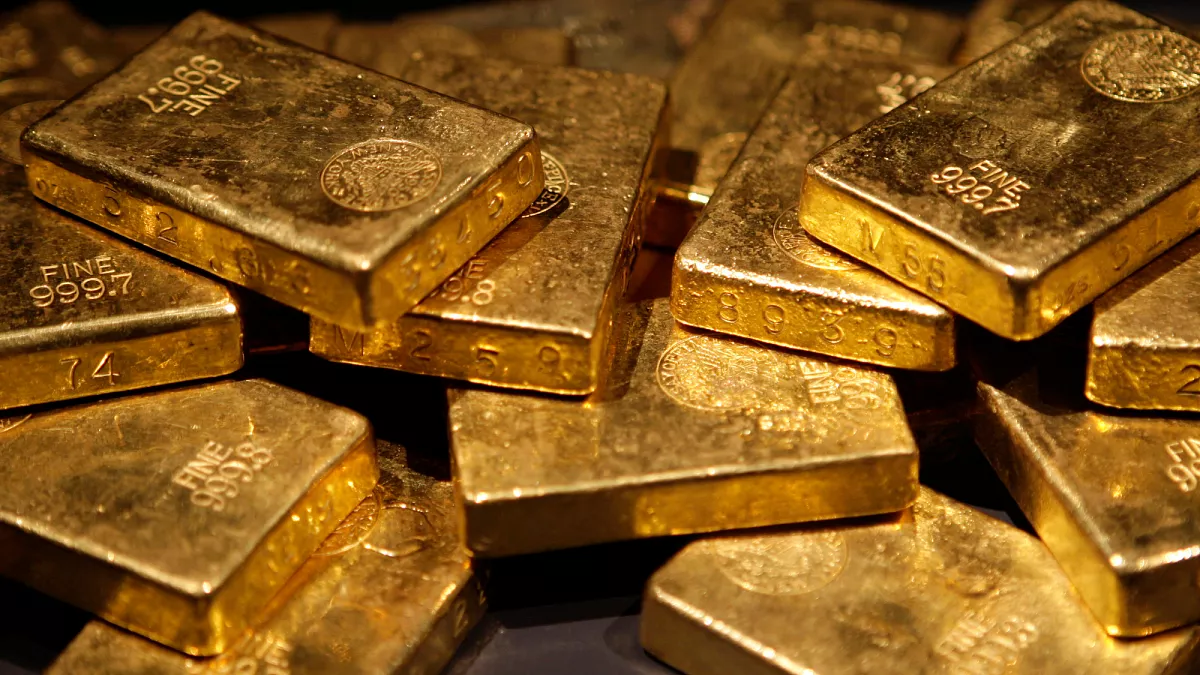
Goldman Sachs analysts report gold prices continue their impressive ascent toward the $3,000 mark, testing this psychologically important threshold. The precious metal trades at $2,997.60 per troy ounce as of March 14, 2025, showing a modest gain of 0.21% from yesterday’s close.
Gold has gained nearly $100 since March 11, reflecting robust demand fundamentals despite varied investor sentiment. Central bank purchasing remains the primary driver behind gold’s remarkable performance over the past year.
China’s central bank extended its gold buying streak for the 18th consecutive month, setting a record for continuous monthly purchases. India and Turkey also significantly increased their gold reserves as part of a broader strategy to diversify away from dollar-denominated assets.
Experts attribute this purchasing behavior to growing concerns about geopolitical tensions and potential asset freezes following precedents set with Russian reserves. These factors created steady upward pressure on prices throughout 2024.
Goldman Sachs previously forecasted gold to reach $2,700 by early 2025, a target already surpassed months ahead of schedule. Current technical analysis suggests support levels at $2,950 and $2,900, with immediate resistance at $3,000.
Asian gold ETFs have experienced their 15th consecutive month of net inflows. This regional enthusiasm contrasts sharply with North American ETFs, which recorded approximately $120 million in outflows yesterday alone.
“Gold’s resilience around the $3,000 level demonstrates strong underlying demand fundamentals,” notes Janet Chen, Chief Precious Metals Strategist at Global Investment Partners. She expects the supportive macroeconomic backdrop to drive further gains.
Market participants now focus on whether gold can convincingly break above and sustain levels beyond $3,000. The relative strength index approaches overbought territory, suggesting a potential consolidation period before the next possible advance.
The Federal Reserve’s rate-cutting cycle that began in late 2024 continues to provide tailwinds for non-yielding assets like gold. Economic uncertainty and ongoing conflicts further enhance the metal’s appeal as a safe-haven asset.
Detailed Market Report
Gold is currently trading at $2,997.60 per troy ounce as of 6:56 AM GMT on March 14, 2025, showing a modest gain of 0.21% (+$6.2) from yesterday’s close of $2,991.30.
The precious metal has traded within a range of $2,994.8 to $3,005.8 during the session, briefly testing the psychologically important $3,000 mark during overnight trading.
Yesterday’s trading session saw gold pull back slightly from its recent highs. The precious metal opened at $3,001.40 and gradually declined throughout the day.
During the overnight session, gold prices fluctuated between $2,995.40 and $2,998.60. This reflects some consolidation after the significant gains seen over the past week.
Gold has gained nearly $100 since March 11, when it was trading at approximately $2,902 per troy ounce. This remarkable surge has brought gold within striking distance of the $3,000 milestone, a level that analysts have been anticipating since late 2024.
Global Gold Markets
London OTC Market: Trading volumes have been robust in London, which continues to maintain its position as the center of global gold trade, comprising approximately 70% of global notional trading volume. The LBMA Gold Price, the global reference benchmark, was set marginally lower this morning after yesterday’s session.
COMEX (US Futures): Gold futures on the COMEX have seen increased volatility, with traders closely monitoring the price action around the $3,000 level. The contract has experienced moderate volume as investors assess the sustainability of the current price levels.
Shanghai Gold Exchange (SGE): The largest physical spot exchange has reported steady demand, with the Chinese market demonstrating continued interest in gold as both an investment and a safe-haven asset. Physical buying in China continues to provide underlying support for global gold prices.
Market Drivers
Several key factors are driving the current gold market dynamics:
Economic Uncertainty: Concerns about potential US economic slowdown continue to support gold prices, as investors seek safe-haven assets amid market volatility.
Central Bank Purchases: Emerging market central banks, particularly China, have maintained their gold buying spree, providing fundamental support for prices. China’s central bank has been particularly active in building its gold reserves as part of its diversification strategy.
Geopolitical Tensions: Ongoing conflicts in multiple regions continue to enhance gold’s appeal as a hedge against geopolitical risk. The situations in Ukraine and the Middle East remain significant factors influencing investor sentiment.
Interest Rate Environment: Recent Federal Reserve policy has been supportive of gold prices, with the rate cutting cycle that began in late 2024 continuing to provide a tailwind for non-yielding assets like gold.
Market Sentiment and Analysis
Janet Chen, Chief Precious Metals Strategist at Global Investment Partners, notes: “Gold’s resilience around the $3,000 level demonstrates the strong underlying demand fundamentals.
While we’re seeing some profit-taking at these levels, the macroeconomic backdrop remains supportive for further gains in the medium term.”
Mark Sullivan, Head of Commodities Research at Atlantic Capital, comments: “The overnight consolidation is healthy after the rapid ascent we’ve witnessed.
Central bank buying continues to put a floor under prices, while geopolitical tensions provide additional support. We expect gold to establish a trading range around $2,950-$3,050 in the coming weeks.”
ETF Flows and Investment Demand
Despite gold’s impressive price performance, gold-backed ETFs have continued to see outflows, particularly from North American investors. This divergence between ETF flows and spot prices remains a notable feature of the current market.
Yesterday, global gold ETFs recorded approximately $120 million in outflows, extending the trend that has persisted for several months. Interestingly, Asian gold ETFs have bucked this trend, experiencing their 15th consecutive month of net inflows, highlighting regional differences in gold investment sentiment.
Technical Analysis
From a technical perspective, gold remains in a strong long-term uptrend that began in late 2022. The recent consolidation just below $3,000 represents a test of this key psychological level, which is also a significant technical resistance.
Key support levels include $2,950 and $2,900, while immediate resistance stands at $3,000. The next resistance is at $3,113, which represents the 261.8% Fibonacci extension level identified by technical analysts.
The relative strength index (RSI) shows gold approaching overbought territory. This suggests that a period of consolidation or modest pullback may be healthy before the next leg higher.
Outlook
The immediate focus for gold traders is whether the metal can convincingly break above and sustain levels above $3,000. Analysts broadly maintain positive forecasts for gold through 2025. Goldman Sachs, in particular, had projected a price target of $2,700 by early 2025 — a level that has already been surpassed.
With central bank buying, safe-haven demand, and a supportive interest rate environment, the outlook for gold remains constructive. However, short-term volatility around current levels is expected as the market digests recent gains.
This article was produced by The Rio Times’ automated newsroom system. How we use AI · Report an error
LatAm Markets: Live Signals → — real-time movers, turnover leaders and FX across Latin America.
Read More from The Rio Times