Gangs Target UN Helicopter: Haiti’s Security Nightmare Worsens
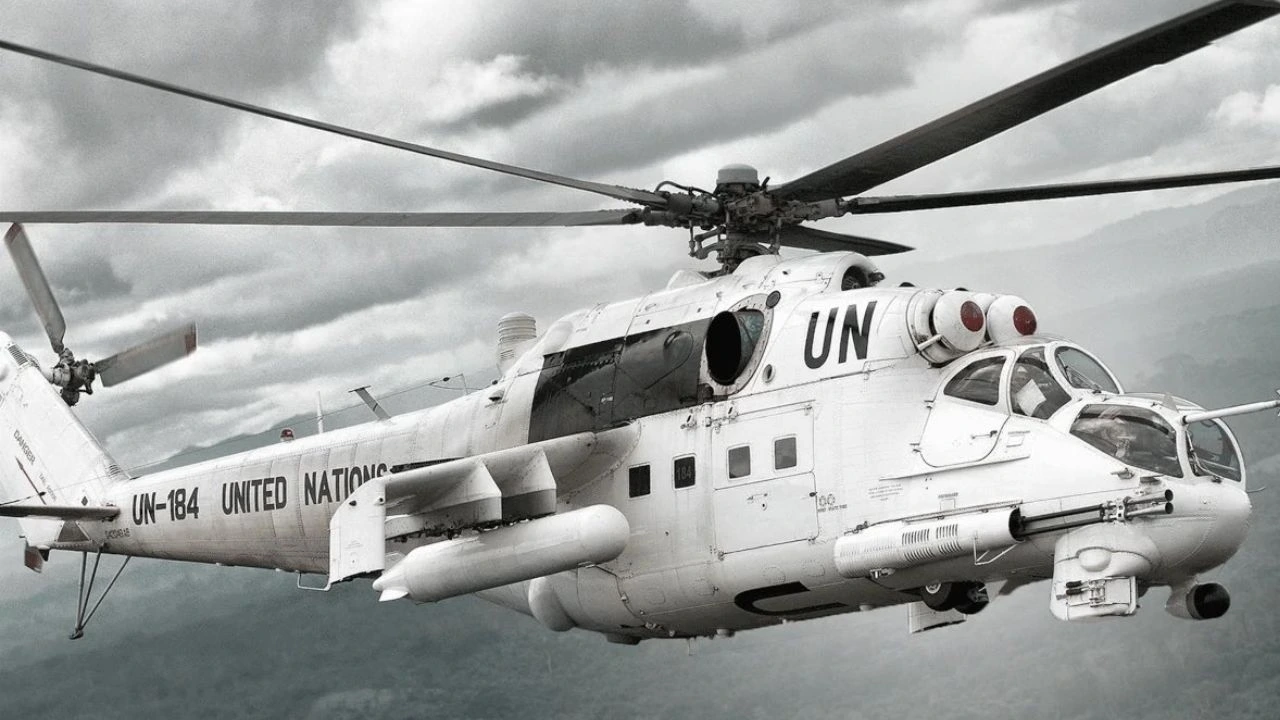
Haiti gangs open fire and hit UN helicopters mid-air as violence surges, marking a new low in the country’s ongoing crisis. The attack occurred on Thursday, forcing the aircraft to make an emergency landing in Port-au-Prince.
Fortunately, all 18 people aboard, including three crew members and 15 passengers, escaped unharmed. This brazen assault highlights the escalating boldness of Haiti’s criminal groups.
It comes just five months after the reopening of Haiti’s main international airport. The facility had been closed for nearly three months due to coordinated gang attacks.
The violence has spread beyond the capital, engulfing nearby areas. In Arcahaie, a coastal town northwest of Port-au-Prince, about 50 suspected gang members died this week.
They had launched an attack on the town, resulting in a deadly confrontation with local forces. Haiti’s security situation has deteriorated rapidly since President Jovenel Moïse’s assassination in July 2021.
Criminal groups now control an estimated 80% of Port-au-Prince. This power vacuum has led to widespread chaos and suffering among the population.
Haiti’s Deepening Humanitarian Crisis
The humanitarian consequences of this violence are staggering. Nearly half of Haiti’s population, about 5.4 million people, face acute food insecurity. This crisis represents the worst hunger emergency in the Western Hemisphere.
In addition, internal displacement has reached alarming levels. In just six months, the number of displaced Haitians has almost doubled to over 700,000.
Roughly half of these displaced individuals are children, underscoring the crisis’s impact on the most vulnerable. International efforts to address the situation have faced significant challenges.
In June 2024, Kenya deployed 400 police officers as part of a UN-supported security initiative. However, this mission lacks sufficient funding and resources to effectively combat the gangs.
The violence has disrupted critical infrastructure and essential services. Food costs now consume up to 70% of total household budgets for many Haitians. This economic strain further exacerbates the already dire humanitarian situation.
The international community’s response has been fragmented and largely ineffective. The UN Security Council recently extended the Kenya-led Multinational Security Support Mission for another year.
However, proposals to transform it into an official UN peacekeeping operation have met resistance. As Haiti’s crisis deepens, the need for a comprehensive and well-funded international response grows more urgent.
The recent attack on the UN helicopter serves as a stark reminder of the challenges ahead. It underscores the critical need to address the root causes of violence and provide relief to millions of suffering Haitians.
More: Latin America news in English, every day from The Rio Times.
This article was produced by The Rio Times’ automated newsroom system. How we use AI · Report an error · Editorial responsibility: Matthias Camenzind, Editor-in-Chief
Haiti
- What Is Happening in Haiti?
- What Is Happening in Haiti?
- Haiti Gang Crisis Explained 2026 Gangs and the UN Force
- Haiti’s 13 December Vote, What US Travellers Need to Know