FT points to Uruguay as new market for cocaine and speaks of the “burned or dismembered corpses” of the drug trade
By Michael Stott
According to the Financial Times, Paraguay, Uruguay and Chile are “the new additions” to the international drug trafficking market.
An explosion that blew off the facade of two modest houses, killing at least five people. Two bodies hanging from a bridge over a busy road. At least 187 inmates killed, some beheaded, in two prison massacres.
Read also: Check out our coverage on Uruguay
This trail of blood would not be strange in Mexico or Colombia, marked by drug violence for decades. However, it happened last year in Guayaquil, the largest city in the once-quiet Ecuador.
In Uruguay, often described as the “Switzerland of Latin America,” 14 bodies turned up in a 10-day period this year. Three had been burned and one dismembered.
The Caribbean honeymoon of the head of Paraguay’s anti-drug prosecutor’s office ended in May with two bullets when a gunman executed him on the beach in front of his pregnant wife.
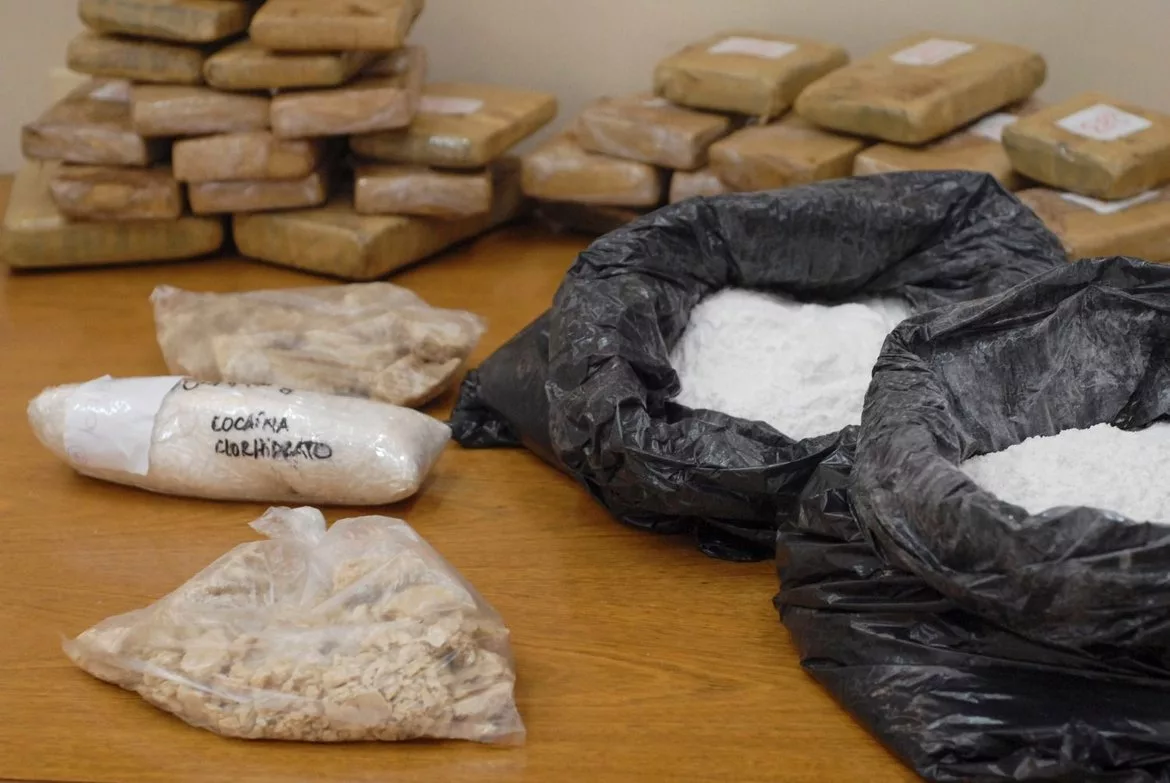
Behind this alarming expansion of violent crime into the smaller and previously more peaceful countries of Latin America is the growing cocaine trade. Cartel bosses, always eager to expand, are devising new routes to reach new markets.
“What we are seeing now is the culmination of the globalization of drug trafficking,” said Jimena Blanco, head of policy research for the Americas at Verisk Maplecroft.
Antwerp seized more cocaine last year than any other European port, almost 90 tons. Belgian customs said the three main countries of origin were Ecuador, Paraguay and Panama, none of them major producers of the drug.
Most of the cocaine destined for Europe is smuggled in shipping containers, and “when seizure rates reach 20 or 25 percent, drug traffickers often change routes,” said Jeremy McDermott, executive director of Insight Crime.
Along with the Brazilian port of Santos and the Costa Rican facility in Limón, Guayaquil is one of what McDermott calls a “second wave of ports” used for cocaine shipments in recent years. Paraguay, Uruguay and Chile are the new additions.
The situation is so dire that, according to the United Nations Office on Drugs and Crime (UNODC), all but three of Latin America’s 21 mainland countries are now “main countries of origin or transit” for cocaine. The exceptions are the small nations of Guyana, Belize and El Salvador.
The drug cartels have not only expanded their routes. They have also increased the overall size of the cocaine business and diversified into adjacent criminal activities.
After five decades of the U.S.-led drug war and billions of dollars spent intercepting and hunting down cartel bosses, the trade has never been greater.
Total cocaine production hit a new record of 1,982 tons in 2020, according to the UNODC, more than double that of 2014.
Cocaine in Europe has never been so plentiful or cheap in real terms, and traffickers are creating lucrative markets in Russia, China, and parts of Asia, where the drug is priced two to three times higher.
The big cartels have gone far beyond drug trafficking. Now they deal with refugees, extort businesses, kidnap the wealthy, and trade illegal timber and gold from the Amazon.
Organized crime in Chile has spread to illegal fishing, while the last business of the Mexican gangs, according to Blanco de Verisk, is smuggling abortion pills across the U.S. border.
The litany of dismal statistics from the failed drug war and its appalling human cost has led many politicians in Latin America to call for the legalization of cocaine.
However, as Shannon O’Neil, vice president of the Council on Foreign Relations in New York, points out: “These are not really drug cartels anymore. They are groups of organized crime. Even if you get rid of drugs, you still have extortion, robbery, human trafficking, gold smuggling. The objective should be: How is the Rule of Law inculcated?”
In a region notorious for corruption, weak law enforcement, and high homicide rates, it’s a difficult but vital task.
With information from El Observador
More: Brazil news in English, every day from The Rio Times.
Editorial responsibility: Matthias Camenzind, Editor-in-Chief · Editorial standards · Report an error