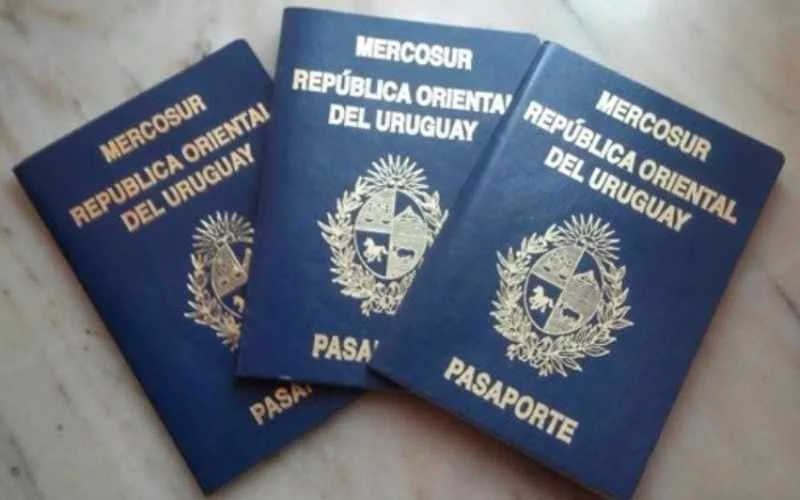
A fake passport scandal in Uruguay has led to allegations of political espionage and corruption. This could jeopardize the country’s reputation as a model of stability in Latin America.
The case began in September last year with the arrest of President Luis Lacalle Pou’s personal bodyguard, Alejandro Astesiano, who was accused of running a criminal network that sold fake passports to foreigners, including Russians, who arrived in the country after the invasion Ukraine fled their country.
The scandal has since widened after a local newspaper published online conversations from Astesiano’s phone suggesting he used his government contacts to sell software developed by the Home Office to senior executives who used it to spy on opposition senators.
These controversies have raised the question of whether corruption is greater in Uruguay than previously thought. Attention now turns to what Lacalle Pou will do to ensure the rule of law and hold those involved accountable.
“This is a pivotal moment for Uruguay,” said Ricardo Gil Iribarne, a former anti-corruption official who headed the country’s transparency and ethics agency under the previous left-wing government. “It’s about a lot more than passports,” he said.
According to investigators, Astesiano, a former police officer, used his close ties with the president to obtain false birth certificates and apply for his citizenship.
Chief Prosecutor Gabriela Fossati told a press conference that since 2013, hundreds of Russians are said to have obtained Uruguayan citizenship in this way. The program has gained attention since the outbreak of the pandemic and the conflict in Ukraine, which triggered a wave of emigration from Russia.
EFFECTS
Lacalle Pou has denied knowing his security chief used his position to sell forged documents for up to US$120,000 and has promised to cooperate with the investigation. “We are relaxed about the measures taken so far,” emphasized the President.
But the leaked messages from Astesiano’s phone have complicated the government’s situation as they threaten to incriminate cabinet members. And pressure is mounting for other officers to hand over their phones.
Interior Minister Luis Alberto Héber denied wrongdoing at a Senate hearing in November. Astesiano said he had no access to government software intended only for authorized officials and was only bluffing his clients. The prosecutors said, however, that there is “no certainty” on this point.
At the same time as these controversies were unfolding, other news emerged from a separate investigation that appeared to implicate senior State and Home Office officials in the handing over of travel documents to suspected drug dealer Sebastian Marset.
Marset, the suspected leader of the First Uruguayan Cartel (PCU), is wanted by Interpol for transporting 16 tons of cocaine between Paraguay and Europe and remains at large.
He was arrested in Dubai in 2021 while traveling on a fake Paraguayan passport. A new Uruguayan passport was quickly issued to Marset in 2021, allowing him to legally leave the UAE.
Deputy Secretary of State Carolina Ache Batlle resigned December 19 amid pressure from the affair and prosecutors are investigating how the documents were issued.
Left-wing opposition leaders have called for the resignation of the interior and foreign ministers. “If it was known that he was a dangerous drug dealer and arrangements were made for him to have access to a national passport, that is incredible negligence,” said Fernando Pereira, leader of the Frente Amplio party.
Political scientist Vicky Gadea said the long-term costs could be “extremely high” for the country’s relatively young democratic institutions if those involved are not held accountable.
“People in Uruguay have the impression that we are on par with some of the strongest democracies in the world,” Gadea said. If people “start questioning how our democracy works”, it could take years to restore trust and damage the country’s international reputation.
According to Transparency International, Uruguay remains the least corrupt country in Latin America. Surveys show again and again that the approximately 3.5 million inhabitants have great trust in the judicial system.
“We are the model students in one class of problem-children,” emphasized Gil Iribarne, referring to the Latin American region. Uruguay could sink to the level of other countries like Brazil and Colombia, where distrust of the institutions will grow if these cases are not investigated and the public reassured.
Critics point out that Lacalle Pou tried to downplay the seriousness of the revelations. The government argues that it is letting the judiciary work and will make a verdict.
“Uruguayans want to see that actions have consequences,” affirmed Gil Iribarne, “the public is still concerned and getting angry.”
With information from latinapress
More: Brazil news in English, every day from The Rio Times.
Editorial responsibility: Matthias Camenzind, Editor-in-Chief · Editorial standards · Report an error