South Africa’s power utility cuts diesel bill 80% as blackouts stay away
South Africa · ENERGY
Key Facts
- —The country South Africa has 64 million people and Africa’s most industrialised economy, worth about US$401 billion, close to Denmark’s. State-owned Eskom generates most of its electricity, largely from coal.
- —Why it matters For years, breakdowns at Eskom’s ageing coal plants forced rolling blackouts, known as load-shedding. To limit them, Eskom burned costly diesel in emergency gas turbines.
- —Why now Eskom’s update of 25 September shows its plants at their best level in six years, after 497 days without load-shedding.
- —What happened From 1 April to 24 September 2026, the diesel bill fell 80.56% to R1.16 billion (about US$71 million). A year earlier it was R5.94 billion (about US$362 million).
- —The numbers Plant availability reached 68.06% for the financial year to date. Use of the diesel turbines fell from 6.97% of their capacity to 1.05%.
- —What it means for you Businesses, residents and visitors face far fewer power cuts than in 2023. Electricity bills still rise, with an approved 8.83% increase from April 2027.
- —Still open Whether the gains survive summer maintenance, and how the 2027 increase is structured. Public comments to the regulator close on 2 October 2026.
South Africa’s state power utility has cut its emergency diesel bill by four-fifths this year. Eskom diesel spending fell to R1.16 billion (about US$71 million) between April and late September 2026.
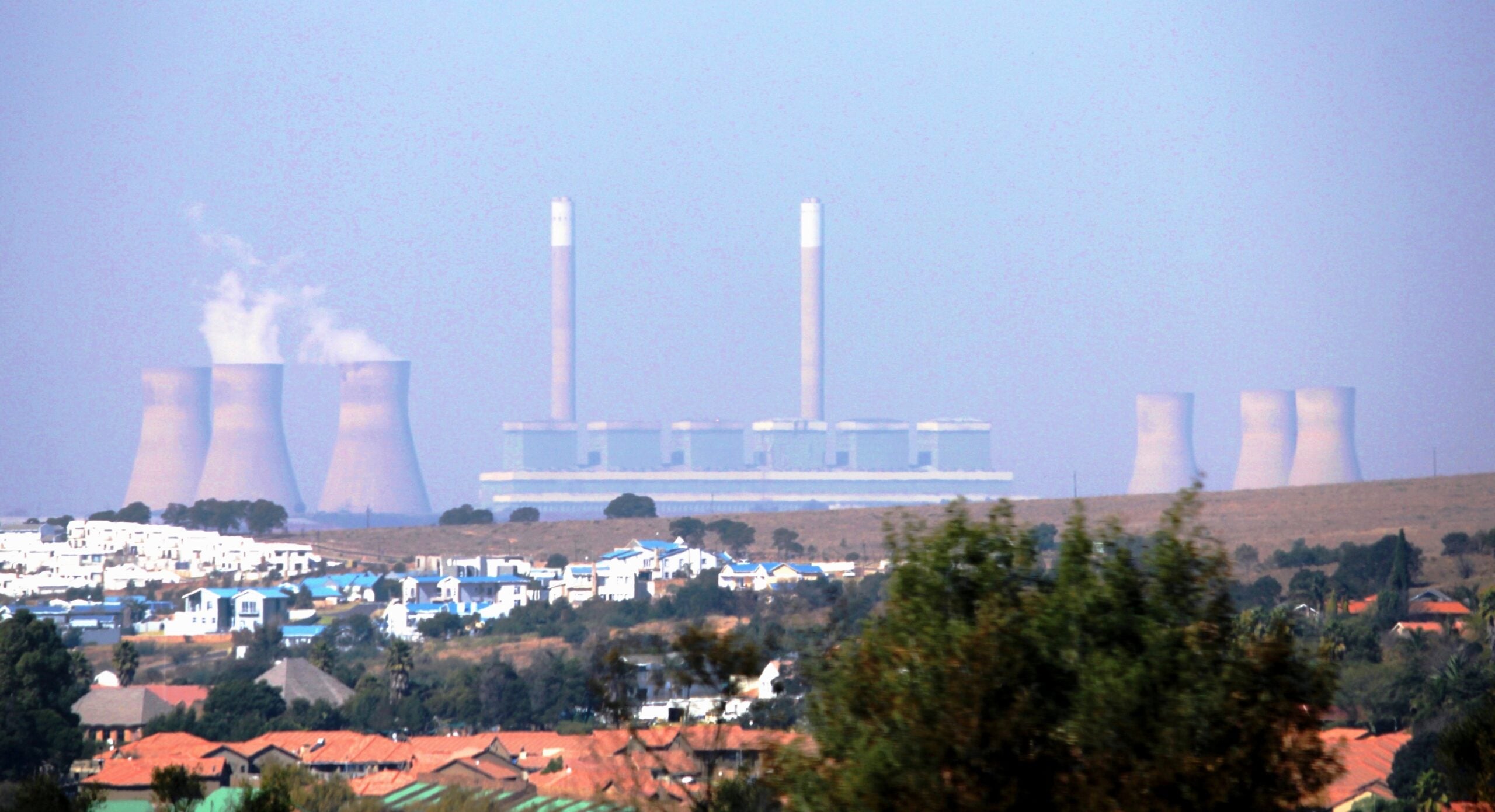
Eskom generates most of South Africa’s electricity, mainly from ageing coal plants. When those plants broke down, it ran diesel-fired turbines to keep the grid from collapsing.
In its update on Friday, 25 September, Eskom said better plant performance had sharply cut that emergency use. Rand figures here are converted at R16.41 per US dollar (open.er-api.com, 29 September 2026).
Eskom diesel spending falls sharply
From 1 April to 24 September 2026, diesel spending fell by R4.78 billion (about US$291 million), or 80.56%. In the same period last year, Eskom spent R5.94 billion (about US$362 million).
The diesel feeds open-cycle gas turbines, or OCGTs, fast-starting backup units used at peak times. Their load factor, a measure of how hard they run, dropped from 6.97% to 1.05%.
OCGT output for the financial year to date was 151.14 gigawatt-hours, about 84.92% lower than a year earlier. Eskom’s financial year runs from April to March.
Earlier figures pointed the same way. On 4 September, Eskom reported an 81.64% fall to R1.08 billion (about US$66 million) for the period to 3 September.
Annual diesel spending fell by R23.0 billion (about US$1.4 billion) between the years ended March 2023 and March 2026, according to Eskom.
Energy availability reaches a six-year high
Eskom’s year-to-date Energy Availability Factor, or EAF, reached 68.06%, its highest in six years. The EAF measures the share of generating capacity that is available to produce power.
The weekly EAF stayed above 70% for a second week, reaching 70.44% from 18 to 24 September. Eskom said this returned about 6,461 megawatts to the grid compared with three years ago.
Higher availability means the diesel turbines rarely need to run. South Africa had recorded 497 consecutive days without load-shedding by 25 September, counting from 16 May 2025.
Eskom also uses “load reduction”, planned local cuts that protect equipment from overloading in some areas. It now affects 247,617 customers, or 3.4% of Eskom’s customer base.
The remaining cases are in Gauteng, the province around Johannesburg and Pretoria, and in KwaZulu-Natal, home to Durban. Eskom aims to end load reduction by March 2027.
Bills keep rising despite the savings
Lower diesel costs have not stopped price rises. The National Energy Regulator of South Africa, or Nersa, has already approved an 8.83% average Eskom increase from April 2027.
That figure is the third year of a multi-year decision taken in 2025. Nersa is now consulting on how the rise will be structured, with public comments due by 2 October 2026.
Eskom had asked for a 36% increase from April 2025, and the regulator granted 12.74%. A calculation error later lifted the approved rises for 2026 and 2027 to 8.76% and 8.83%.
Higher tariffs feed into inflation and industrial costs. For energy-intensive sectors such as mining and manufacturing, electricity remains a central concern.
Why the turnaround matters for investors
Stable electricity is a basic requirement for investment in South Africa. Fewer blackouts and less emergency diesel suggest that Eskom’s operational recovery is holding.
Burning less diesel also reduces reliance on imported fuel, which is exposed to global price swings. That eases pressure on the trade balance and on the state-owned utility’s finances.
Reliable power also shapes how outside investors judge South Africa’s place on the continent, a theme explored in Africa: The New Scramble.
Regional read-through for Southern Africa
South Africa is the region’s largest economy and a key electricity supplier to neighbouring states. Improvements at Eskom can ease pressure across the Southern African Power Pool, a regional electricity-trading network.
Yet the tariff path complicates the picture. Lower diesel spending does not automatically mean cheaper power for consumers or for neighbouring utilities that buy from Eskom.
Investors and professionals across the region will watch whether the gains hold through the southern-hemisphere summer. Summer demand patterns and planned maintenance will test the utility’s progress.
What to watch next
Nersa’s decision on the structure of the 2027 increase will be a key signal for households and industry. Keeping the EAF near 68% would keep diesel use low.
Any reversal in plant performance could quickly push emergency fuel spending higher. For now, Eskom is burning far less diesel and keeping the lights on more consistently.
Frequently Asked Questions
How much did Eskom cut diesel spending in 2026?
Eskom diesel spending fell by R4.78 billion (about US$291 million), or 80.56%, between 1 April and 24 September 2026. It dropped to R1.16 billion (about US$71 million) from R5.94 billion (about US$362 million) a year earlier.
What is Eskom’s Energy Availability Factor now?
Eskom’s year-to-date Energy Availability Factor reached 68.06% in its 25 September update, the highest in six years. The weekly figure for 18 to 24 September was 70.44%.
Will electricity prices still rise in South Africa?
Yes. The regulator, Nersa, has approved an 8.83% average Eskom increase from April 2027, despite the lower diesel spending.
Is South Africa still having load-shedding?
Eskom says there has been no load-shedding since 16 May 2025. Local load reduction still affects about 247,600 customers in Gauteng and KwaZulu-Natal.
Connected Coverage
Sources
- Eskom, power system update, 25 September 2026
- Eskom, winter performance statement, 4 September 2026
- SABC News: Nersa seeks public input on Eskom’s 8.83% tariff structure
- SABC News: public comments on the 2027 tariff open
- World Bank: South Africa data
This article was produced by The Rio Times’ automated newsroom system. How we use AI · Report an error
LatAm Markets: Live Signals → — real-time movers, turnover leaders and FX across Latin America.
Read More from The Rio Times