Embraer’s Self-Landing Phenom 300EV Wins Triple Certification
Brazil · BUSINESS
Key Facts
- —Certification The Embraer self-landing Phenom 300EV won Anac, FAA and Easa approval on 25 August 2026.
- —Technology First light jet certified with Garmin Emergency Autoland for pilot incapacitation.
- —Performance Mach 0.80 top speed and 2,055 nautical miles (3,806 km) of range with four passengers.
- —Price and timing US$13.995 million list price, with first deliveries scheduled for late 2028.
- —Family The Phenom 300 line has been the world’s best-selling light jet for 14 consecutive years.
Anac, the FAA and Easa approved the Phenom 300EV in one sweep, making it the first light jet certified to land itself in an emergency.
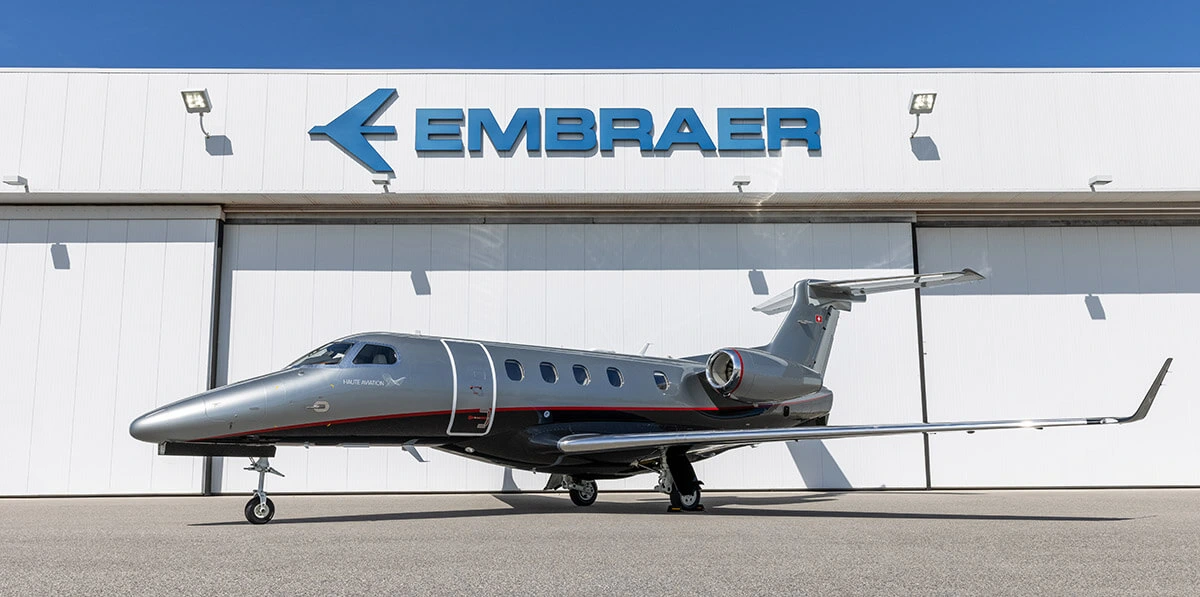
Brazilian planemaker Embraer has certified the first light business jet capable of landing itself. The company announced on Tuesday 25 August 2026 that the Phenom 300EV won approval from Brazil’s Anac, the US Federal Aviation Administration and Europe’s Easa in a single coordinated sweep. The Embraer self-landing jet carries Garmin’s Emergency Autoland, a system designed for the moment a pilot can no longer fly. First customer deliveries are scheduled for 2028, and the triple approval clears the model for sale in all major markets from day one.
What the Embraer self-landing system actually does
The Embraer self-landing capability comes from Garmin’s Emergency Autoland, certified as part of the Phenom 300EV’s G3000 Prodigy Touch avionics suite. Once activated, by occupants or automatically, the system takes full control of the aircraft.
It selects a suitable airport, navigates toward it, communicates with air traffic control, flies the approach and touches down autonomously, braking the jet to a stop on the runway.
The scenario it addresses is pilot incapacitation, a risk that weighs heavily in the light-jet segment because most Phenom missions are flown by a single pilot. Until now, a passenger in that situation had no realistic path to safety.
The 300EV wraps the autoland in a broader safety package. It adds autobrake for takeoffs and landings, autothrottle, an emergency descent mode and Embraer’s Runway Overrun Awareness and Alerting System, all first-in-class features in the category.
A new multipurpose electronic controller developed by Embraer integrates a rudder-by-wire system and other electronically controlled functions, another first for a light jet.
Performance, cabin and price
Embraer calls the 300EV the fastest and longest-range light jet in the world. It reaches Mach 0.80, about 980 km/h, and flies 2,055 nautical miles, or 3,806 km, with four passengers and reserves.
That range covers nonstop city pairs such as São Paulo–Manaus, Aspen–New York and Dubai–Maldives. Compared with the 300E, the new version adds 45 nautical miles of range and 430 pounds, about 195 kg, of payload, taking maximum payload to 3,066 pounds.
The cabin gains a vacuum toilet, a redesigned galley with a high-power outlet, improved air circulation and LED taxi and landing lights. True Blue Power lithium-ion batteries replace the previous units.
Factory-installed connectivity comes via Gogo Galileo on the OneWeb low-earth-orbit satellite network. Starlink will follow as an aftermarket option under a supplemental type certificate.
The variant completed flight testing before the certification campaign ended, a milestone Embraer had flagged at the July unveiling, when it promised approvals from the three regulators by the end of 2026.
Aviation International News puts the list price at US$13.995 million in 2026 dollars. First deliveries are planned for late 2028, giving the Embraer self-landing jet a two-year runway to convert certification into orders.
Live Company IntelligenceEmbraer SA ADR — the full investor dossier
Wall Street view
Valuation & profitability
Price & risk
$58.1452-wk high
$66.87
Revenue trend · 6y
Ownership
Dividend
A first for light jets, won on three continents
The Embraer self-landing Phenom 300EV is the first light jet certified with Emergency Autoland and will be the largest business jet to offer the feature when it enters service.
Certification by Anac, the FAA and Easa in a single announcement is unusual and commercially valuable: it means no staggered entry into the model’s three largest markets.
The 300EV joins a small club. The HondaJet Elite II and the Cirrus Vision Jet already offer autoland, and Textron’s Citation CJ4 Gen3 is awaiting certification with the same Garmin system.
‘Reaching triple certification is evidence of our teams’ dedication and of Embraer’s commitment to engineering excellence and disciplined execution,’ said Michael Amalfitano, president and chief executive of Embraer Executive Jets.
The approval lands in a strong year for the division, which in February launched refreshed Praetor 500E and 600E jets, already certified by the same trio of regulators.
Executive aviation generated 29.1% of Embraer’s revenue in 2025, and the segment ended the year with a firm-order backlog of US$7.6 billion, according to the company’s securities filings.
What the Embraer self-landing jet means for the market
The Phenom 300 family has been the world’s best-selling light jet for 14 consecutive years, with more than 900 aircraft delivered since the model entered service in 2009.
Unveiled on 14 July 2026, the 300EV is the third aircraft refresh Embraer Executive Jets has announced this year alone, a cadence aimed at defending share against Honda and Textron.
Because the changes run deep, from flight controls to avionics, existing Phenom 300E aircraft cannot be upgraded to the Embraer self-landing standard. That protects residual values but pushes owners toward new orders.
Analysts see emergency autoland shifting from a novelty to an expectation in owner-flown aviation, much as parachute systems did in piston aircraft. Certification on three continents accelerates that shift.
For Embraer, the test now is commercial: turning a certified safety milestone into firm orders before deliveries begin in 2028, while competitors race to match the capability.
More: Brazil news, every day from The Rio Times.
Frequently Asked Questions
Which Embraer jet can land itself, and when was it certified?
The Phenom 300EV. The Embraer self-landing jet was certified on 25 August 2026 by Brazil’s Anac, the US FAA and Europe’s Easa, the first light jet approved with Garmin Emergency Autoland.
How does the Emergency Autoland system work?
If the pilot becomes incapacitated, the system takes control, selects a suitable airport, communicates with controllers, flies the approach and lands the aircraft autonomously, then brakes it to a stop.
How much does the Phenom 300EV cost and when are deliveries?
The list price is US$13.995 million in 2026 dollars, according to Aviation International News. Embraer plans first customer deliveries for late 2028, with no retrofit path for existing Phenom 300E jets.
Connected Coverage
Embraer Q2 Record Backlog Signals Strong Latin American Demand
Sources
- www.poder360.com.br
- www.ainonline.com
- avweb.com
- www.ch-aviation.com
- www.flyingmag.com
- www.inflight-online.com
This article was produced by The Rio Times’ automated newsroom system. How we use AI · Report an error · Editorial responsibility: Matthias Camenzind, Editor-in-Chief