Ecuador’s Three-Stage Descent: How Criminal Gangs Became Dangerous Insurgents
(Analysis) President Daniel Noboa declared Ecuador faces the most violent internal armed conflict in its history against organized criminal groups.
The crisis represents a textbook evolution of insurgency that aligns with Professor David Betz’s acclaimed three-phase framework of civil conflicts. Ecuador witnessed 781 violent deaths in January 2025 alone, marking the deadliest month in national history.
This surge follows a dramatic 574% increase in homicide rates between 2019 and 2023. Criminal violence escalated significantly after Los Choneros gang leader José Adolfo “Fito” Macías escaped prison in January 2024, followed by armed criminals storming TC Television studios live on air.
Professor Betz, a war studies expert at King’s College London, explains insurgencies typically develop through three distinct phases. Ecuador’s criminal organizations show clear progression through this model.
Many gangs completed Betz’s “defensive phase” years ago, characterized by political organization, propaganda, and alignment with criminal enterprises to access weapons and muscle.
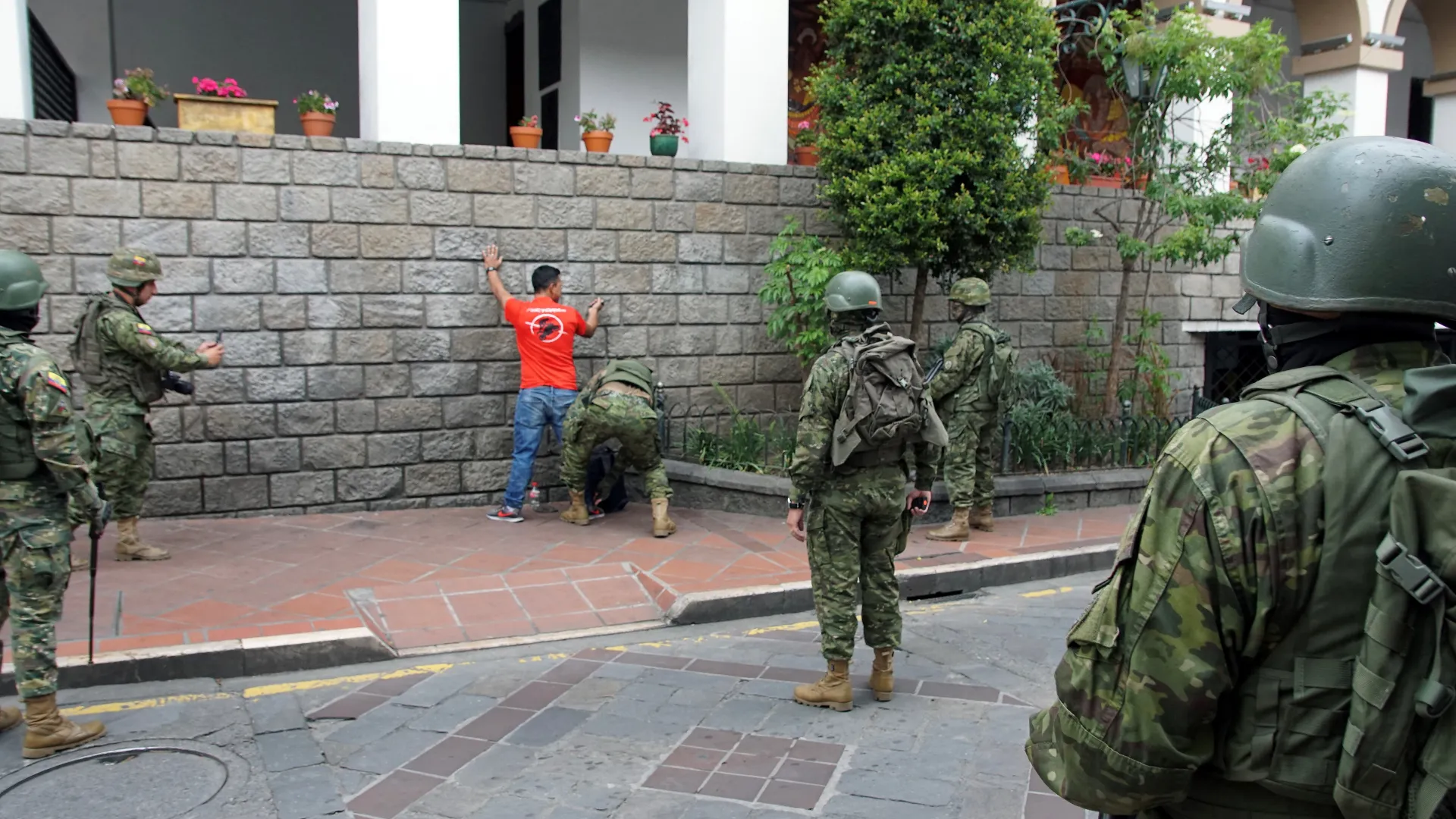
Several criminal factions now operate firmly in Betz’s second “stalemate phase.” Los Choneros and Los Lobos have established alliances with Colombian, Mexican, and Albanian trafficking organizations.
They create no-go zones where police enter only after consulting local leaders. Their activities include ambushing police stations and attacking government figures – precisely the indicators Betz identifies as phase two hallmarks.
“The stalemate phase features attacks on judges, lawyers, media figures, and government representatives,” explains Betz in his analysis of insurgency patterns. Ecuador witnesses these exact tactics as cartels target officials who challenge their territorial control.
Ecuador’s Struggle with Criminal Organizations
Noboa’s government claims success in combating these groups, with police detaining 13,858 people and seizing 2,019 firearms in 2025 alone. The president received the Police Command Baton at a recent ceremony, vowing to pursue terrorists and their political allies without negotiation.
Betz’s work suggests Ecuador faces significant risk factors for prolonged conflict. The country’s criminal organizations employ what he calls “Latin American-style dirty war” tactics – chronic low-level violence designed to undermine government authority through attacks on infrastructure and public institutions.
Human rights organizations document concerning patterns of extrajudicial killings and arbitrary arrests by security forces operating under the armed conflict declaration. These actions potentially strengthen recruitment for criminal organizations by fostering grievances against the state.
The economic impact reverberates throughout Ecuador as businesses face widespread extortion schemes. Criminal groups demand “vacunas” (protection fees), forcing many establishments to close and destabilizing the national economy.
Ecuador’s rapid transformation from one of Latin America’s safest countries occurred as criminal organizations seized control of drug trafficking routes after the 2016 Colombian peace agreement with FARC rebels.
Professor Betz’s framework provides critical insight into how these groups evolved. They transformed from simple gangs into sophisticated insurgent organizations challenging state authority.
As Noboa continues his aggressive security campaign against what he terms “narcoterrorism,” the conflict trajectory remains uncertain.
Professor Betz’s research suggests that military force alone rarely resolves deeply rooted insurgencies. This is especially true without addressing the underlying economic and social conditions.
More: Ecuador news in English, every day from The Rio Times.
This article was produced by The Rio Times’ automated newsroom system. How we use AI · Report an error · Editorial responsibility: Matthias Camenzind, Editor-in-Chief