Ecuador watches foreign fishing fleet on its way to Galapagos exclusive zone boundary
RIO DE JANEIRO, BRAZIL – It is already that time of year: the large fishing fleet, mainly under the Chinese flag, is supposedly looking for giant squid off South America.
The Government of Ecuador contacted Beijing and asked for respect for the ecosystems. If all remains unchanged, the group will pass through Chile in the coming months.
The Government of Ecuador announced that it is keeping a permanent watch on the movement of a foreign fishing fleet on its way to the Exclusive Economic Zone (EEZ) of the Galapagos Islands.

Currently, the fleet is still in international waters, but through a communiqué, the Ministry of Foreign Affairs affirmed that members of that fleet have approached up to 70 nautical miles from the EEZ in the last weeks.
The fleet has been in the news this time of the year for several years and is usually made up of vessels from China and other Asian nations.
For this reason, the Foreign Ministry indicated that it has already officially communicated its concern about the situation to the Chinese authorities.
It has also requested that the group, supposedly searching for squid, be kept outside the EEZ limits.
Ecuadorian diplomacy has also urged its Chinese counterpart to comply with the rules and regulations established to “guarantee the sustainability of the species and not to affect marine ecosystems”.
The Foreign Ministry hopes to keep a channel of communication open to process Ecuador’s concerns and ensure the adoption of measures to guarantee that the fleet can carry out fishing activities in international waters outside the EEZ.
WHY SO MUCH CONCERN IN GALAPAGOS?
The areas near Galapagos are often corridors for migratory marine species, some of which are endangered.
In August 2017, Ecuador detected a large illegal fishing fleet near the Galapagos Marine Reserve.
That was composed of 297 vessels, and one of them, the Fu Yuan Yu Leng 999, was seized by Ecuadorian authorities.
The vessel had been caught 34.5 nautical miles (63.9 kilometers) east of San Cristobal Island, the easternmost island of the Galapagos, with 300 tons of fish.
The catch included protected species such as hammerhead sharks, which are endangered and included in the Red List of the International Union for Conservation of Nature (IUCN).
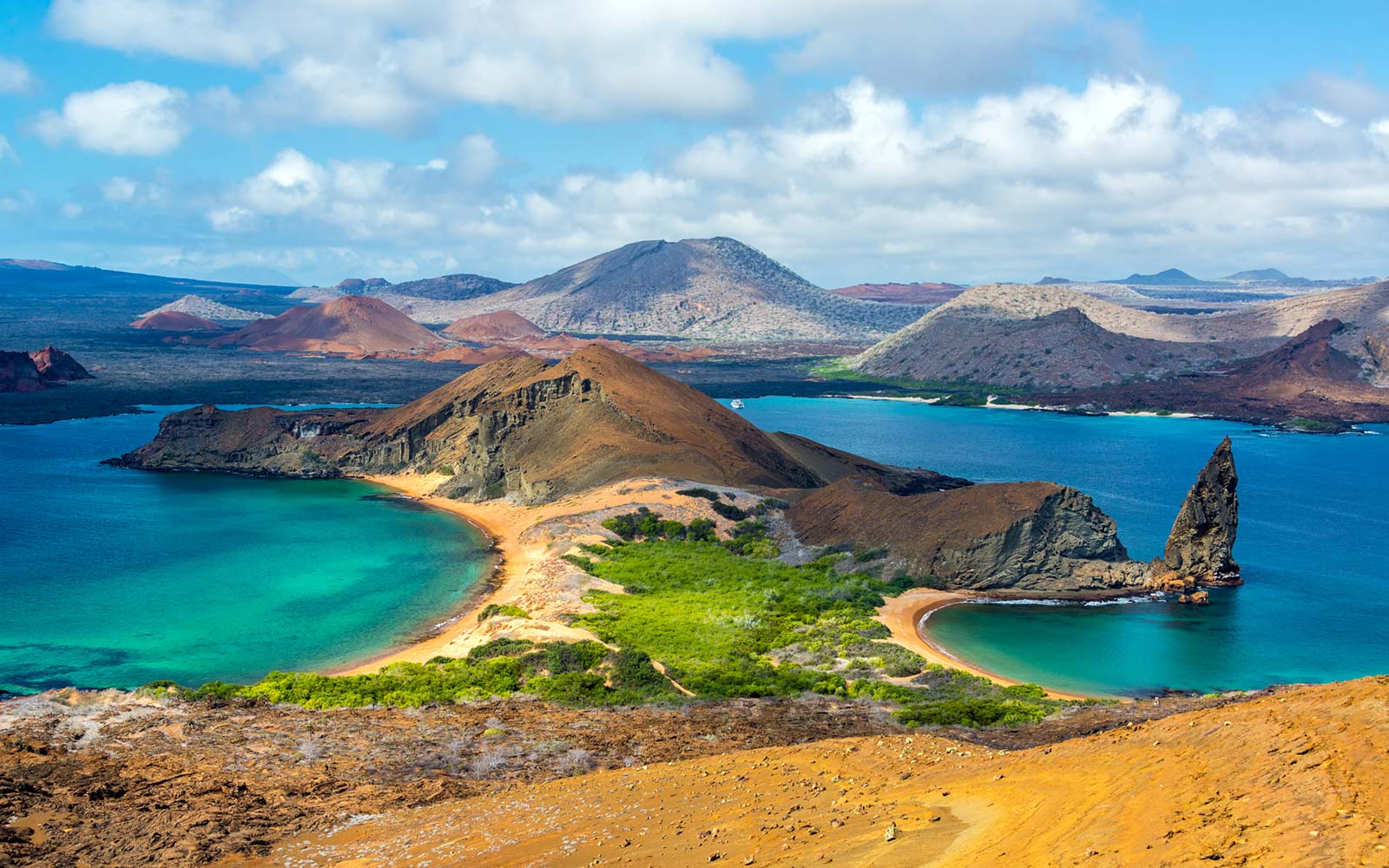
The Galapagos archipelago comprises 13 large islands, six smaller ones, and 42 islets located approximately 1,000 kilometers west of the Ecuadorian mainland.
Because of its biodiversity, it is considered a natural laboratory that allowed the English scientist Charles Darwin to develop his theory on species’ evolution and natural selection.
The presence of the international fishing fleet tends to be repeated every year, and its passage through Galapagos generates concern in Peru and Chile.
With information from BBCL
More: Brazil news in English, every day from The Rio Times.
Editorial responsibility: Matthias Camenzind, Editor-in-Chief · Editorial standards · Report an error